Thermal Spray Coating Materials and Performance Characteristics
August 14, 2025·By Nolan Watson
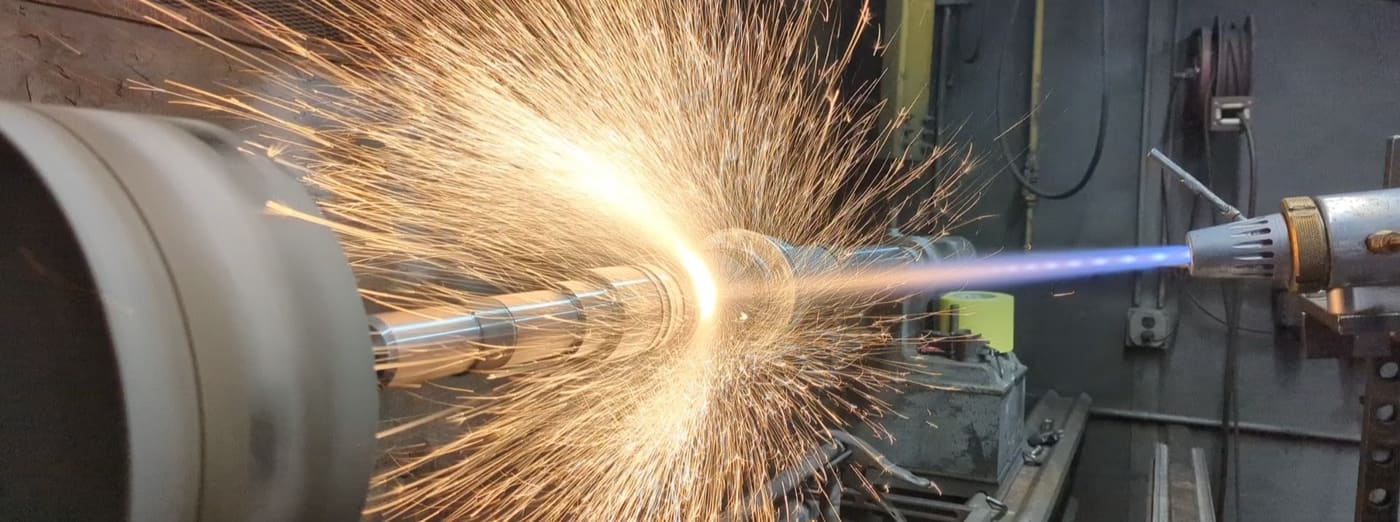
When critical components operate in extreme wear, heat, or corrosive environments, thermal spray coating materials provide a versatile and cost-effective way to extend service life and restore functionality.
From turbine shafts to pump sleeves to bearing surfaces, thermal spray coatings allow us to apply engineered surfaces tailored to specific operating demands without distorting or metallurgically altering the base part. To get the best result, the thermal spray coating process, coating material, porosity, bond strength, coating hardness, and final surface finish all need to work together. Connect with our team for a consultation on how thermal spraying may help your equipment.
How Thermal Spray Coating Materials Are Selected
Thermal spray coating materials are selected around the application first. The right choice depends on the service environment, the base material, the required coating thickness, the amount of acceptable porosity, the desired coating hardness, and the finishing requirements after spraying.
HFW works with processes such as HVOF coating, plasma spray coating, electric arc spray, flame spray, Rokide® ceramic spraying, and spray welding. Each process affects coating density, bond behavior, oxide content, and final finish differently.
Thermal Spray Coating Process and Material Fit
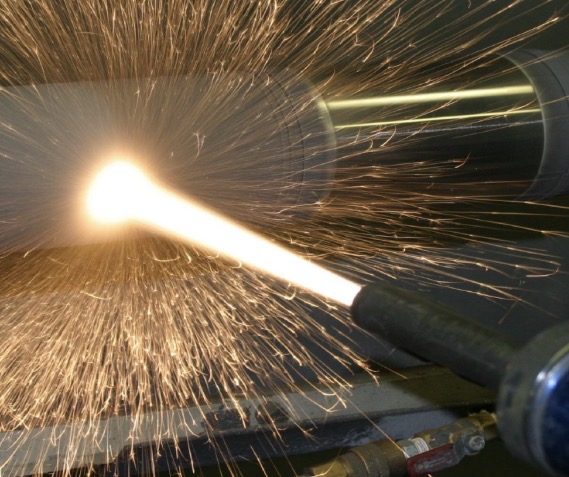
The thermal spray coating process selection depends on what the part needs to do after repair: resist wear, resist corrosion, restore dimensions, provide thermal protection, or meet several of those requirements at once. A dense HVOF coating may be preferred for tight tolerance wear surfaces, while plasma spray coating may be considered when the application calls for a different material or thermal profile.
| Coating factor | Why it matters |
|---|---|
| Material selection | Determines wear, corrosion, heat, and surface performance for the application. |
| Bond type | Affects how the coating attaches to the prepared substrate. |
| Porosity | Can influence chemical resistance, lubrication behavior, and coating density. |
| Coating hardness | Helps compare sprayed coatings for wear resistance and surface durability. |
| Surface finish | Determines whether the coated part can meet the final tolerance and operating requirement. |
Mechanical Bond vs. Physicochemical Bond
For most thermal spray processes, the bond between coating and substrate is mechanical. Molten or partially molten particles are propelled at high velocity onto a roughened surface, usually prepared by grit blasting, where they mechanically interlock with surface protrusions.
However, in certain high-energy processes like electric arc and plasma spray, the molten particles may reach temperatures sufficient to partially fuse with the substrate. This creates what is sometimes called a physicochemical bond, which offers enhanced mechanical bonding.
Porosity in Thermal Spray Coatings
All thermally sprayed coatings contain some degree of porosity. The amount depends on the process used, the coating material, and the application technique.
- When porosity is detrimental: In chemical service, permeation through the pores can attack the interface between the coating and substrate, leading to premature failure.
- When porosity is beneficial: In certain mechanical or thermal shock applications, higher porosity can increase flexibility and shock resistance. On bearing surfaces, controlled porosity can act as oil reservoirs, improving lubrication.
Selecting the right process and material combination allows us to tailor porosity levels to the application's needs.
Bond Strength, Thickness Limits, and Internal Stresses
While thermal spray coatings can be built up in layers, thickness limits exist because of both cost and the physics of the process.
- Internal stresses increase with coating thickness
- Denser coatings (lower porosity) often carry higher internal stresses
- Excessive stress can lead to lifting, cracking, or crazing of the coating as well as reduced bond strength
Proper process control and, when necessary, intermediate bond coats help mitigate these risks.
Oxides in Coatings
Oxides are a natural byproduct of thermal spraying, forming when molten particles are exposed to oxygen during flight.
- Oxide content depends on the material, process, and spraying atmosphere
- Inert gas environments or propellants can reduce oxidation
- Oxide levels influence hardness and wear resistance. Sometimes this is beneficial, and sometimes it is not
Coating Hardness: Why It Is Relative
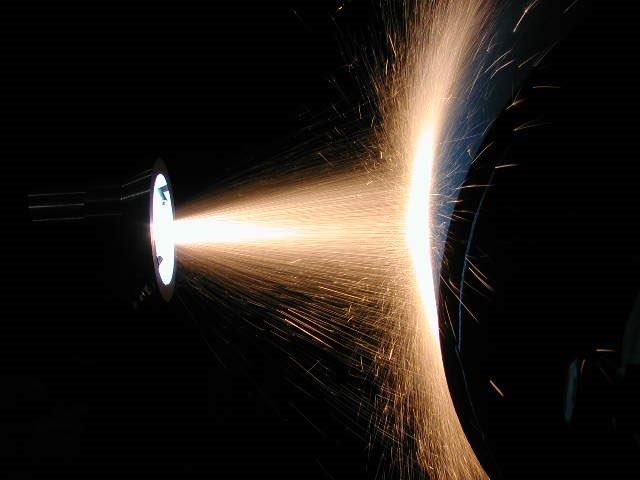
Coating hardness depends on porosity, particle bonding, oxide content, and material selection. Standard hardness tests have been adapted for thermally sprayed coatings, but results are comparative, not absolute.
In practice, hardness values are most useful when comparing one sprayed coating to another, rather than to wrought or cast material data.
Adhesion and Surface Preparation
One of the most important factors in thermal spray adhesion is surface preparation. A properly prepared substrate supports strong mechanical interlock. Factors affecting adhesion include:
- Coating material selection
- Blast profile and cleanliness
- Application technique
- Coating thickness (thicker layers increase residual stress)
Finishing after spraying must also be performed correctly. Poor grinding or machining can damage the coating or compromise bond strength.
Surface Finish Considerations
Because non-fused thermal spray coatings are inherently porous, surface finish readings can be misleading. A profilometer measures the depth of pores as well as surface texture, often producing a higher roughness value than the coating "feels" to the touch.
For functional surfaces, performance testing and application-specific inspection are better indicators of finish quality than profilometer readings alone.
Precision Finishing of Thermal Spray Coatings
When it comes to coating performance, precision grinding and finishing are arguably just as important as the coating itself. Finishing is highly precise work. HFW can work to within 0.0002" on our cylindrical grinders. Grinding is used to achieve dimensions within tight tolerances, dial in straightness, minimize runout, and hit desired surface finishes.
This is complex work, and minor errors can result in costly reworks. Improper finishing technique can damage a coating, up to and including the coating becoming unbonded from the base material. Given the importance of finishing and the challenges of doing it well, it is important to note that HFW does not warrant coatings finished by others.
Why This Matters
By understanding how bond type, porosity, thickness limits, oxide content, coating hardness, and adhesion interact, you can make informed decisions on thermal spray coating materials and process selection. At HFW Industries, we combine decades of thermal spray expertise with process control to match coating selection to the operational demands of the application.
To discuss your application, email RFQ@hfwindustries.com. Submit a quote request with drawings, photos, operating conditions, and timing so HFW can review the application and next steps. You can also call (716) 875-3380.
About the Author
Nolan Watson writes about reliability, rebuild strategies, industrial manufacturing trends, thermal spray coatings, and precision grinding at HFW Industries.
Additional Technical Resources for Precision Manufacturing Professionals
- Thermal Spray Coating Services
HFW's commercial thermal spray service page for HVOF, plasma spray, electric arc spray, flame spray, Rokide®, and spray weld coating work.
- Thermal Spray Coatings Explained: HVOF and Tungsten Carbide
A comprehensive overview of HVOF and thermal spray coating processes, materials, and industrial applications.
- What Is Hardfacing?
How weld overlay differs from thermal spray and when hardfacing is the better fit.
- HVOF vs. Hard Chrome Plating
Performance, cost, and environmental comparison of HVOF thermal spray versus traditional hard chrome plating.
- HVOF Tungsten Carbide Coating Properties
Material properties, hardness, and wear resistance data for HVOF-applied tungsten carbide coatings.
- CNC Precision Grinding Services
HFW's cylindrical OD grinding capabilities, tolerances, and component types from turbomachinery to chemical processing.
Frequently Asked Questions About Thermal Spray Coating Materials
What are thermal spray coating materials?
Thermal spray coating materials are metals, ceramics, carbides, alloys, or other engineered materials applied to a prepared surface using a thermal spray coating process. The material is selected based on wear, corrosion, heat, buildup, and finishing requirements.
How does the thermal spray coating process affect performance?
The process affects coating density, porosity, oxide content, bond behavior, thickness limits, and final surface finish. HFW evaluates both the coating material and the process before recommending a repair or surface protection approach.
When is plasma spray coating used?
Plasma spray coating is one of several thermal spray processes HFW offers. It involves an ionized gas (plasma) melting the coating powder, which is propelled by kinetic energy to the substrate. It is ideal for ceramics, cermets, and high-melting-point metals.
Why do coating hardness and porosity matter?
Coating hardness helps compare sprayed coatings for wear-related applications, while porosity affects coating density, chemical exposure, lubrication behavior, and the way the surface responds in service.
What affects thermal spray bond strength?
Bond strength depends on coating material, surface preparation, process control, coating thickness, and finishing technique. Poor finishing can damage the coating or compromise bond strength, which is why HFW does not warrant coatings finished by others.
Stay Informed
Subscribe to Our Newsletter
Get practical insights from HFW’s turnkey manufacturing and rebuild team to help you extend equipment life, reduce downtime, and simplify your next equipment project.


Unsubscribe anytime. Open signup directly.