Precision Grinding Services for Coated and Critical Components
Cylindrical OD, ID, surface, honing, and superfinishing for critical components. Tolerances as tight as 0.0002" on qualified features.
Core Finishing Capability
Precision Grinding That Completes the Coating, Machining, and Rebuild Workflow
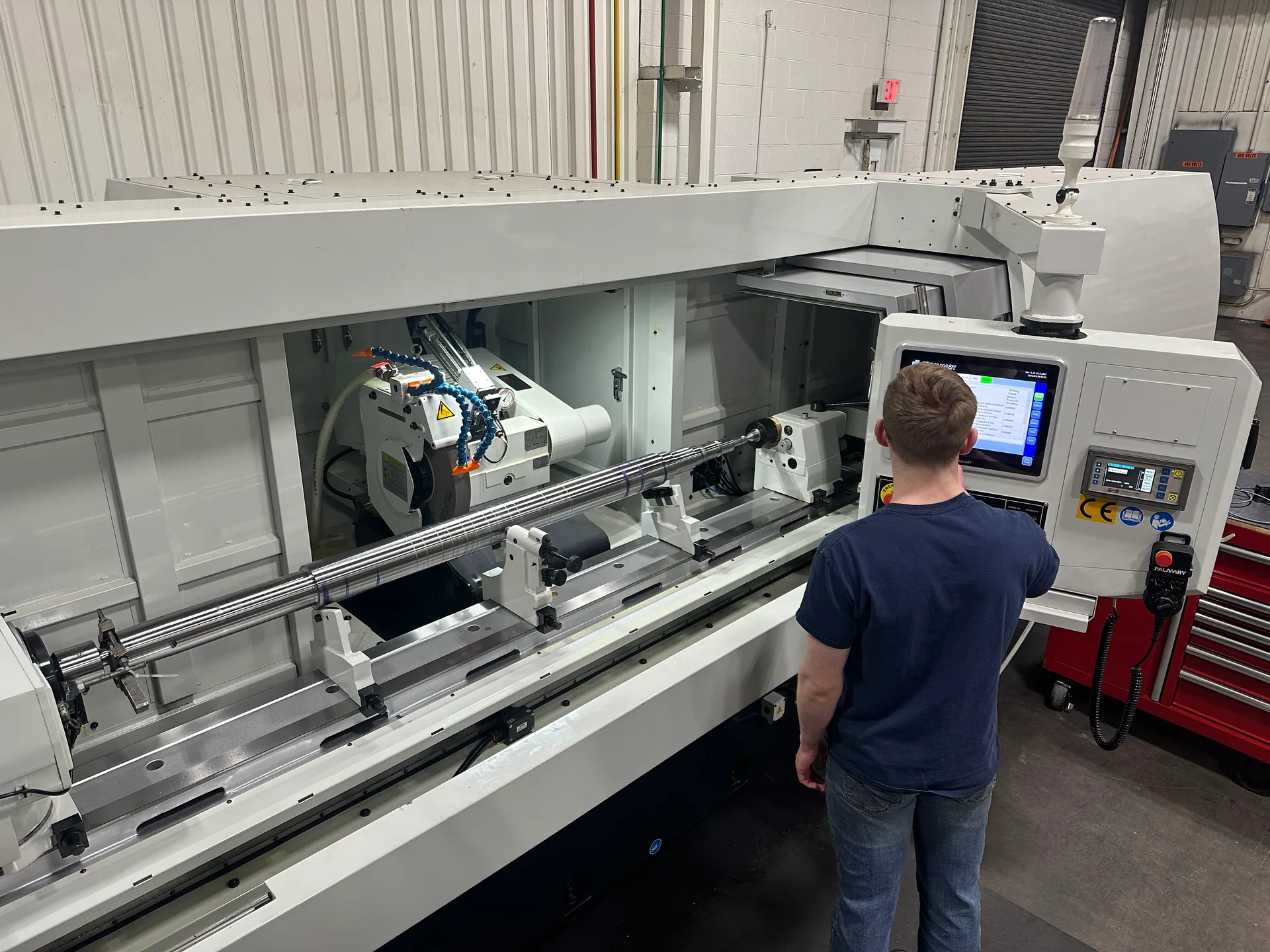
HFW Industries provides precision grinding services for critical industrial components, especially parts that have been coated, rebuilt, or machined to near-final size. Grinding is where the final geometry is created: bearing fits, seal surfaces, journal diameters, bore dimensions, runout, and surface finish.
HFW brings 75+ years of experience and more than 15 grinding and finishing machines to critical industrial parts.
That grinding capability is integrated with thermal spray, hardfacing, machining, EMRO inspection, and assembly. Customers in power generation, oil & gas, chemical processing, marine service, pulp & paper, mining, and high-tech manufacturing rely on HFW to return parts to service with the right dimensions and documentation.
Inside Our Plant
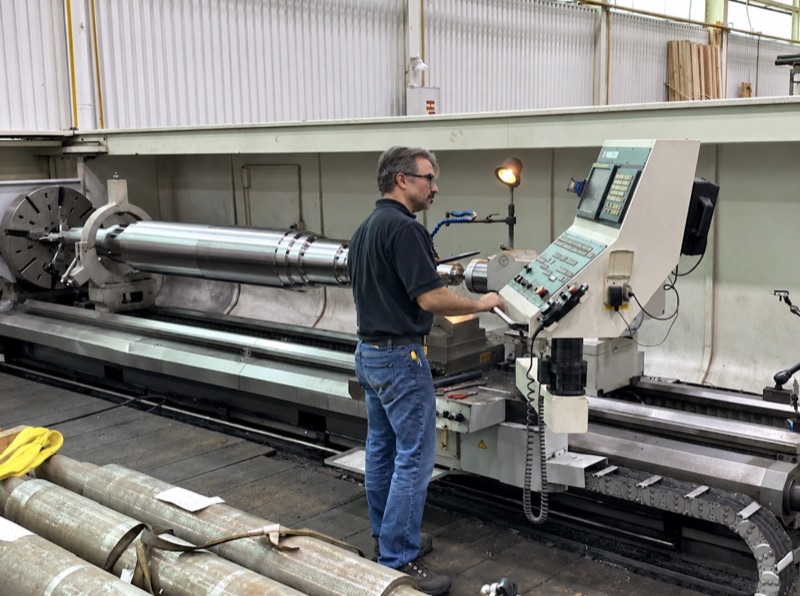
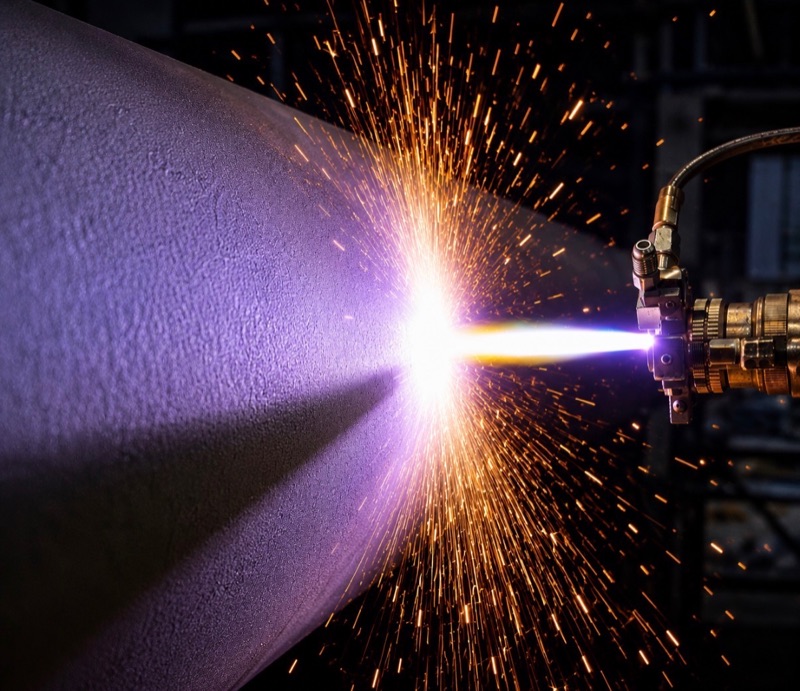
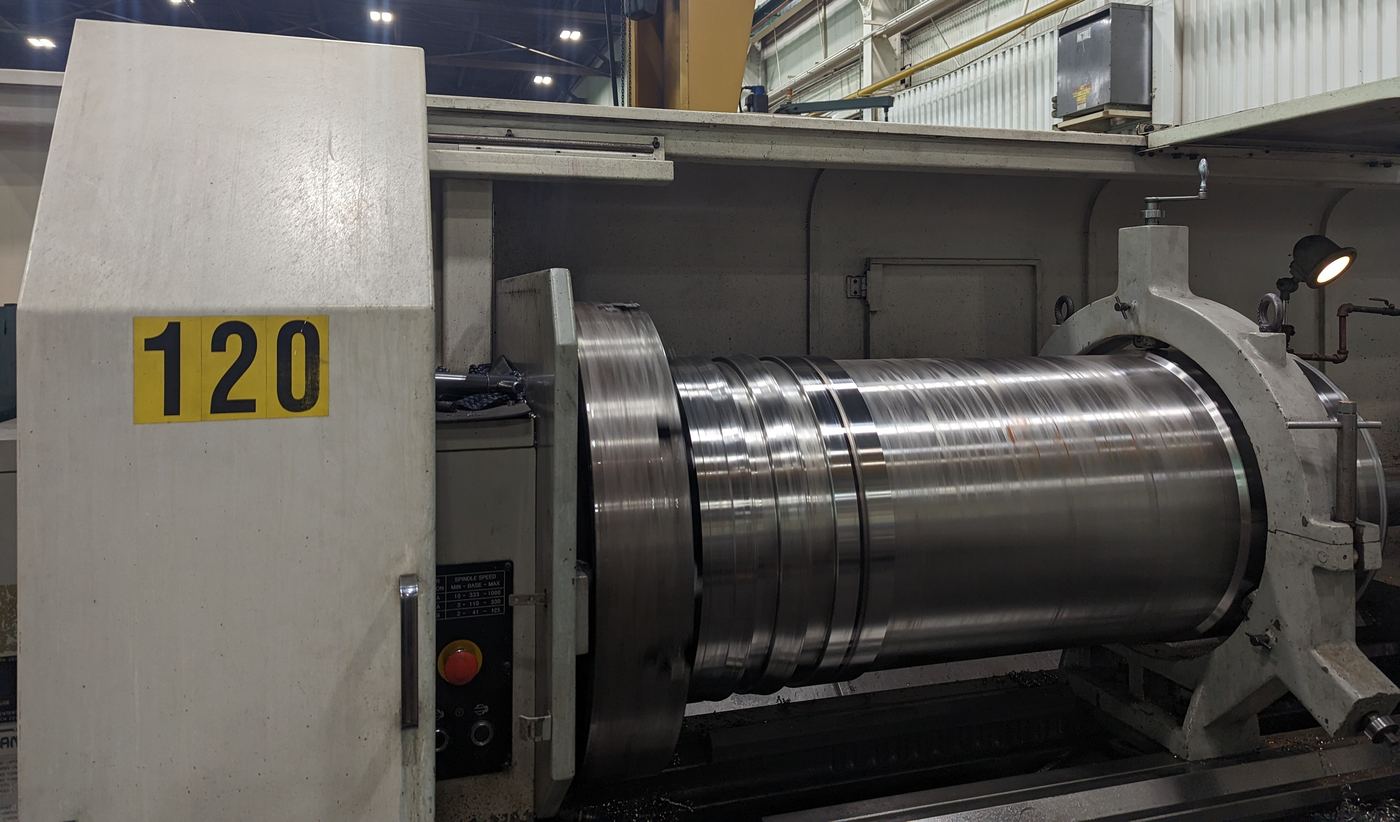
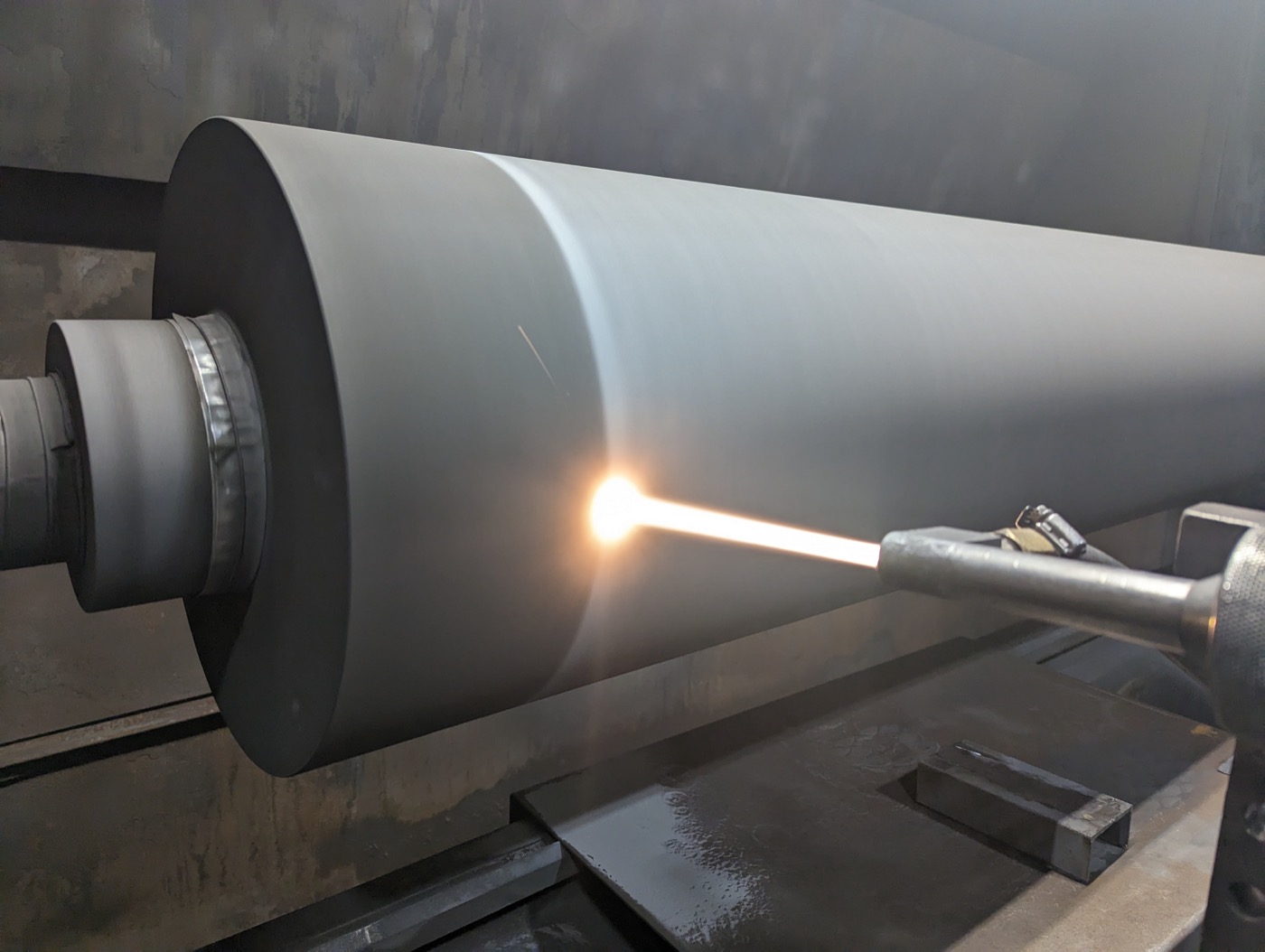
Precision Grinding Gallery
The Process
What Precision Grinding Solves
Machining can establish form. Coating and weld overlay can restore material or add wear resistance. Precision grinding creates the final fit, surface, and runout condition that lets the part perform in the field. That is why grinding is not an afterthought at HFW. It is a core operation in our rebuild, coating, and manufacturing model.
Coated Shaft Finishing
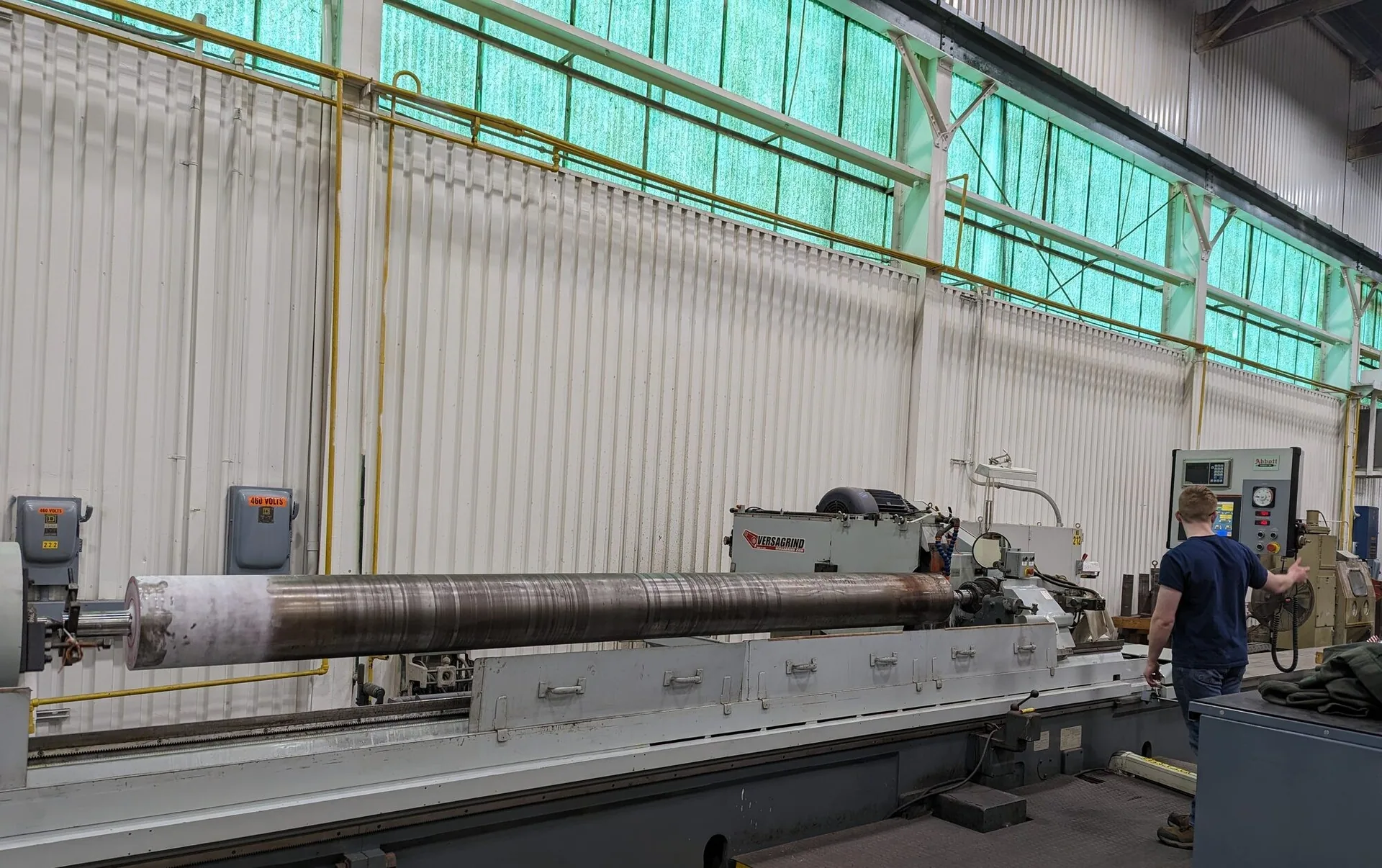
Finish coated ODs—whether tungsten carbide, chrome carbide, ceramic, plasma spray, or other materials—to final dimension and surface finish.
Precision Bore Restoration
ID grinding for bearing housings, seal housings, pump casings, sleeves, and coated bores where boring cannot hold the final requirement.
Rotating Equipment Reliability
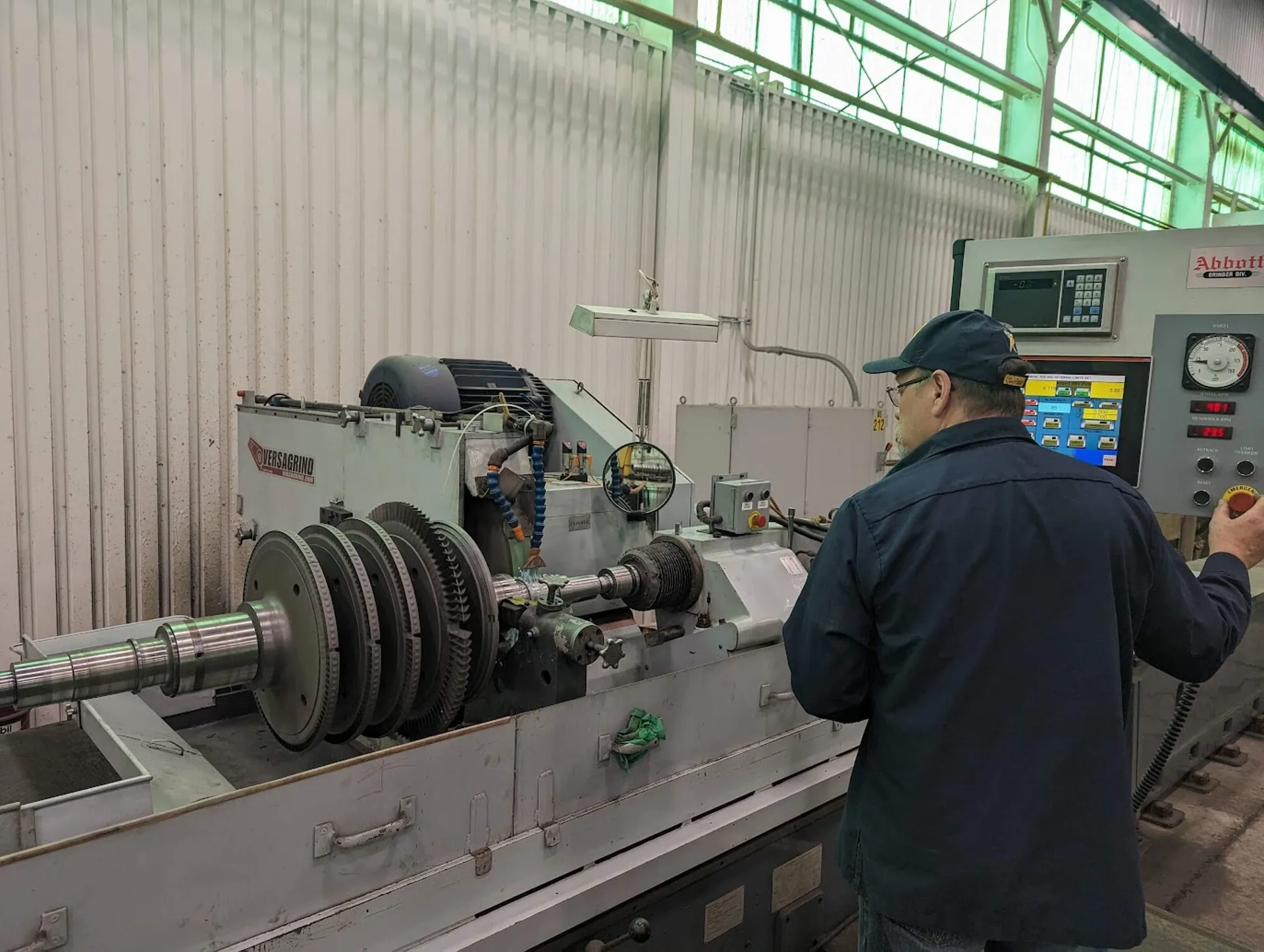
Control diameter, surface finish, runout, and fit on turbine shafts, generator shafts, compressor rotors, pump shafts, and journals.
Capabilities
Grinding and Finishing Processes
Cylindrical OD Grinding
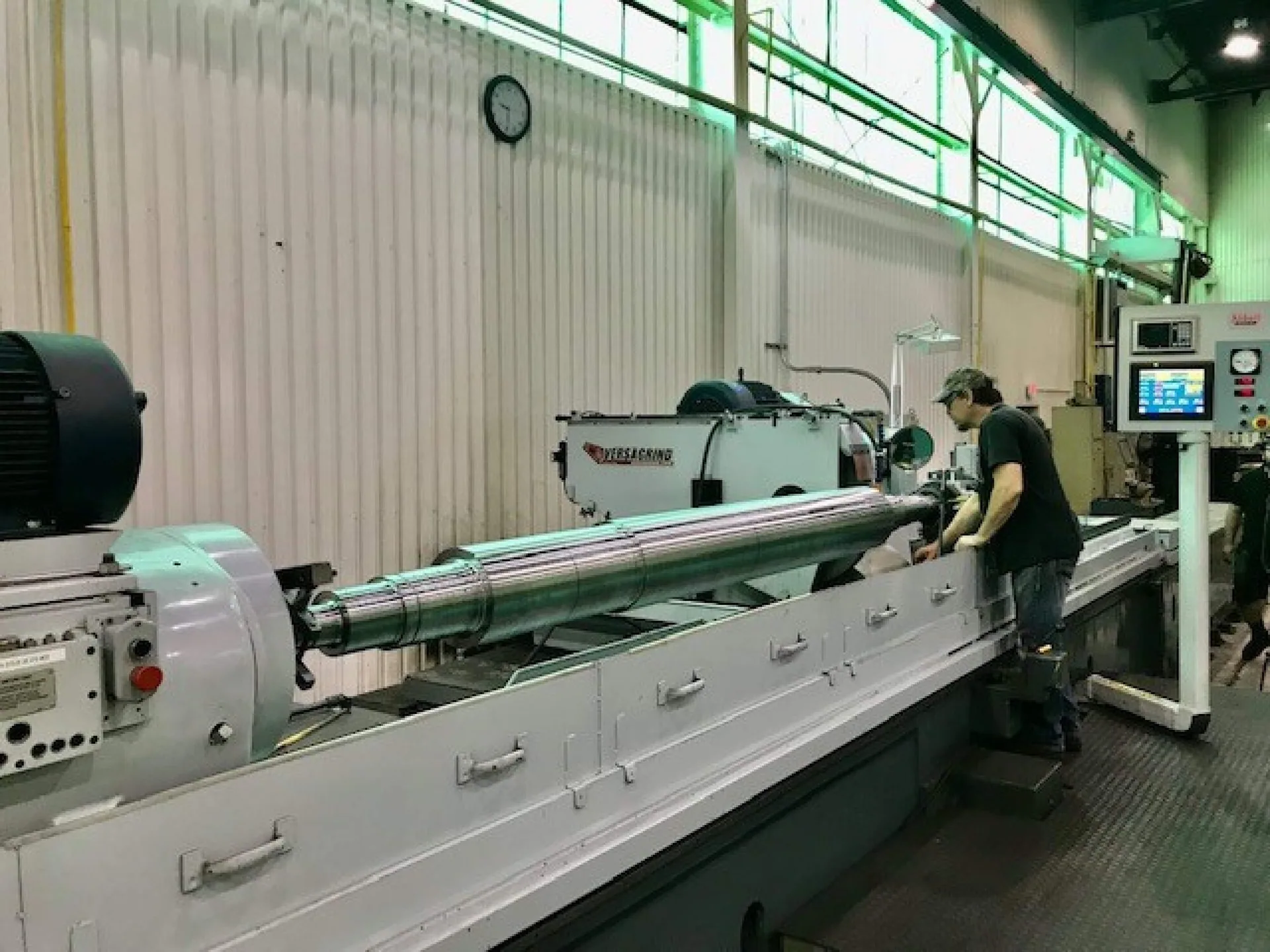
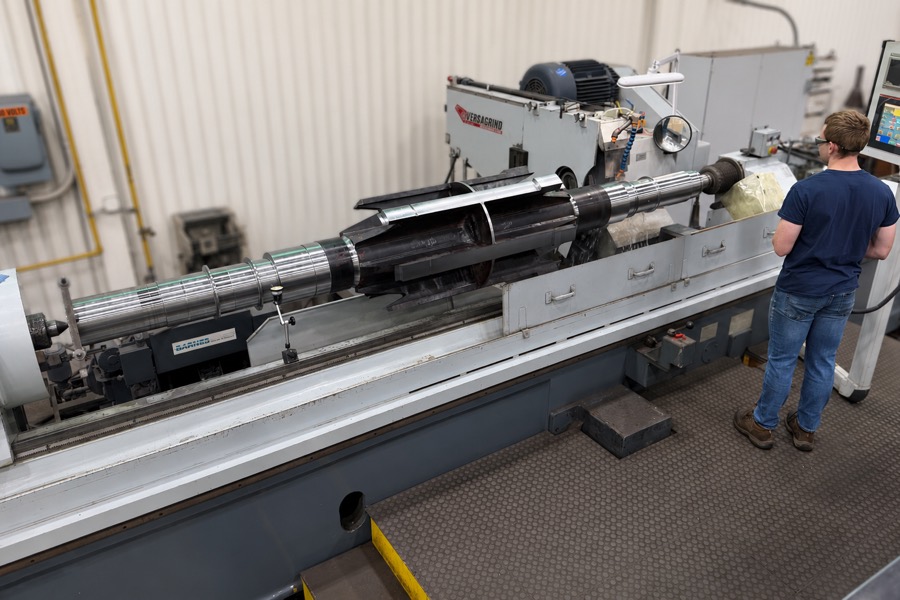
Conventional cylindrical grinding up to 30-inch diameter x 288 inches long, plus CNC grinding for qualified rotating components.
Internal Diameter (ID) Grinding
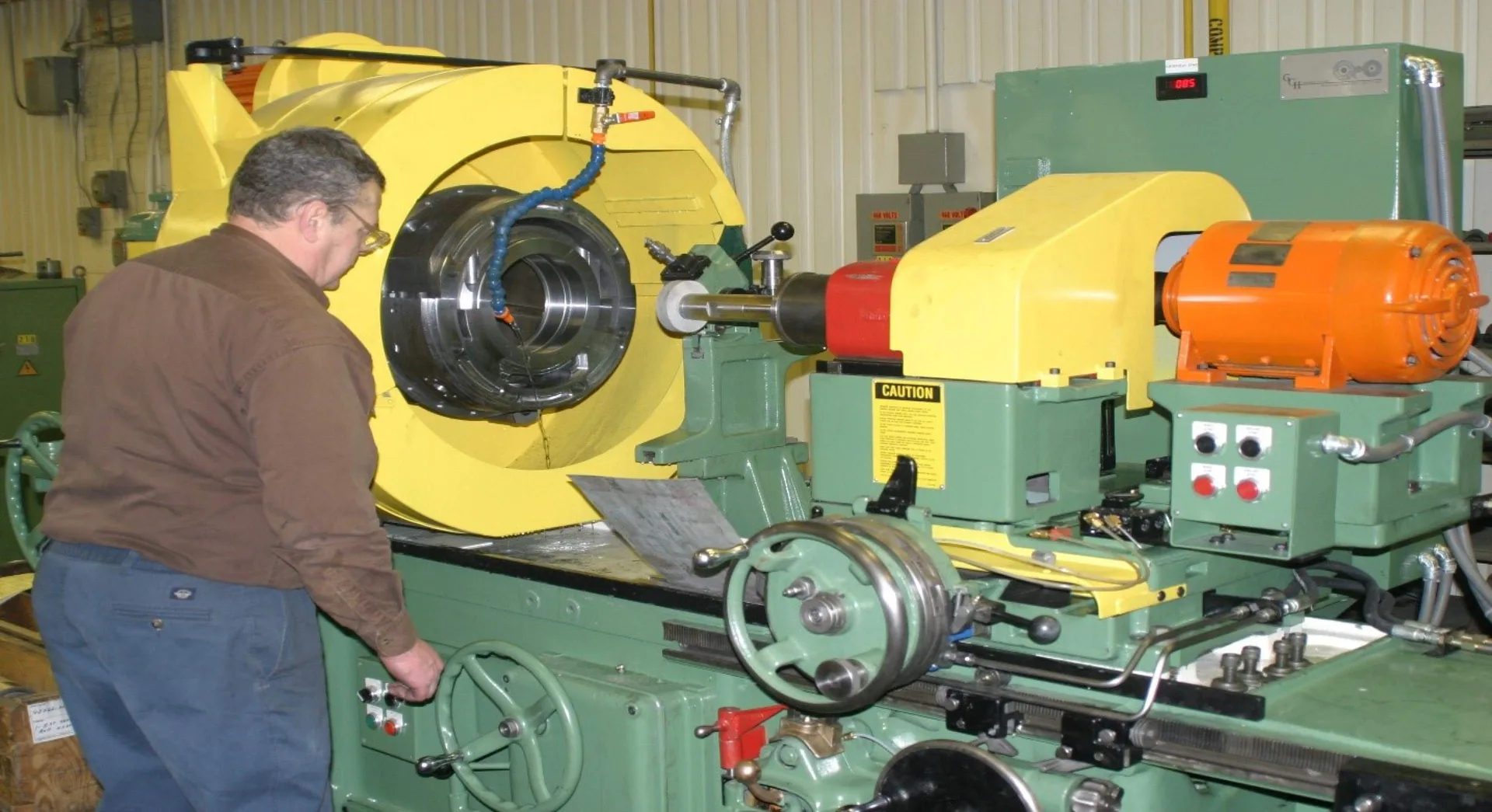
ID grinding capability for 1 inch to 36-inch internal diameters with a 24-inch stroke.
Surface Grinding
Flat surface grinding for sealing faces, shoulders, thrust surfaces, mounting faces, and precision flatness requirements.
Superfinishing
Fine finishing for bearing and seal surfaces where controlled surface texture affects wear, leakage, and vibration performance.
Honing
Bore correction and finish optimization for ID features up to 36 inches where the application requires controlled geometry.
CNC Precision Grinding
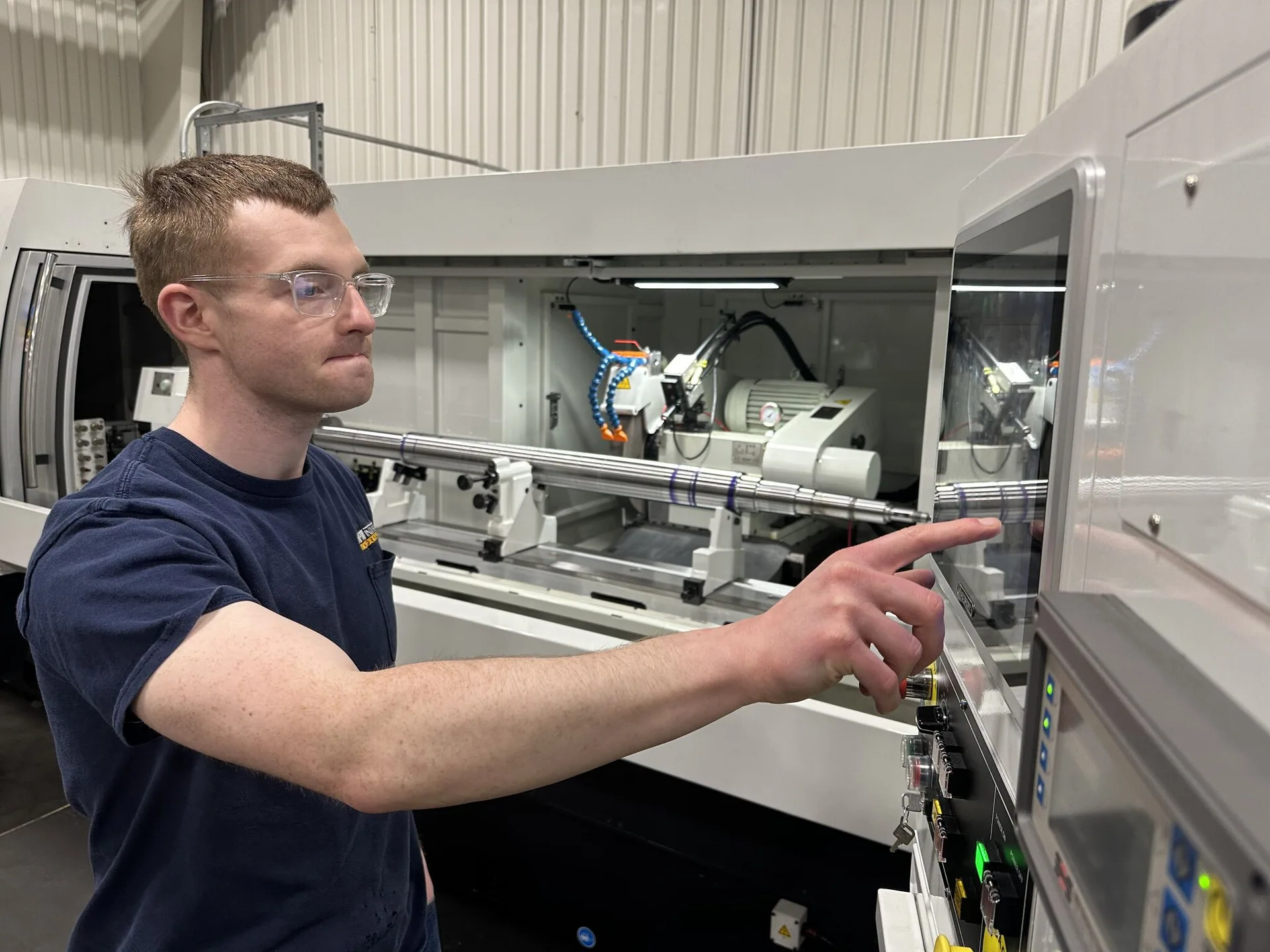
CNC grinding services for coated shafts, journals, bearing areas, seal surfaces, and other fit-critical industrial components.
Coated Surface Finishing
Grinding Is Where Coatings Become Finished Bearing and Seal Surfaces
HVOF tungsten carbide, chrome carbide, ceramics, and other thermal spray coatings are engineered for wear, corrosion, or dimensional restoration. But after coating, the part still needs the right diameter, texture, and geometry. HFW grinds coated surfaces to final specification so the coating performs as a working journal, seal surface, bearing diameter, or mating fit.
This especially matters on rotating equipment. A shaft can have the right coating chemistry and still fail the application if the final surface has the wrong runout, finish, or diameter. HFW keeps coating and grinding in the same facility so stock allowance, masking, finish requirements, and inspection criteria are coordinated before the coating is applied.
EMRO Inspection
How Perfectly Do Your Shafts Spin?
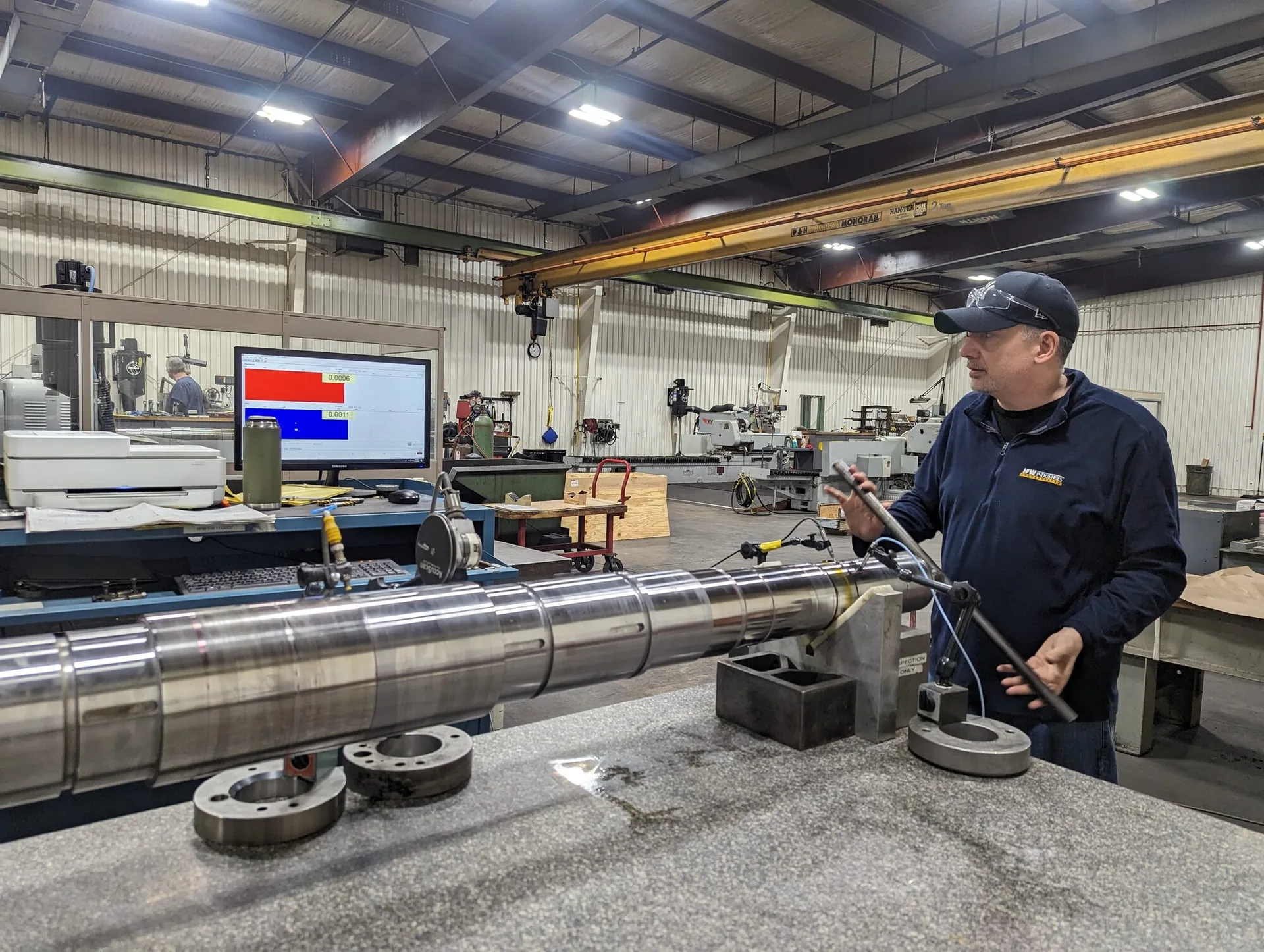
Mechanical runout measures geometry. Electrical runout captures signal behavior that can affect proximity probes and vibration monitoring systems. For high-speed rotating equipment, both matter.
HFW performs electrical-mechanical runout (EMRO) inspection using proximity sensors and prepared probe areas. The goal is straightforward: verify that the finished shaft or rotor will not create misleading vibration signals or premature reliability problems after it goes back into service.
Read About EMRO InspectionOne-Source Workflow
Precision Grinding Inside the Full Rebuild Sequence
When grinding is outsourced after machining or coating, the supplier doing the final finish inherits decisions made earlier by someone else. HFW avoids that problem by coordinating machining stock, coating thickness, grinding allowance, and inspection requirements internally.
Typical Coated Shaft Sequence
- Incoming inspection and dimensional review
- Machine worn surfaces to clean geometry
- Prepare surface and apply HVOF or other coating
- Cylindrical grind to final diameter and finish
- Inspect runout, surface finish, and critical dimensions
Typical Bore Rebuild Sequence
- Inspect housing, bore, and mating requirements
- Machine or bore to remove damaged material
- Coat or rebuild the bore when material restoration is needed
- ID grind to final bore size and finish
- Verify concentricity, fit, and inspection records
Common Precision Grinding Applications
HFW's grinding and finishing work supports industrial components where small dimensional errors can become vibration, leakage, wear, assembly problems, or unplanned downtime. Common applications include:
- Turbine shafts, generator shafts, and motor shafts
- Compressor rotors, pump shafts, and piston rods
- Bearing journals, seal areas, and thrust surfaces
- HVOF tungsten carbide and chrome carbide coated surfaces
- Bearing housings, seal housings, and pump casings
- Internal bores, sleeves, barrels, and centrifuge components
- Processing rolls and paper/pulp equipment
- Vacuum pump and rotating assembly rebuilds
Power Generation
Generator shafts, rotor assemblies, seal and bearing housings, inlet pipe surfaces, and valve components ground to final specification for utilities and OEMs.
Oil & Gas
Compressor rods and pistons, shaft sleeves and spacers, journal and thrust housings, and balance pistons finished to tight tolerance for refining and upstream operations.
Chemical & Plastics
Mixer shafts, pump housings, centrifuge components, hydraulic rams, and processing rolls finished for demanding chemical process environments.
Turbomachinery
Industrial compressors, expanders, and turbine shafts where runout tolerances, surface finish, and bearing fits directly affect high-speed rotational reliability.
For reliability and maintenance teams, the RFQ is rarely just "grind this part." The real question is whether the finished component will install cleanly, run smoothly, and survive the next service interval.
Industries We Serve
Precision Grinding Across Heavy Industry
HFW supports grinding and finishing work for national and worldwide customers operating critical rotating equipment, coated components, and precision assemblies.
The HFW Advantage
Why Reliability Teams Choose HFW for Precision Grinding
Grinding Integrated with Coatings
HFW applies and finishes thermal spray coatings in one facility, aligning coating thickness, grinding stock, final dimensions, and surface finish from the start.
OD, ID, Surface, and Finish Capability
More than 15 precision grinding and finishing machines support cylindrical OD, internal diameter, surface grinding, honing, and superfinishing requirements.
Rotating Equipment Focus
Turbines, compressors, pumps, generators, and other rotating equipment need more than diameter control. HFW understands runout, surface finish, bearing fits, and proximity probe behavior in service.
ISO 9001:2015 Quality
Documented travelers, calibrated inspection equipment, surface finish checks, EMRO capability, CMM support, and final QC signoff support demanding industrial RFQs.
Related Reading
Precision Grinding Services & Resources
Explore focused grinding service pages and related technical resources.
CNC Precision Grinding Services
CNC grinding for coated shafts, journals, bearing areas, seal surfaces, and rotating equipment features.
ID GrindingInternal Diameter Grinding Services
ID grinding for bores, housings, sleeves, bearing areas, seal surfaces, and coated bore surfaces.
Quality & ReliabilityElectrical Mechanical Runout (EMRO)
How EMRO inspection detects hidden shaft issues standard dial indicators can miss.
Frequently Asked Questions
Precision Grinding FAQ
Answers reliability, maintenance, OEM, and procurement teams need when evaluating an industrial grinding supplier.
What precision grinding services does HFW Industries provide?
HFW provides cylindrical OD grinding, internal diameter grinding, surface grinding, superfinishing, honing, coated-surface grinding, shaft finishing, bore finishing, and precision finishing as part of one-source rebuild and manufacturing workflows.
What grinding tolerances can HFW hold?
Tolerance depends on geometry, material, coating type, workholding, and inspection requirements. HFW routinely supports tight industrial grinding requirements and can hold tolerances as tight as 0.0002 inches on qualified critical features. We confirm the tolerance plan during quoting so the print, process, and inspection method match the part.
Can HFW grind HVOF tungsten carbide and other thermal spray coatings?
Yes. HFW routinely grinds HVOF tungsten carbide, chrome carbide, ceramic, plasma spray, and other coated surfaces to final diameter and finish. Grinding is often the operation that turns a coating into a finished bearing, seal, or journal surface.
Why is precision grinding important after coating or rebuild?
Coatings and weld overlays restore material or improve surface properties, but grinding defines the final geometry. Without the right grinding sequence, a coated shaft or rebuilt bore can still fail on bearing fit, seal finish, runout, or surface texture.
Does HFW provide EMRO inspection after grinding?
Yes. For critical rotating components, HFW can perform electrical-mechanical runout inspection to help verify that finished shafts and rotors will behave correctly with proximity probes and vibration monitoring systems in the field.
Ready to Discuss Your Project?
Whether you need new equipment, component rebuilds, or advanced surface coatings, HFW Industries delivers long-lasting, high-performance solutions.