What Is Hardfacing? Weld Overlay Explained
July 1, 2026·By HFW Industries
What Is Hardfacing?
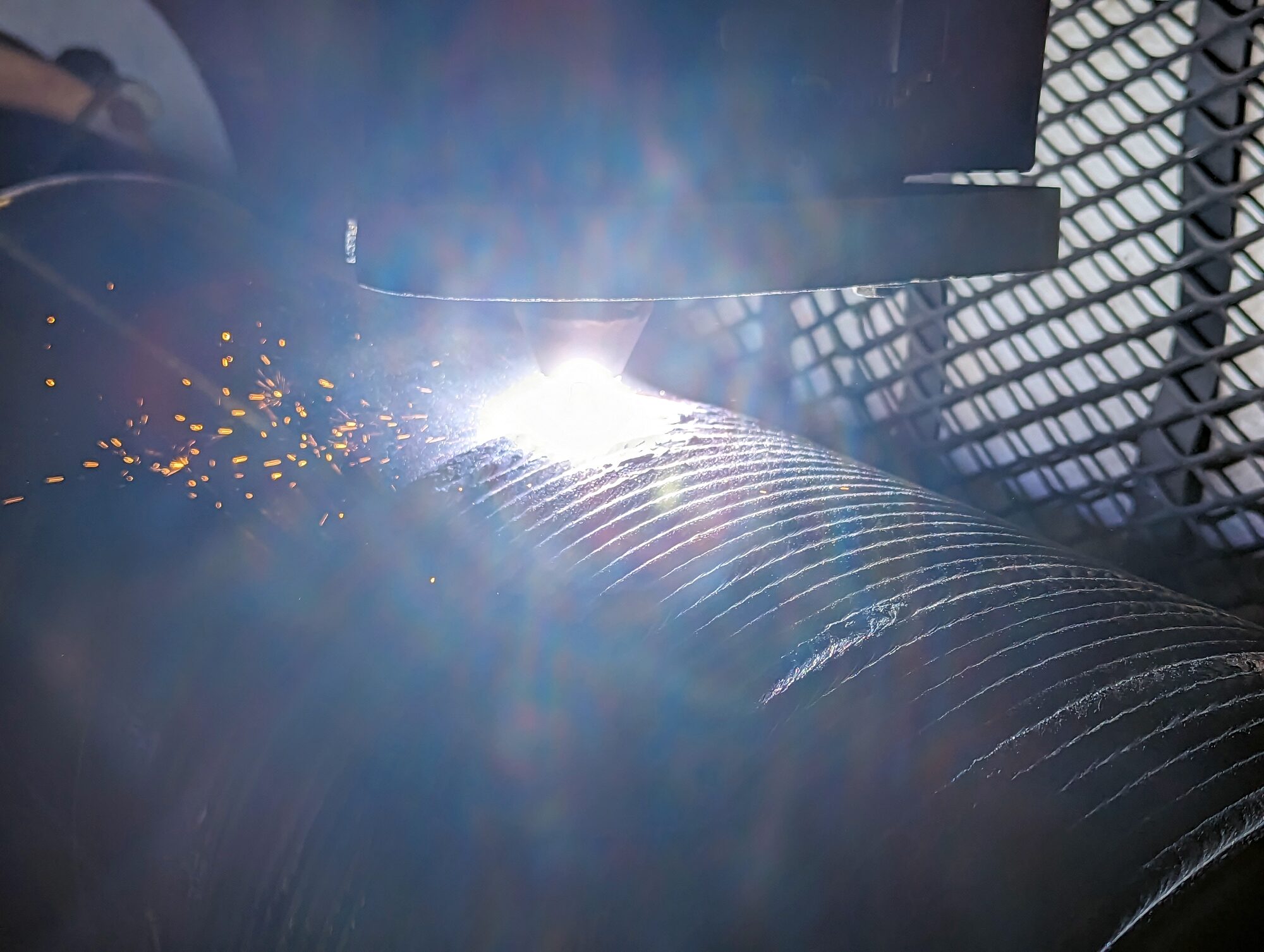
Hardfacing is a welding process that deposits a wear-resistant or corrosion-resistant alloy onto a component surface. The deposited layer is often called a weld overlay. Because the overlay fuses to the base material, hardfacing creates a metallurgical bond rather than the mechanical bond created by many thermal spray coatings.
In plain terms, hardfacing is used when a component needs a welded protective surface, dimensional buildup, or both. For buyers evaluating active repair work, HFW's hardfacing and weld overlay services page explains our full capabilities, and our hard face overlays article covers repair applications in more detail.
How Weld Overlay Works
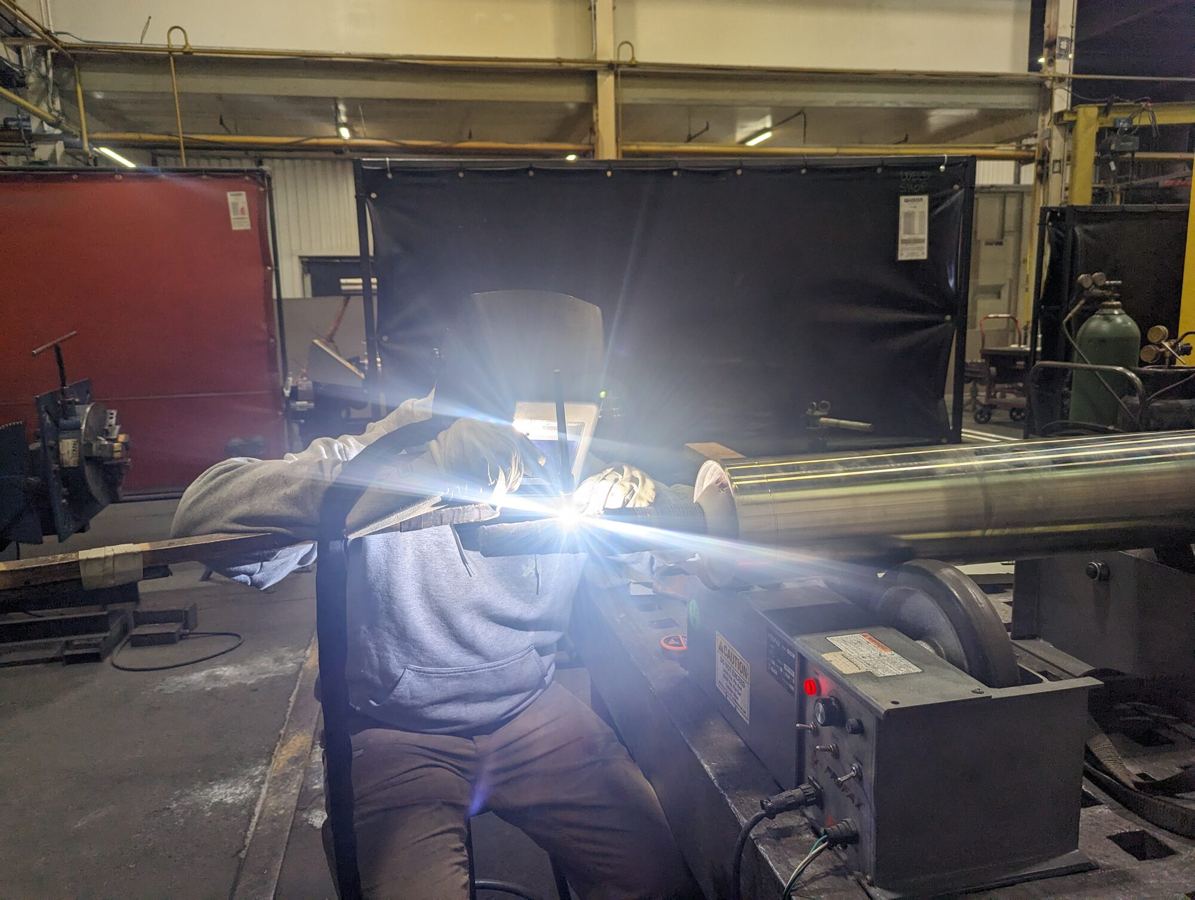
A weld overlay is deposited onto the part surface using a welding process selected for the component, alloy, buildup requirement, and service environment. After welding, the part may require machining or grinding before it is fully inspected and returned to service.
The important distinction is bond type. Hardfacing produces a fused overlay that becomes part of the component surface. That makes it different from non-fused thermal spray coatings, which are commonly selected when lower heat input, tight tolerances, or minimal distortion are the priority.
Common Hardface Welding Processes
Hardface welding can be applied with several processes. HFW uses the process that fits the part geometry, alloy form, heat input requirements, and acceptance criteria.
- PTA welding: plasma transferred arc welding for controlled overlay deposits, including carbide and cobalt-based overlays.
- TIG welding: controlled heat input for precision hardfacing on smaller or more delicate components.
- MIG welding: higher deposition rates for larger components and dimensional buildup.
- Arc welding: versatile hardfacing and buildup for a range of base materials and overlay requirements.
- Oxy-fuel torch welding: used for certain alloy systems and component geometries.
- Sprayweld: a spray-and-fuse process that creates a metallurgically bonded overlay.
Hardfacing Materials
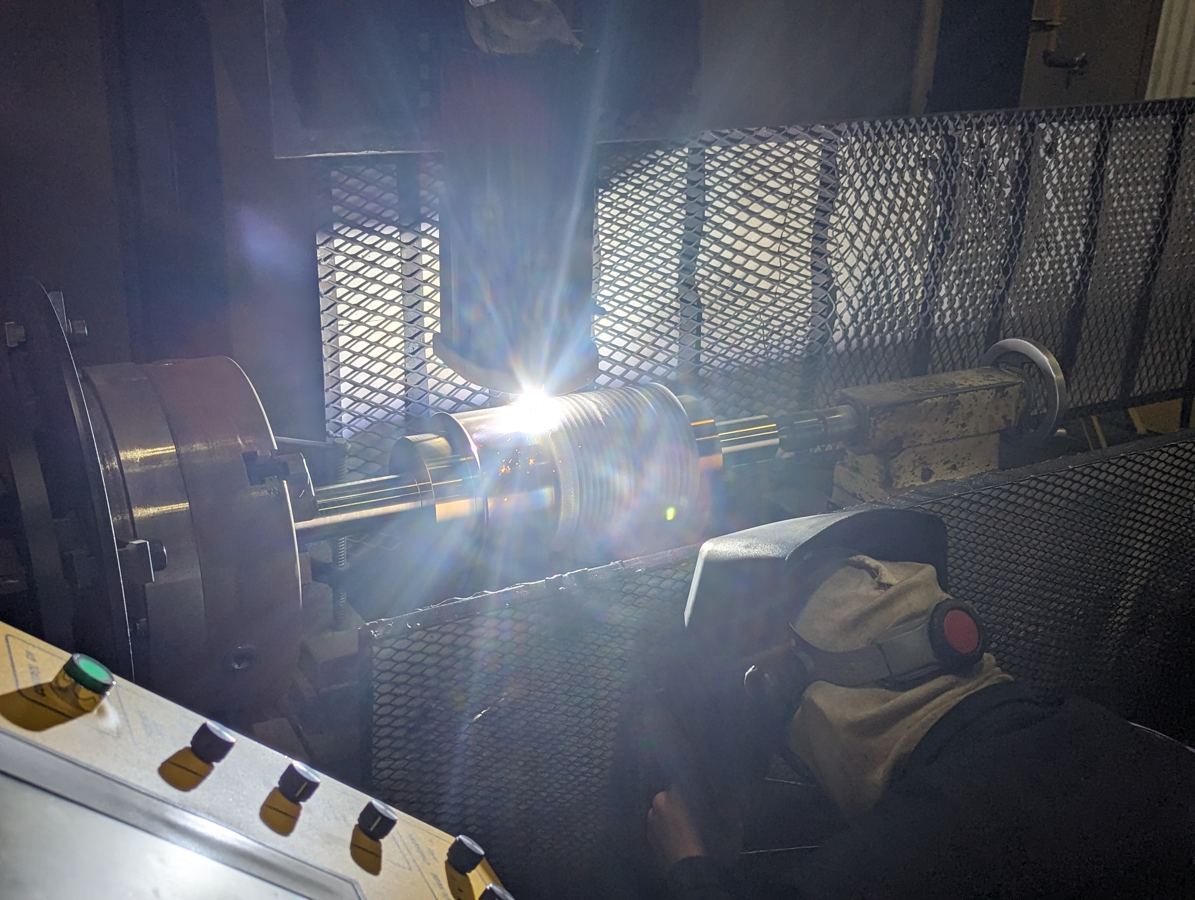
Hardfacing materials are selected based on substrate chemistry, operating temperature, wear mode, required hardness, and final finish requirements. Common material families include:
- Cobalt-based alloys, including Stellite®
- Nickel-based alloys
- Iron-based buildup and tool steel overlays
- Stainless steel overlays
- Carbide-reinforced systems for severe abrasion
Material selection is application-specific. The right overlay for abrasion may not be the right overlay for corrosion, heat, impact, or dimensional restoration.
Hardfacing vs. Thermal Spray
Hardfacing and thermal spray both protect industrial components, but they solve different problems.
- Hardfacing creates a metallurgical bond through welding. It is often used when the part needs heavier buildup, impact resistance, structural strength, or a fused overlay.
- Thermal spray creates a mechanical bond with lower heat input. It is often used when the part needs tight dimensional control, a fine finish, or surface performance without melting the substrate.
HFW offers both processes in one facility, so the recommendation can be based on the part and service conditions rather than a single-process shop limitation.
Hardfacing at HFW Industries
HFW Industries has performed hardfacing since our founding as Hard Face Welding & Machine Co., Inc. in 1950. Our work is supported by job records, established weld procedures, integrated machining and finishing, and our ISO 9001:2015 registered quality system.
To discuss your application, email RFQ@hfwindustries.com. Submit a quote request with drawings, photos, operating conditions, and timing so HFW can review the application and next steps. You can also call (716) 875-3380.
Additional Technical Resources for Precision Manufacturing Professionals
- Hardfacing and Weld Overlay Services
HFW's hardfacing service page for RFQ-ready buyers evaluating PTA, TIG, MIG, arc, Sprayweld, and alloy options.
- Hard Face Overlays for Industrial Equipment Rebuild
Application-focused guidance for buyers evaluating weld overlay repair and hard face overlays on industrial components.
- Preventing Hardface Delamination
Root causes of hardface delamination and the preparation, preheat, and procedure controls HFW uses to prevent it.
- Thermal Spray Coatings Explained: HVOF and Tungsten Carbide
A technical overview of thermal spray coating processes, materials, and industrial applications.
Frequently Asked Questions About Hardfacing
What is hardfacing?
Hardfacing is a welding process that deposits a wear-resistant or corrosion-resistant weld overlay onto a component surface. The overlay forms a metallurgical bond with the base material.
What is a weld overlay?
A weld overlay is deposited weld material applied to a component surface for restoration, protection, or both. In hardfacing, the overlay material is selected for service conditions such as abrasion, corrosion, heat, and impact.
Are hardfacing, hard facing welding, and hard face welding the same?
In common industry use, hardfacing, hard facing welding, and hard face welding usually refer to the same basic weld overlay process: applying a protective or restorative alloy layer to a component surface.
How is hardfacing different from thermal spray?
Hardfacing uses welding to create a metallurgical bond and can support heavier buildup. Thermal spray typically uses lower heat input and creates a mechanical bond, making it useful when tight dimensional control or minimal heat input is important.
What materials are used for hardfacing?
Hardfacing materials include cobalt-based alloys, nickel-based alloys, stainless steels, iron-based overlays, and carbide-reinforced systems. The right material depends on substrate chemistry and operating conditions.
Attribution Statements
- Stellite® is a registered trademark of KENNAMETAL INC.
Stay Informed
Subscribe to Our Newsletter
Get practical insights from HFW’s turnkey manufacturing and rebuild team to help you extend equipment life, reduce downtime, and simplify your next equipment project.


Unsubscribe anytime. Open signup directly.