Hard Chrome Plating Alternatives: Why Industry Is Turning to HVOF
June 16, 2026·By Nolan Watson
Reliability engineers and procurement managers across chemical processing, power generation, and oil and gas have increasingly evaluated hard chrome plating alternatives, and the urgency is no longer theoretical. Two converging regulatory actions are compressing the supply of compliant chrome plating vendors and raising costs for those that remain: the U.S. EPA's regulatory focus on chrome finishing facilities and California's 2039 deadline for the phaseout of hexavalent chromium in functional industrial plating.
For facilities that depend on chrome-plated industrial equipment, including rotating components, the time to qualify an alternative is now. This article covers the regulatory landscape driving the transition, why High Velocity Oxy-Fuel (HVOF) thermal spray coatings have become a field-validated hard chrome replacement across multiple industries, and how HFW Industries delivers a turnkey solution from coating through finish grinding in one facility.
Why Chrome Plating Suppliers Are Under Pressure Right Now
Electrolytic hard chrome (EHC) plating has been the default surface hardening treatment for industrial rotating equipment for decades. That default is unraveling on two regulatory fronts.
U.S. EPA: the EPA's rulemaking for chrome finishing facilities focuses on PFAS-based chemical fume suppressants, the compounds plating shops rely on to control hazardous hexavalent chromium air emissions. As PFAS restrictions tighten, platers will face compounding compliance costs and capacity constraints.
California CARB: the California Air Resources Board's Chrome Plating ATCM addresses hexavalent chromium emissions from chrome plating. The 2023 regulatory action became effective January 1, 2024, and set a 2039 deadline for the phaseout of hexavalent chromium in functional hard chrome plating. Because California regulation can influence national supply chains, this deadline has implications well beyond California's borders.
As plating shops exit the market or reduce capacity to manage compliance costs, lead times for chrome-plated components can lengthen, and qualified alternative vendors may become harder to source on short notice. Facilities that begin qualification of HVOF alternatives now avoid that scramble during a planned outage or turnaround.
HVOF Thermal Spray: The Validated Hard Chrome Plating Alternative
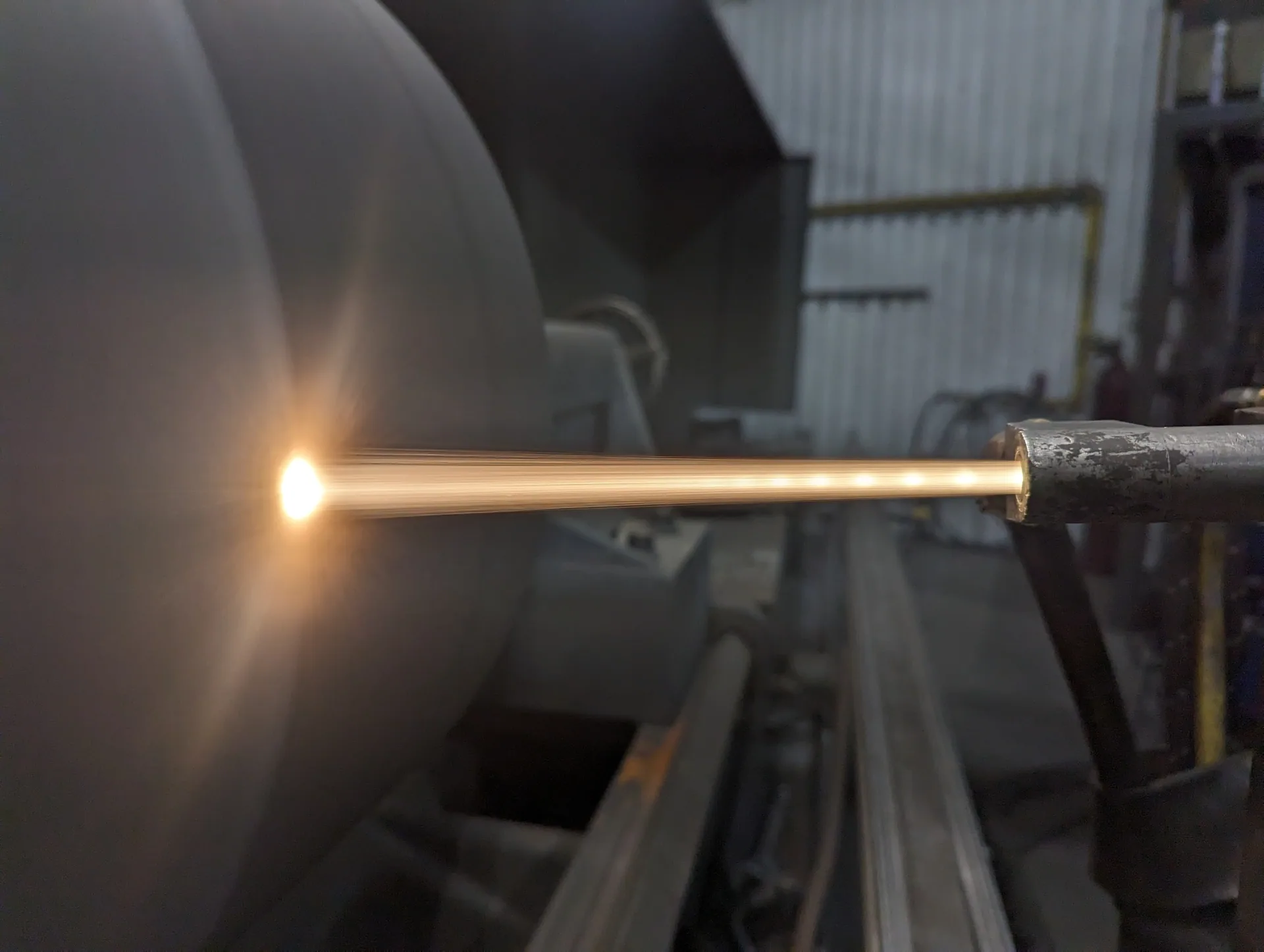
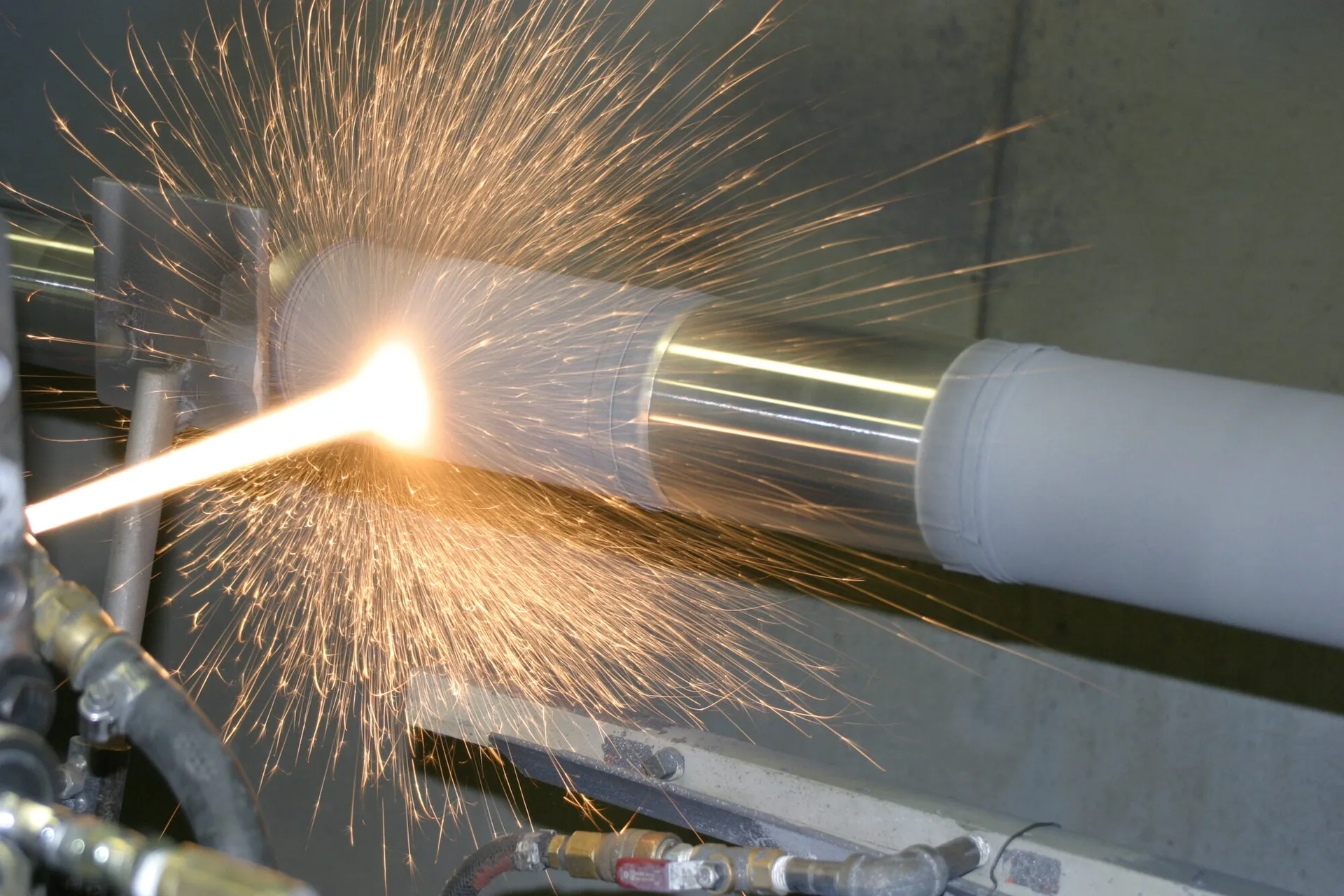
HVOF thermal spray coating is not a new or experimental process. HFW Industries has been applying HVOF coatings for more than 30 years. Unlike electroplating, which relies on a hazardous chemical bath, HVOF is a kinetic process: powdered feedstock is heated in a high-pressure combustion flame and propelled at supersonic velocity onto a prepared substrate.
The particles flatten on impact and mechanically lock into a dense, low-porosity layer, with no hazardous bath chemistry involved.
What the DoD Testing Found
Department of Defense Hard Chrome Alternatives Team projects evaluated HVOF coatings against electrolytic hard chrome across aerospace components including landing gear, propeller hubs, and gas turbine engine parts. In a gas turbine engine component study, researchers described "extensive fatigue, fretting wear, salt-fog corrosion, and carbon-seal wear tests" on HVOF WC/17Co and other thermal spray coatings compared with hard chromium.
Across DoD/HCAT work, HVOF WC/Co coatings can match or outperform EHC in several performance categories, including fatigue, wear, corrosion, and hydrogen embrittlement. Results still depend on component geometry, substrate, coating thickness, and service conditions. The DoD work also supported the practical case for reduced operating costs, lower environmental-management burden, and shorter turnaround time compared with chrome plating in appropriate repair applications.
One key takeaway from the DoD comparative testing: "In general, WC-Co coatings last at least two to three times longer than hard chrome." HFW can discuss these reports with customers who are building a technical justification for moving from hard chrome to HVOF within their own organizations.
Selecting the Right HVOF Coating Material
No single coating material is optimal for every application. HFW's engineering team matches coating chemistry to the specific wear, temperature, and corrosion profile of each component. In place of hard chrome plating, the following coating families are often evaluated:
| Coating family | Where it is used |
|---|---|
| Tungsten Carbide / Cobalt (WC/Co/Cr) | Regarded as a benchmark choice for aggressive abrasion, sliding wear, and particle erosion on high-speed rotating equipment. Widely used as a hard chrome alternative on pump shafts, compressor shafts, piston rods, and valve stems across multiple industries. |
| Chromium Carbide / Nichrome (Cr3C2/NiCr) | Engineered for oxidation resistance at elevated temperatures up to 1,500°F, protecting components in high-heat environments where chrome plating cannot survive service conditions. |
| Tungsten Carbide / Nickel (WC/Ni) | Selected where corrosion resistance requirements favor a nickel matrix over cobalt, including some wet and chemically aggressive environments. |
| Nickel-based corrosion-resistant alloys | Applied in aggressive chemical environments where standard carbide coatings are not the primary fit. |
| 420 stainless steel | Selected as a cost-effective yet still reliable solution that has been successfully implemented in demanding applications such as turbomachinery. |
Hard Chrome Plating Alternatives by Industry
While the regulatory pressure driving the transition away from chrome plating is broad, the specific components and service conditions vary by industry. HFW has direct experience across the following verticals.
Power Generation and Oil & Gas
Turbine and compressor shafts, piston rods, valve stems, seal housings, and bushings in power generation and oil and gas facilities have historically relied on hard chrome plating for wear and corrosion resistance. These are high-value, long-lead components where an unplanned failure carries significant downtime cost.
HVOF coatings, particularly 420 stainless steel for general reclamation of shafts, WC/Co/Cr for wear-critical surfaces, and Cr3C2/NiCr for elevated-temperature applications, are some replacement options in these environments. HFW manufactures and restores power generation and oil and gas rotating components including turbine and turbocompressor shafts, rotor components, piston rods, valve seats and stems, and seal and bearing housings.
Chemical Processing
In chemical processing, hard chrome plating has been used on pump shafts, agitator shafts, hydraulic rams, feed screws, and plungers to resist the combined effects of corrosion and abrasive wear from aggressive process chemistries.
The transition away from chrome in this environment requires careful material selection, since not every HVOF coating is compatible with every chemical process. HFW evaluates each application individually, selecting from WC/Co/Cr, WC/Ni, nickel-based alloys, and proprietary materials based on the specific chemistry, operating temperature, and failure history of the component. HFW manufactures and restores chemical processing equipment including reactor shafts, pump shafts, agitator shafts and assemblies, valve stems, feed screws, and hydraulic rams.
Why Precision Finishing Makes or Breaks the Coating
Selecting the right HVOF coating material is necessary but not sufficient. The precision grinding step after coating application determines whether the component performs at specification.
Non-fused thermal spray coatings have microscopic surface porosity that reads differently on standard profilometers. Grinding these surfaces without HVOF-specific process knowledge can fracture, craze, or fully disbond the coating from the substrate.
Vendor fragmentation can cause field failures in HVOF-coated components. The coating is applied by one shop, finished by an outside grinder without HVOF-specific process knowledge, and the component fails in service. A single-source provider eliminates that risk entirely.
HFW: Single Source from Substrate to Final Dimension
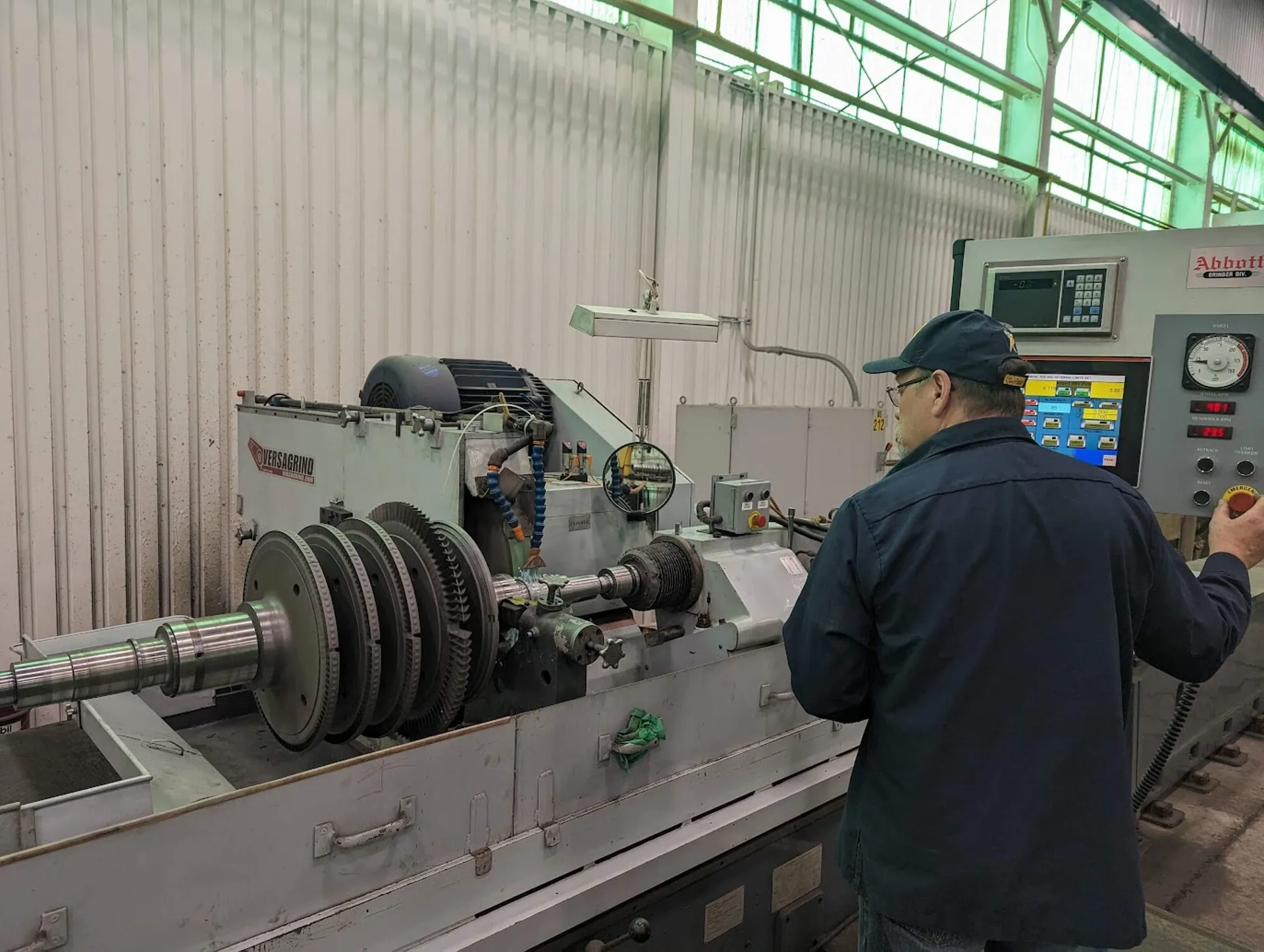
HFW operates as a turnkey facility at our Buffalo, NY location. A component arrives and does not leave our plant until it is finished. CNC machining, hardfacing weld overlay where needed, HVOF spray application, and final cylindrical grinding to 0.0002-inch tolerances are performed in one facility by a team with 75 years of experience working with precision industrial equipment.
No vendor handoffs. One source of accountability from receipt to final inspection.
For reliability engineers managing turnaround schedules, the single-source model reduces coordination overhead, compresses lead times, and eliminates the qualification risk of introducing an untested finishing vendor.
Ready to Discuss Your Chrome Replacement Needs?
Whether you are facing a regulatory deadline, a vendor capacity issue, or a component that has been chrome-plated for years and is due for a more durable solution, HFW can help evaluate the right hard chrome replacement path.
To discuss your application, email RFQ@hfwindustries.com. Submit a quote request with drawings, photos, operating conditions, and timing so HFW can review the application and next steps. You can also call (716) 875-3380.
About the Author
Nolan Watson writes about reliability, rebuild strategies, industrial manufacturing trends, thermal spray coatings, and precision grinding at HFW Industries.
Additional Technical Resources for Precision Manufacturing Professionals
- Thermal Spray Coating Services
HFW's thermal spray service page for HVOF coatings, hard chrome replacement, tungsten carbide, chrome carbide, and related coating work.
- HVOF Tungsten Carbide Coating Properties
Material properties, hardness, bond strength, finish, and application details for HVOF-applied tungsten carbide coatings.
- Tungsten Carbide Shortage 2026
What reliability and maintenance teams should know about tungsten carbide supply, pricing, lead times, and coating alternatives.
- Precision Grinding Services
How HFW finishes coated surfaces to final dimensions, tolerances, and surface finish requirements.
Frequently Asked Questions About Hard Chrome Plating Alternatives
What are common hard chrome plating alternatives?
Common hard chrome plating alternatives include HVOF coatings such as tungsten carbide cobalt, tungsten carbide cobalt chrome, chrome carbide nickel chrome, tungsten carbide nickel, nickel-based corrosion-resistant alloys, and stainless steel options such as 420 stainless steel. The correct replacement depends on the component, service environment, coating thickness, finish requirement, and failure mode.
What is the best alternative to hard chrome plating?
HVOF is often evaluated as the best alternative to hard chrome plating for shafts, rods, journals, seal surfaces, rolls, and other rotating or sliding components. The right hard chrome replacement still depends on the part geometry, wear mode, corrosion exposure, operating temperature, coating material, and final surface finish requirement.
Why are companies evaluating HVOF vs hard chrome?
Companies are evaluating HVOF vs hard chrome because chrome plating faces regulatory pressure, supplier capacity risk, and performance limits in some wear-critical applications. HVOF can provide dense, low-porosity coatings without a hexavalent chromium plating bath.
Can stainless steel be an alternative to hard chrome plating?
Stainless steel coatings, including 420 stainless steel in some applications, can be evaluated as an alternative to hard chrome plating when the service conditions fit the coating's wear, corrosion, and finishing limits. HFW also evaluates tungsten carbide, chrome carbide, nickel-based alloys, and other HVOF coatings when a different hard chrome alternative is better suited to the application.
Is HVOF a universal hard chrome replacement?
No. HVOF is a strong hard chrome replacement candidate for many shafts, rods, rolls, journals, seal surfaces, and rotating components, but the right choice depends on geometry, operating temperature, wear mode, corrosion exposure, coating material, and final finishing requirements.
Why does finish grinding matter after HVOF coating?
Finish grinding determines whether the coated component returns to service at the required dimension, tolerance, and surface finish. HFW performs coating and precision grinding in one facility to reduce vendor handoffs and finishing risk.
Stay Informed
Subscribe to Our Newsletter
Get practical insights from HFW’s turnkey manufacturing and rebuild team to help you extend equipment life, reduce downtime, and simplify your next equipment project.


Unsubscribe anytime. Open signup directly.