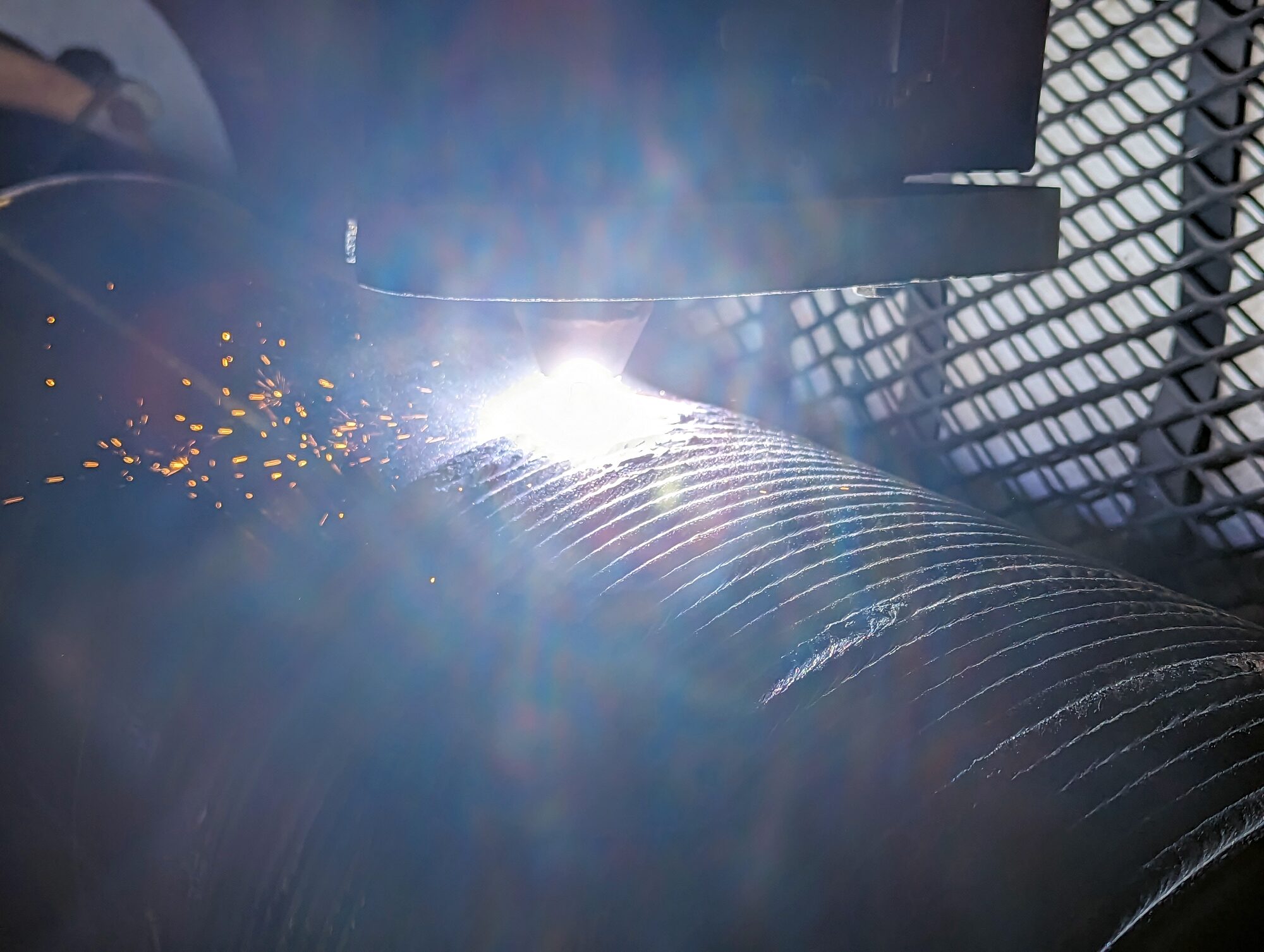
Hard Face Overlays for Industrial Equipment Rebuild
November 10, 2025·By Jack Watson and Nolan Watson
Hard face overlays help restore and protect industrial components exposed to wear, heat, corrosion, and impact. For more than 75 years, HFW Industries has used hardface welding and weld overlay repair to rebuild worn surfaces, add selective protection to new parts, and support demanding process equipment applications.
Since our founding as Hard Face Welding & Machine Co., Inc., we have accumulated the experience, job records, and process knowledge needed to support demanding hardfacing and weld overlay repair projects. We work across critical industries including chemical processing, oil & gas, and power generation.
As a one-source provider, HFW integrates hardfacing, precision machining, grinding/finishing, thermal spray coatings, assembly, and inspection in one facility.
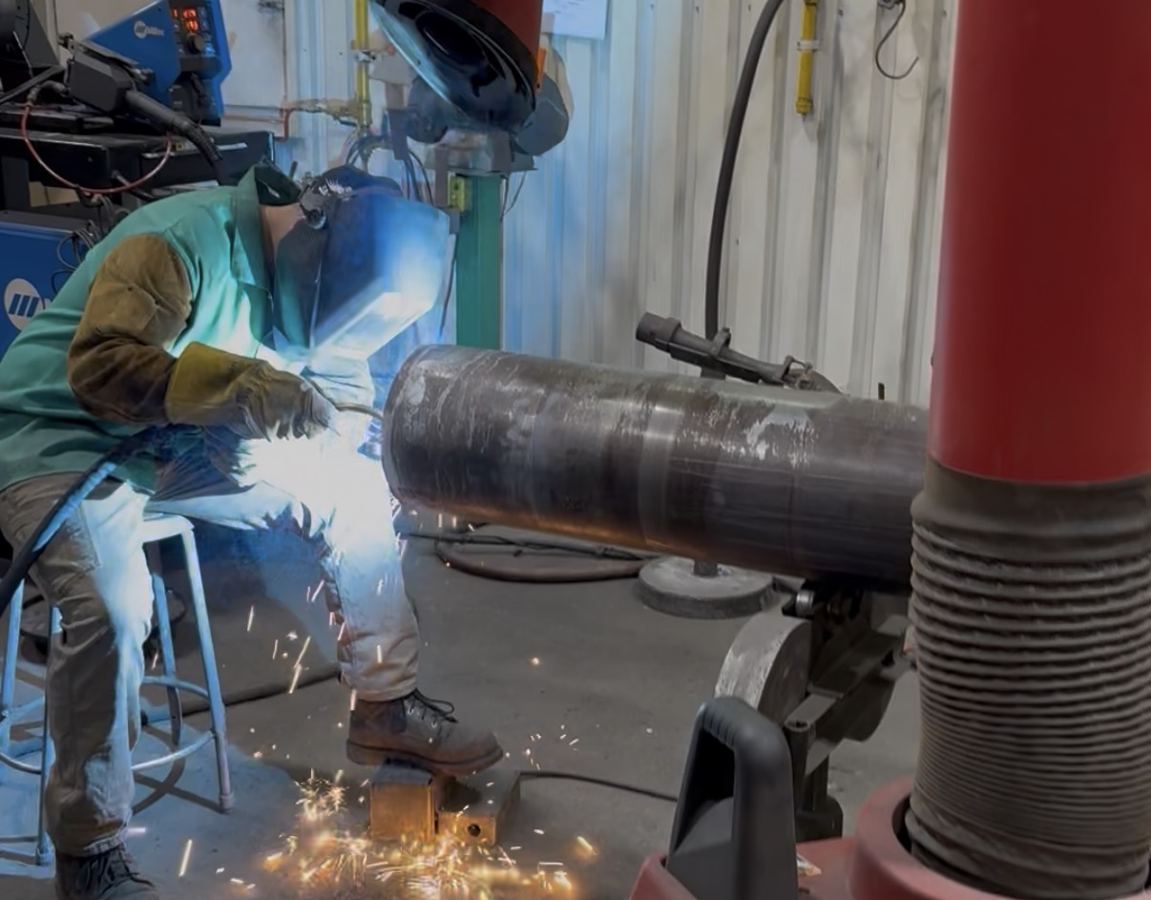
Benefits of Hard Face Overlays for Industrial Components
Hard face overlays can extend the service life of industrial components by adding a durable, metallurgically bonded overlay that resists abrasion, corrosion, heat, and impact. They allow worn parts to be restored to specification when the base component is a good repair candidate. Hardfacing can also be applied selectively to new components to prevent premature wear in critical areas. With multiple welding processes, alloy options, and integrated machining and finishing in one facility, HFW delivers hardfacing solutions built for demanding industrial environments.
Hardfacing can be applied to:
- New parts for selective wear protection
- Worn components requiring dimensional restoration
- OEM or non-OEM equipment
- Heavy-duty components exposed to severe service conditions
Hardfacing Experience for Repeatable Weld Overlay Repair
Our extensive job record library, built over seven decades, and our established welding procedures enable us to repeat successful applications even years later. Every job is supported by modern welding equipment and controlled through our ISO 9001:2015 registered quality system, with inspection at each operation.
HFW has hardfaced thousands of components used in:
- Chemical and plastics processing
- Power Generation & Turbomachinery
- Oil & Gas
- Mining & Extraction
- Pulp & Paper
- OEM manufacturing and capital equipment
Weld Overlay Repair Application Process
Every successful weld overlay repair project begins with a detailed understanding of three critical factors:
- Base metal chemistry
- The selected or recommended overlay alloy
- Clear acceptance and inspection criteria
Because hard face overlay requirements vary widely, the process selection depends on several factors, including:
- Size and geometry of the part
- Required hardness and alloy properties
- Operating environment
- Budget and lead-time constraints
- Amount of restoration needed
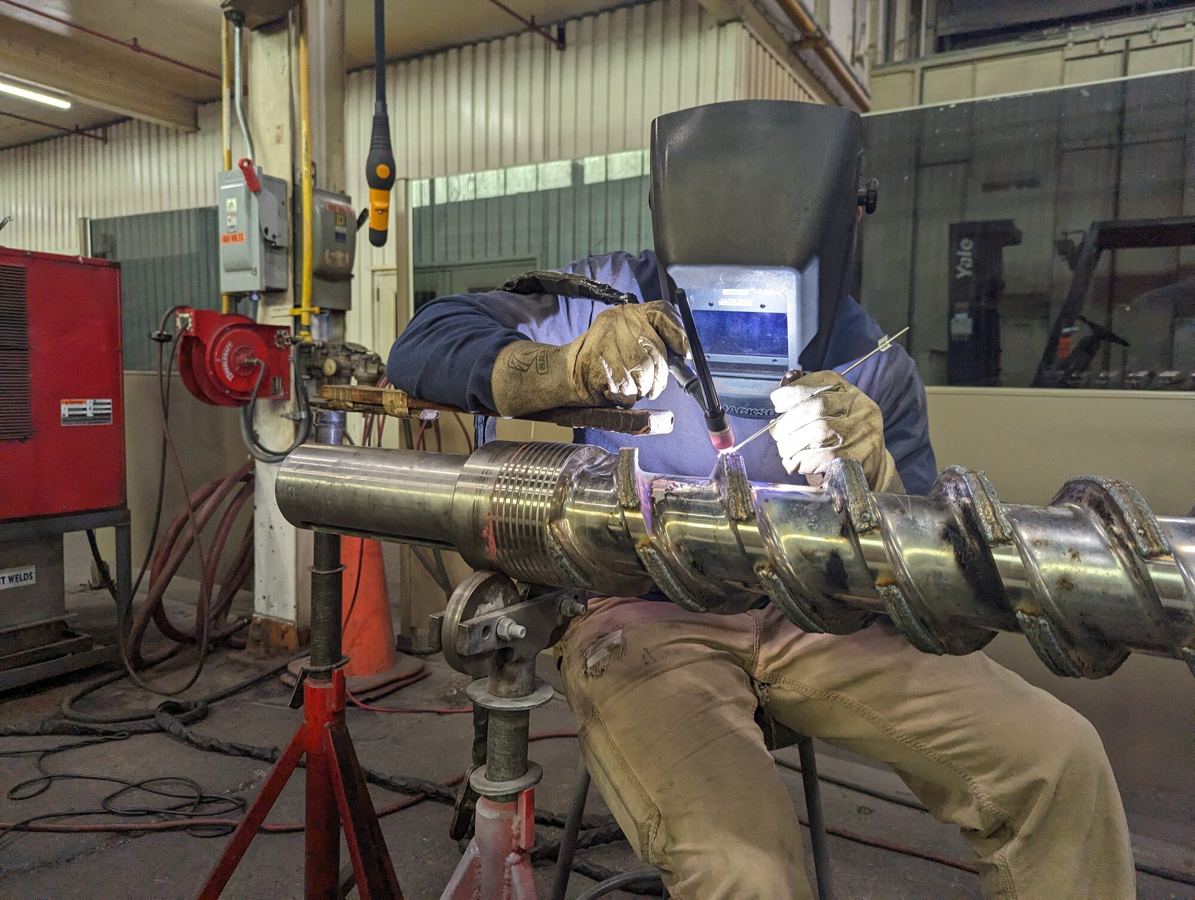
Critical Weld Procedure Parameters
To support durability, repeatability, and metallurgical integrity, HFW's weld procedures specify:
- Preheat temperatures
- Interpass temperatures
- Post-weld cooling and heat treatments
- Required number of weld passes
- Filler metal size and feed rates
- Finishing methods and acceptance criteria
- Inspection requirements, including: liquid penetrant testing, ultrasonic inspection, X-ray inspection, and visual inspection
Hardface Welding Materials & Processes
HFW applies a wide range of nickel-, cobalt-, iron-based alloys, carbides, and specialty materials supplied in rod, wire, or powder form to suit each job.
Hardfacing processes include:
- Arc Welding
- TIG welding (GTAW)
- MIG (GMAW) Welding
- Oxy-Fuel Torch Welding
- Plasma Transferred Arc (PTA): ideal for high-performance carbide and cobalt-based overlays
- Sprayweld (Thermal Spray + Fusing)
Each method creates a metallurgical bond between the overlay and the base metal. Thermal spray, on the other hand, forms a mechanical bond. The metallurgical integrity offered by hardfacing is crucial for applications requiring high heat tolerance, structural strength, abrasion resistance, and impact durability.
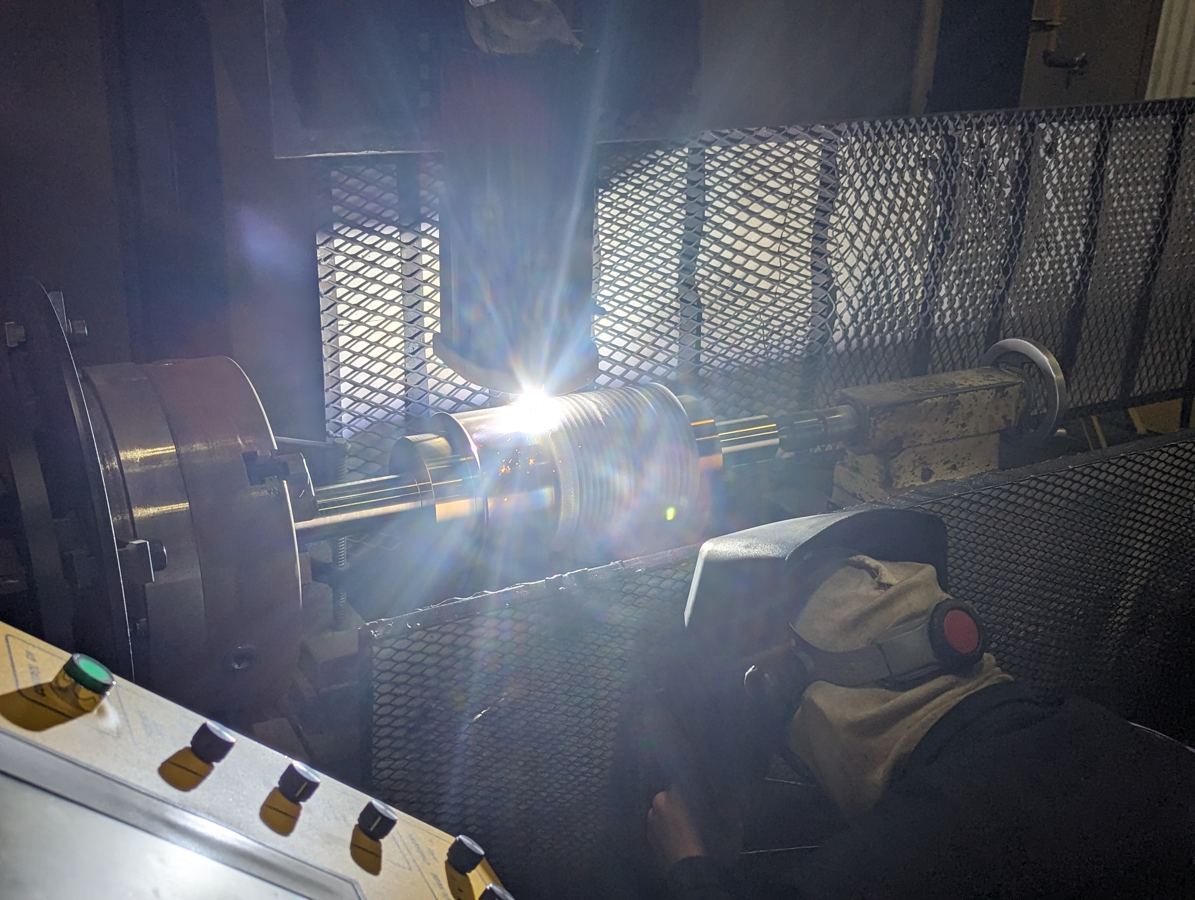
One-Source Hardfacing, Machining & Thermal Spray
What sets HFW apart is our fully integrated process flow. Instead of coordinating multiple vendors for welding, machining, thermal spray, and finishing, customers rely on a single partner. This vertically integrated model reduces handoffs and keeps the work under one quality system. We offer one traveler, one quality system, and one point of accountability. In one instance, our one-source solution cut a customer's assembly time by 75% at one-third the cost.
Talk to HFW About Hard Face Overlay Repair
HFW can help evaluate the right hard face overlay path for the job.
To discuss your application, email RFQ@hfwindustries.com. Submit a quote request with drawings, photos, operating conditions, and timing so HFW can review the application and next steps. You can also call (716) 875-3380.
About the Authors
Jack Watson is HFW Industries' business development manager and a fourth-generation member of the family business. He works with customers and HFW's technical teams to develop manufacturing, coating, and rebuild solutions for critical industrial equipment.
Nolan Watson writes about reliability, rebuild strategies, industrial manufacturing trends, thermal spray coatings, and precision grinding at HFW Industries.
Additional Technical Resources for Precision Manufacturing Professionals
- What Is Hardfacing? Weld Overlay Explained
A primer on hardfacing: what it is, how weld overlay works, and when it's the right solution.
- Preventing Hardface Delamination
Root causes of hardface delamination and the preparation, preheat, and procedure controls HFW uses to prevent it.
- Thermal Spray Coatings Explained: HVOF and Tungsten Carbide
A comprehensive overview of HVOF and thermal spray coating processes, materials, and industrial applications.
- Cutting Assembly Time by 75% at one-third the Cost
Case study: consolidating machining, coating, and finishing at HFW cut a customer's assembly time by 75% at one-third the cost.
- Repair vs. Replace: When Remanufacturing Beats Buying New
Framework for evaluating whether to repair or replace worn equipment, with cost and lifecycle considerations.
Frequently Asked Questions About Hard Face Overlays
What are hard face overlays used for?
Hard face overlays are used to restore or protect components exposed to abrasion, corrosion, heat, impact, or dimensional wear. They can be applied to worn parts or selected surfaces on new components.
What hardface welding processes does HFW use?
HFW uses hardface welding processes including arc welding, TIG welding, MIG welding, oxy fuel torch welding, plasma transferred arc, and Sprayweld depending on the part geometry, alloy, buildup requirement, and service environment.
When is weld overlay repair a good option?
Weld overlay repair may be a good option when the base component is sound, the worn area can be rebuilt, and a metallurgically bonded hardfacing layer matches the service environment.
When is cobalt hardfacing or Stellite hardfacing used?
Cobalt-based alloys such as Stellite® are used when the service conditions require the properties of a cobalt-based hardfacing alloy. HFW evaluates base metal, operating temperature, wear mode, corrosion exposure, and acceptance criteria before selecting an overlay.
Can HFW combine hardfacing with machining and grinding?
Yes. HFW performs hardfacing, precision machining, grinding and finishing, thermal spray coatings, assembly, and inspection in one facility, keeping the work under one quality system.
Attribution Statements
- Stellite® is a registered trademark of KENNAMETAL INC.
Stay Informed
Subscribe to Our Newsletter
Get practical insights from HFW’s turnkey manufacturing and rebuild team to help you extend equipment life, reduce downtime, and simplify your next equipment project.


Unsubscribe anytime. Open signup directly.