Industrial Equipment Rebuild vs. Replacement: When Remanufacturing Delivers Better Value
July 1, 2026·By Jack Watson
Industrial equipment rebuild vs. replacement is rarely a simple price comparison. The right answer depends on the condition of the component, the lead time for a new part, the original material, the failure mode, and whether a repair can restore the part to accepted tolerances while improving service life.
HFW Industries both builds and remanufactures industrial equipment. That gives our team a practical basis for helping customers decide whether to repair, rebuild, or manufacture a replacement component.
For buyers who already know they need repair support, see HFW's industrial equipment rebuild and remanufacturing capabilities.
For buyers who already know they need a newly manufactured component, see HFW's turnkey manufacturing capabilities.
When Industrial Equipment Rebuild Makes Sense
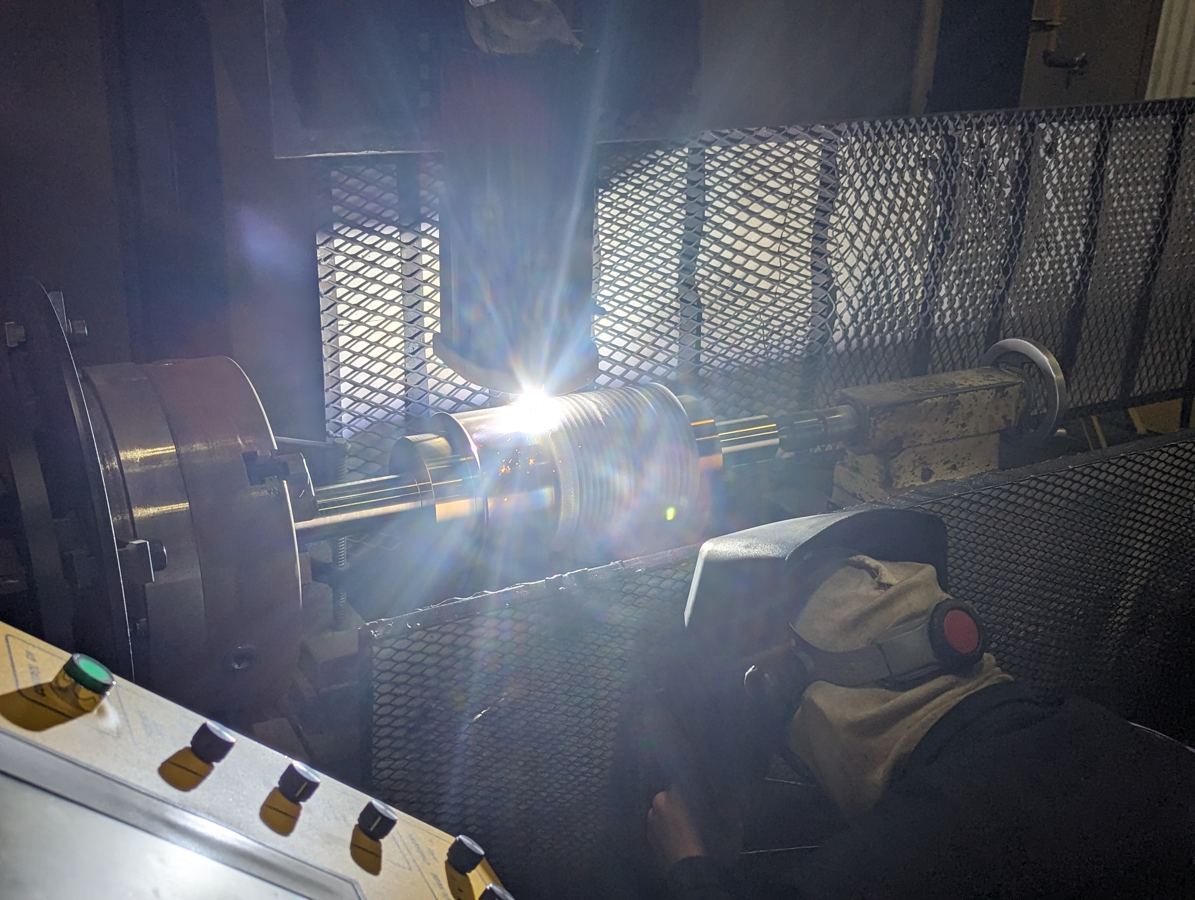
Remanufacturing can be the strongest option when a component has recoverable base geometry and the worn surfaces can be restored through thermal spraying, hardface welding, precision machining, precision grinding, and full assembly.
In certain cases, HFW can take equipment that is set aside as scrap and rebuild it to accepted tolerances. There are also cases where the best value is to manufacture new components instead of repairing the existing equipment. Circumstances where repairing may be ideal include:
- High-value castings, shafts, rolls, housings, and rotating components with worn bearing, seal, journal, or fit surfaces
- Components where a new replacement has a long lead time or requires capital approval
- Parts that can be restored by thermal spray coating, weld overlay, precision machining, or precision grinding
- Equipment where a better coating or repair strategy can extend service life beyond the prior repair cycle
When Replacement or New Manufacturing May Be Better
HFW does not recommend repair by default. If the component is too damaged, if the base material is compromised, or if the repair path would cost more than manufacturing a replacement, building new may be the stronger option.
This is one reason HFW's manufacturing capability matters. Our team can compare repair and new-build options instead of forcing the project into one path.
What HFW Evaluates Before Recommending Repair
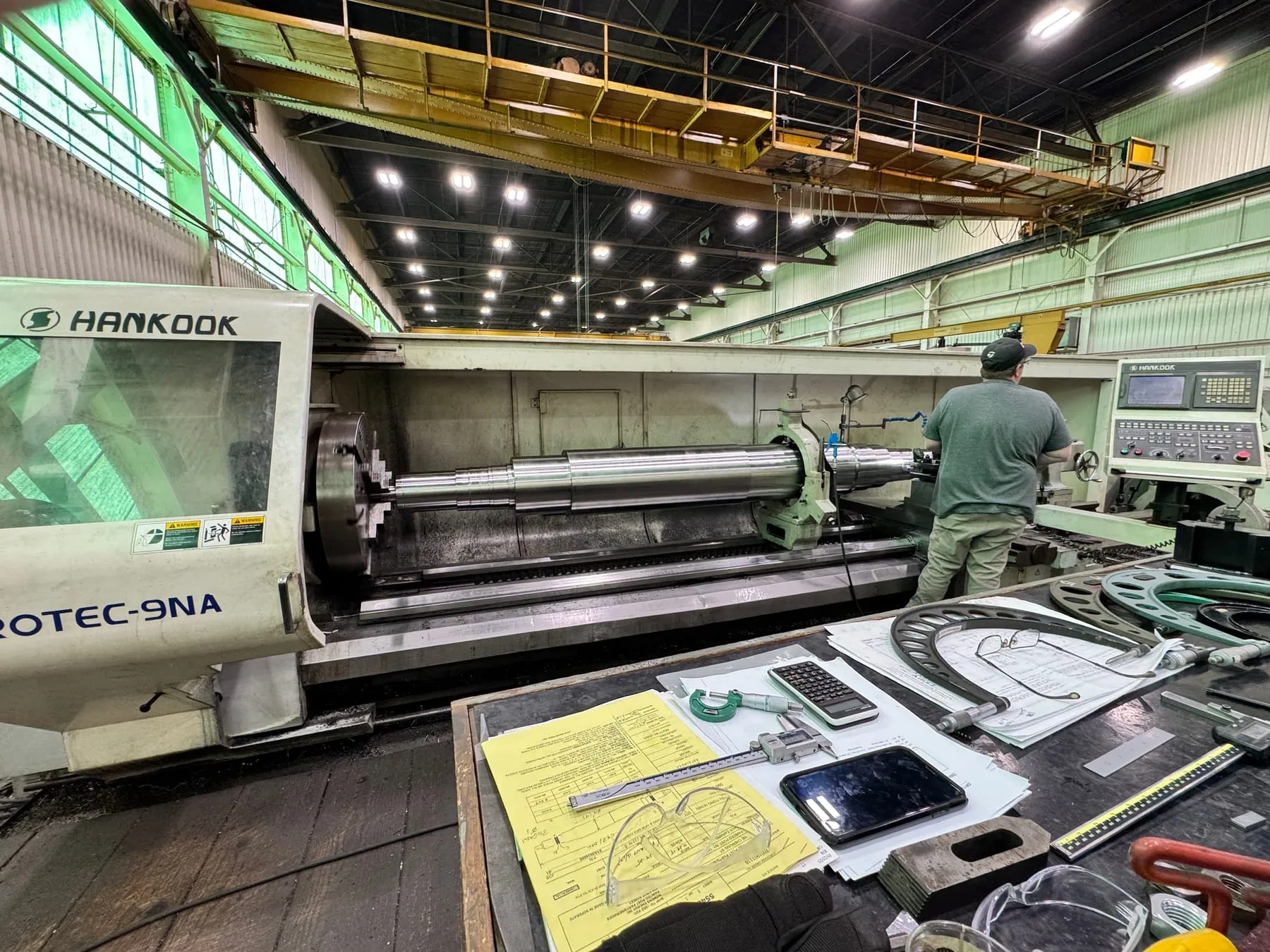
- The condition of the base component after cleaning and inspection
- The worn features that need dimensional restoration
- The service environment, including corrosion, abrasion, impact, temperature, and process chemistry
- The thermal spraying, hardface welding, precision machining, precision grinding, or full assembly steps required to return the component to service
- Lead time compared with buying new or manufacturing a replacement
- Budget timing, including maintenance budgets and capital budgets
Equipment Remanufacturing Can Improve Service Life
Depending on the material and application, dramatic improvements can sometimes be made to the life of existing equipment. In one documented chemical processing application, the customer's rolls initially lasted two months, standard thermal spray coating improved performance to four to five months, and HFW later helped the customer reach five to six years of service life using HFW 512 alongside thermal spray technology.
A repair can also protect your schedule. HFW repaired alloy housings that were set aside for scrap. Our solution was roughly one-third the cost of replacement, and we later helped redesign the assembly process to reduce assembly time from eight hours to two. Read the full case study: Cutting Assembly Time by 75% at one-third the Cost.
Communication Reduces Turnaround Risk
When work is on a tight timeline, each step in the process matters. Material lead time can create expected delays, but HFW has also seen hidden delays caused by revised purchase orders and misalignment between engineering, purchasing, and the repair vendor.
Close coordination between the engineering group, purchasing department, and vendor can have a dramatic impact on lead time. HFW has seen lead time reduced by as much as four to six weeks when all three parties are aligned early.
Industrial Equipment Rebuild Services at HFW
HFW performs thermal spraying, hardface welding, precision machining, precision grinding, full assembly, and inspection in one facility. That one-source model is especially valuable when repair requires multiple operations, because the work stays under one quality system from intake through final inspection.
To discuss your application, email RFQ@hfwindustries.com. Submit a quote request with drawings, photos, operating conditions, and timing so HFW can review the application and next steps. You can also call (716) 875-3380.
About the Author
Jack Watson is HFW Industries' business development manager and a fourth-generation member of the family business. He works with customers and HFW's technical teams to develop manufacturing, coating, and rebuild solutions for critical industrial equipment.
Additional Technical Resources for Repair and Reliability Teams
- HFW 512 Corrosion-Resistant Coating Case Study
How HFW 512 corrosion-resistant coating helped extend chemical processing roll life from months to years.
- Turnkey Manufacturing
HFW's manufacturing capabilities page for buyers who need a replacement component built instead of repaired.
- Cutting Assembly Time by 75% at one-third the Cost
Case study: consolidating repair work at HFW cut a customer's assembly time by 75% at one-third the cost.
- Turbomachinery Repair and Coating Services
HFW's full-service turbomachinery offering: shaft rebuilds, HVOF coatings, EMRO inspection, and precision grinding in one facility.
- Industrial Equipment Rebuild and Remanufacturing
HFW's main repair capabilities page for RFQ-ready buyers evaluating a worn or failed component.
Frequently Asked Questions About Industrial Equipment Rebuild
When should industrial equipment be repaired instead of replaced?
Industrial equipment rebuild may make sense when the base component is recoverable, the worn areas can be restored, replacement lead time is long, and repair can return the component to accepted tolerances.
What is equipment remanufacturing?
Equipment remanufacturing restores a worn component through operations such as thermal spraying, hardface welding, precision machining, precision grinding, full assembly, and inspection so it can return to service.
How does repair vs replace affect downtime?
The repair vs replace decision affects downtime because replacement parts may have long lead times, while repair can sometimes restore an existing component faster. HFW evaluates lead time, scope, component condition, and repair feasibility before recommending a path.
Stay Informed
Subscribe to Our Newsletter
Get practical insights from HFW’s turnkey manufacturing and rebuild team to help you extend equipment life, reduce downtime, and simplify your next equipment project.


Unsubscribe anytime. Open signup directly.