Electrical Mechanical Runout (EMRO): Detecting Hidden Shaft Defects Before They Fail
December 20, 2023·By Jack Watson
When working with rotating equipment, shafts must turn in a precise, cylindrical manner. Unwanted movement can cause vibration and other adverse conditions that are detrimental to equipment lifespan and the process that the equipment works within.
What Is Electrical Mechanical Runout (EMRO)?
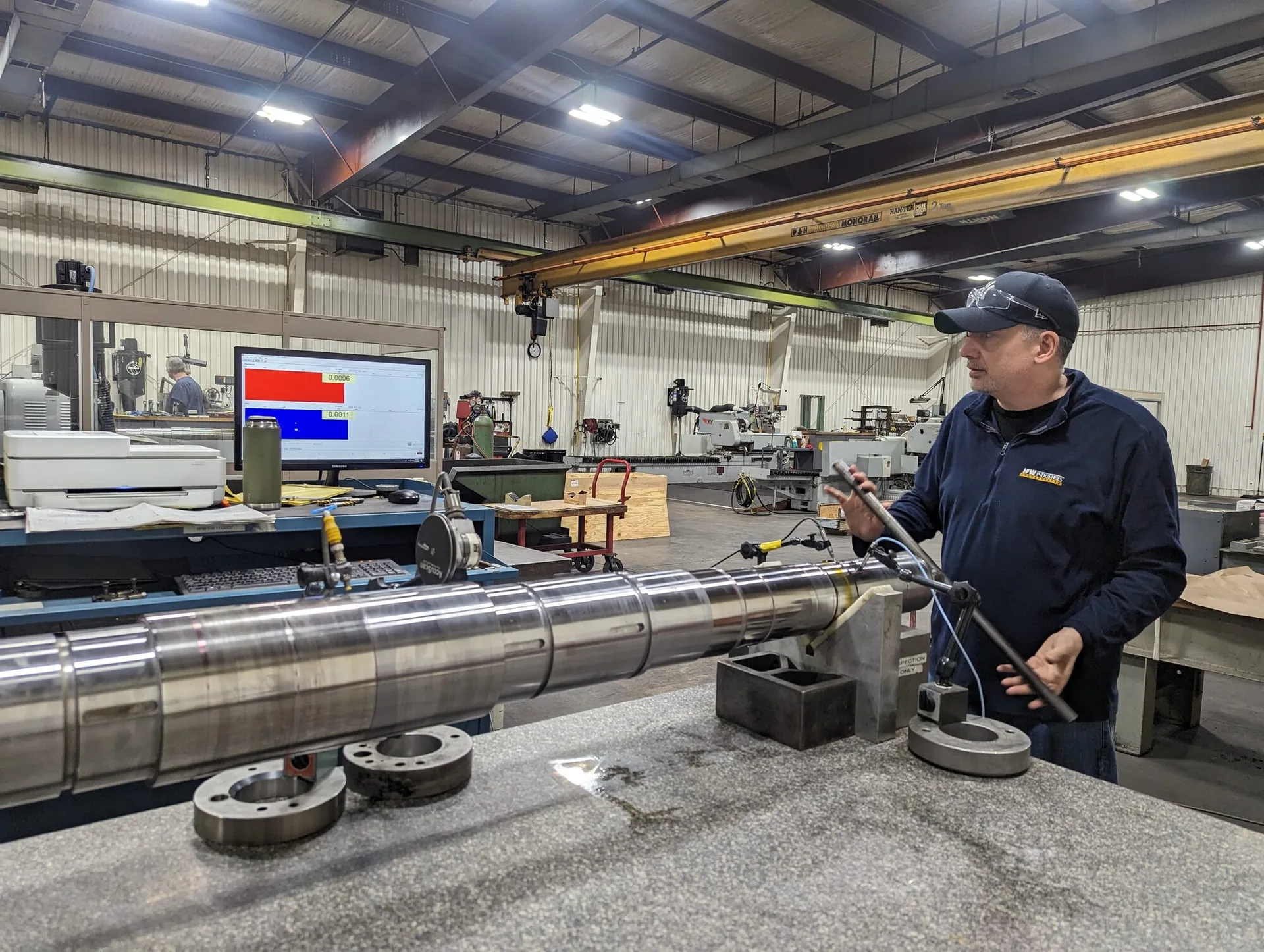
Electrical mechanical runout (EMRO) measurement is a service offered by HFW Industries. It uses a proximity sensor to help measure both mechanical and electrical runout in a shaft or other rotating component.
The purpose is straightforward: understand how the shaft behaves as the outside diameter is rotated so the equipment can run smoothly in service.
Mechanical Runout
For most users, mechanical runout is the primary concern. At a basic level, mechanical runout measures the roundness of a shaft or other piece of rotating equipment as the outside diameter is rotated.
For end users, it is crucial that a shaft spin cylindrically for machinery and production systems to function correctly. Mechanical runout is often caused by manufacturing procedures and handling.
Electrical Runout
Some users' processes mean they must go a step further and understand electrical runout as well. Electrical runout measures electrical property differences as the outside diameter of the part is rotated.
Electrical runout is typically impacted by material chemistry and material treatment, including heat treating and forging. Mechanical runout is relatively easy to measure with a dial indicator, an instrument found in nearly every machinist's and mechanic's toolbox. Measuring electrical runout is more complex.
How HFW Measures EMRO
HFW completes EMRO measurement using a proximity sensor that creates a high-frequency magnetic field between the sensor and the shaft. This magnetic field attracts electrical currents present in the shaft and allows a technician to measure the mechanical and electrical runout.
Why EMRO Inspection Is Critical for Turbomachinery and Compressor Shafts
Turbomachinery and compressor shafts operate in applications where unwanted movement can affect equipment lifespan and the process around it. EMRO inspection gives customers another way to evaluate shaft condition when mechanical runout alone does not provide enough information for the application.
This is especially useful for high-speed rotating equipment, where small runout issues can contribute to vibration and other adverse conditions. For these applications, HFW can include EMRO as part of a broader manufacturing or repair workflow.
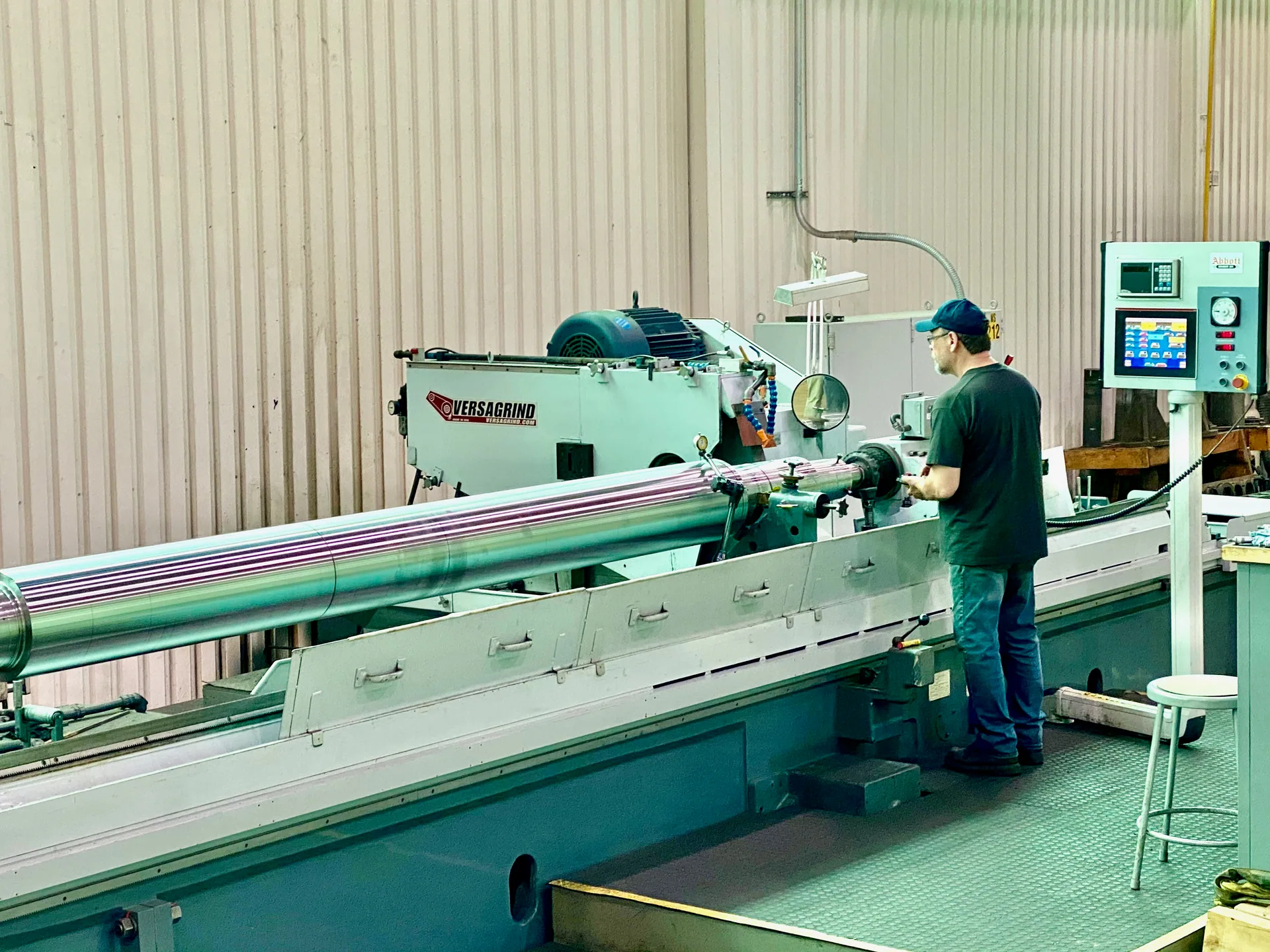
For more on the role of quality inspection in equipment reliability, see our Quality page.
EMRO Shaft Inspection Services at HFW Industries
EMRO is a service that HFW Industries has offered for many years. Our team is well-versed in the intricacies of reducing runout while keeping other manufacturing considerations in mind.
Minimizing Shaft Runout During Precision Repair and Rebuild
The best way to reduce mechanical and electrical runout is to design the manufacturing process with runout in mind rather than attempting to alleviate runout issues after the fact.
Other considerations, including a shaft's wear and corrosion resistance, may take priority over slight runout imperfections. Minor runouts may be acceptable depending on the application and customer specifications.
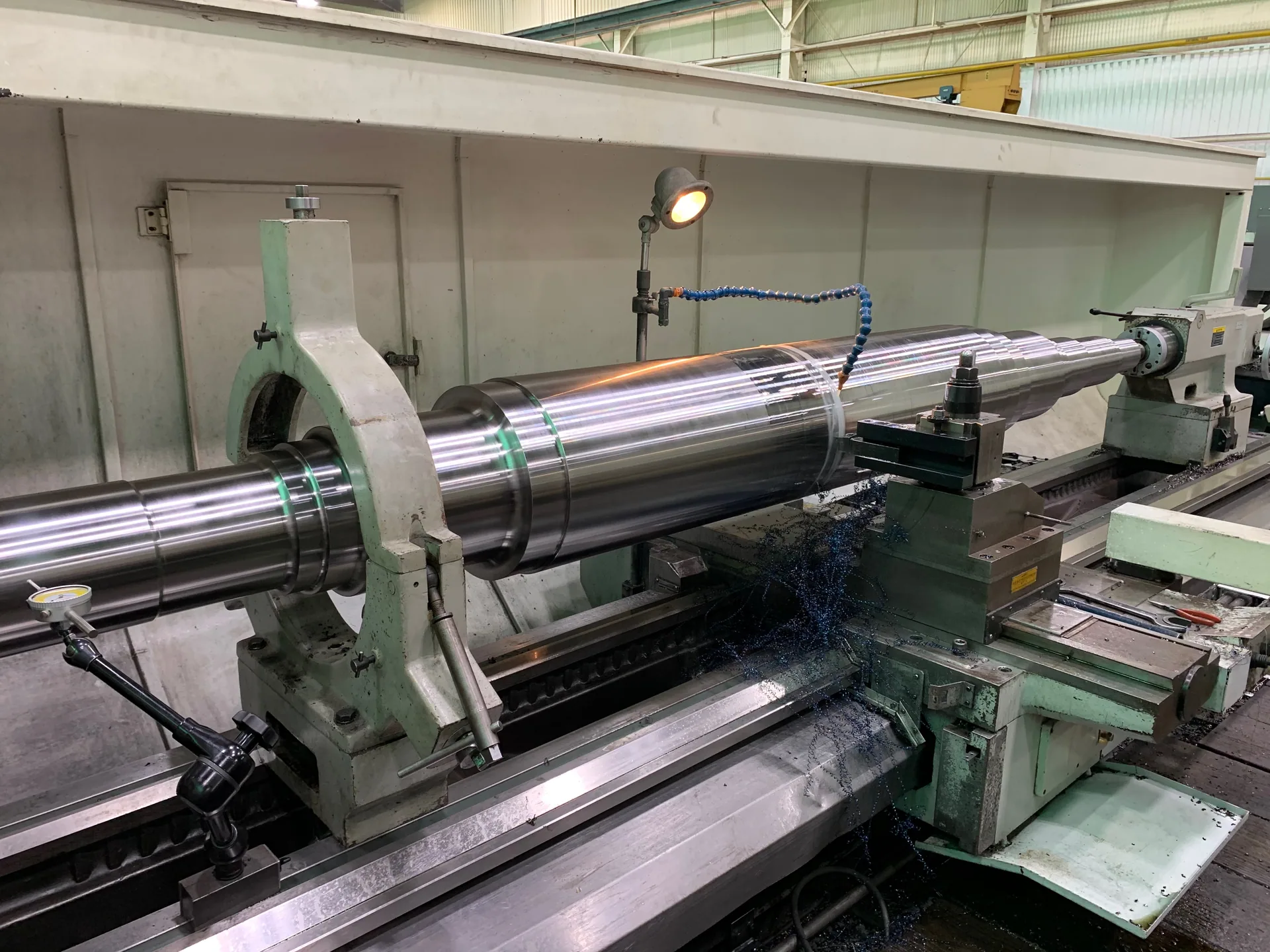
HFW can help customers evaluate these tradeoffs as part of a one-source solution for manufacturing and repair of precision industrial equipment and components.
Contact HFW Industries for EMRO Inspection Services
To discuss your application, email RFQ@hfwindustries.com. Submit a quote request with drawings, photos, operating conditions, and timing so HFW can review the application and next steps. You can also call (716) 875-3380.
About the Author
Jack Watson is HFW Industries' business development manager and a fourth-generation member of the family business. He works with customers and HFW's technical teams to develop manufacturing, coating, and rebuild solutions for critical industrial equipment.
Additional Technical Resources for Reliability & Maintenance Professionals
- Quality at HFW
How HFW's ISO 9001:2015 quality system supports inspection, documentation, and traceability.
- Turbo-Compression Repair and Turbomachinery Coating Services
Component-level detail on compressor shafts, piston rods, and turbine parts repaired and coated at HFW.
- Emergency Turbomachinery Repair
HFW's emergency response capabilities for turbomachinery: rapid turnaround, after-hours intake, and quality under time pressure.
- Power Generation Repair and Manufacturing
HFW's service capabilities for power generation equipment including generators, turbines, and rotating shafts.
- HVOF Tungsten Carbide Coating Properties
Material properties, hardness, and wear resistance data for HVOF-applied tungsten carbide coatings.
Stay Informed
Subscribe to Our Newsletter
Get practical insights from HFW’s turnkey manufacturing and rebuild team to help you extend equipment life, reduce downtime, and simplify your next equipment project.


Unsubscribe anytime. Open signup directly.