Wear-Resistant Coatings for Industrial Equipment
July 1, 2026·By Nolan Watson
Wear-resistant coatings help industrial components stay in service longer when abrasion, erosion, galling, sliding contact, process media, or combined corrosion and wear are damaging the working surface. For maintenance and reliability teams, the right coating, finish, and repair process can reduce downtime in the real operating environment.
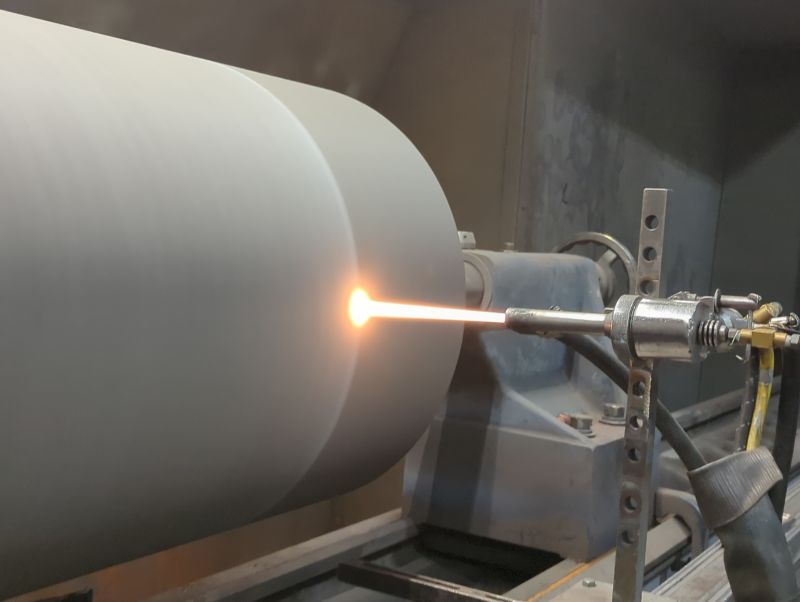
HFW evaluates worn components before recommending thermal spray coating, hardfacing weld overlay, precision machining, precision grinding, repair, or turnkey manufacturing. Wear-resistant coatings can support chemical processing, paper, steel, power generation, oil and gas, OEM, and general industrial applications.
Types of Wear HFW Evaluates
Wear problems often look similar at first, but the coating path can change depending on what is actually damaging the part.
- Abrasion: hard particles or process media cutting into the surface.
- Erosion: repeated particle or fluid impact removing material over time.
- Galling or sliding wear: surface damage caused by metal-to-metal contact, adhesion, or poor lubrication.
- Corrosion with wear: chemical attack or corrosion roughening the surface and accelerating material loss.
- High-temperature wear: applications where oxidation, heat, and wear must be addressed together.
Coating and Overlay Options
HFW does not treat wear-resistant coating selection as a one-material decision. The practical fit depends on the failure mode, base material, part geometry, coating thickness, finish requirement, and inspection standard.
- Tungsten carbide by HVOF: evaluated for abrasion, erosion, and dense hard surfaces below high-temperature oxidation limits.
- Chrome carbide nickel chrome (Cr3C2-NiCr): evaluated where high-temperature wear and oxidation resistance are important.
- HFW 512: HFW's proprietary nickel-based thermal spray alloy, used where wear and corrosion overlap and the application conditions support it.
- Ceramic coatings: used in selected applications where a hard, chemically stable surface is needed.
- Hardfacing weld overlays: used where the part needs heavier buildup, impact resistance, severe wear resistance, or profile restoration.
Common Components for Wear-Resistant Coatings
HFW evaluates wear-resistant coatings when a high-value part is too costly, slow, or disruptive to replace. RFQ examples include:
- Process rolls, dryer rolls, feed rolls, calender rolls, and nip rolls
- Pump shafts, sleeves, wear rings, bores, housings, and seal areas
- Mixer shafts, agitators, paddles, screws, and sleeves
- Feed screws, extruder components, plungers, rotors, and blades
- Turbine, compressor, shaft, journal, and seal components where coating and finishing requirements are tightly controlled
Where HFW 512 Can Help Extend Service Life
HFW 512 is HFW's proprietary nickel-based thermal spray alloy. For components exposed to both wear and corrosion, it may help reduce rebuild frequency when the chemistry, temperature, wear pattern, geometry, and finish requirements support the coating.
In one documented roll application, standard thermal spray first improved roll life from two months to 4 to 5 months. HFW 512 later helped extend service life to 5 to 6 years, giving the customer a practical way to reduce downtime and replacement pressure.
When Coating Alone Is Not Enough
A wear-resistant coating may fail to deliver value if the component is not machined, ground, finished, and inspected correctly after coating. HFW supports coating work with in-house machining, precision grinding, and inspection so the coated surface can return to service with the required dimensions and finish.
HFW also evaluates whether the part needs dimensional restoration, a weld overlay, a different coating family, or a redesigned wear area instead of coating the same surface the same way again.
Contact HFW About Wear-Resistant Coatings
To discuss your application, email RFQ@hfwindustries.com. Submit a quote request with drawings, photos, operating conditions, and timing so HFW can review the application and next steps. You can also call (716) 875-3380.
About the Author
Nolan Watson writes about reliability, rebuild strategies, industrial manufacturing trends, thermal spray coatings, and precision grinding at HFW Industries.
Additional Technical Resources
- Corrosion-Resistant and Chemical-Resistant Coatings
How HFW evaluates coating selection when corrosion, chemistry, temperature, and wear overlap.
- HVOF Tungsten Carbide Coating Properties
Technical detail on tungsten carbide coating hardness, porosity, bond strength, finish, and performance factors.
- HFW 512 Corrosion-Resistant Coating Case Study
How HFW 512 corrosion-resistant coating helped extend documented roll life from months to years in the right operating environment.
- Thermal Spray Coating Services
HFW's commercial thermal spray service page for HVOF, plasma, Rokide®, arc spray, and related coating work.
Frequently Asked Questions About Wear-Resistant Coatings
What is a wear-resistant coating?
A wear-resistant coating is a surface coating selected to help a component resist abrasion, erosion, sliding wear, galling, or combined corrosion and wear. The best coating depends on the failure mode, base material, geometry, finish requirement, and operating environment.
What coating processes does HFW use for wear resistance?
Depending on the application, HFW may evaluate HVOF thermal spray, plasma spray, ceramic coatings, HFW 512, tungsten carbide, chrome carbide nickel chrome (Cr3C2-NiCr), hardfacing weld overlays, or another coating path.
Is the hardest coating always the best wear-resistant coating?
No. Hardness matters, but coating fit also depends on impact, corrosion, temperature, substrate compatibility, coating thickness, surface finish, and how the component will be machined or ground after coating.
Can HFW help if a previous wear coating failed?
Yes. HFW can review the failure pattern, coating history, operating conditions, and component requirements to determine whether a different coating, overlay, finish, or repair path should be evaluated.
Stay Informed
Subscribe to Our Newsletter
Get practical insights from HFW’s turnkey manufacturing and rebuild team to help you extend equipment life, reduce downtime, and simplify your next equipment project.


Unsubscribe anytime. Open signup directly.