Chemical Mixer and Agitator Repair
Mixer shafts, agitators, paddles, screws, sleeves, and seal surfaces restored for corrosive chemical service.
Chemical & Plastics
Mixer Components Restored Around Corrosion and Wear
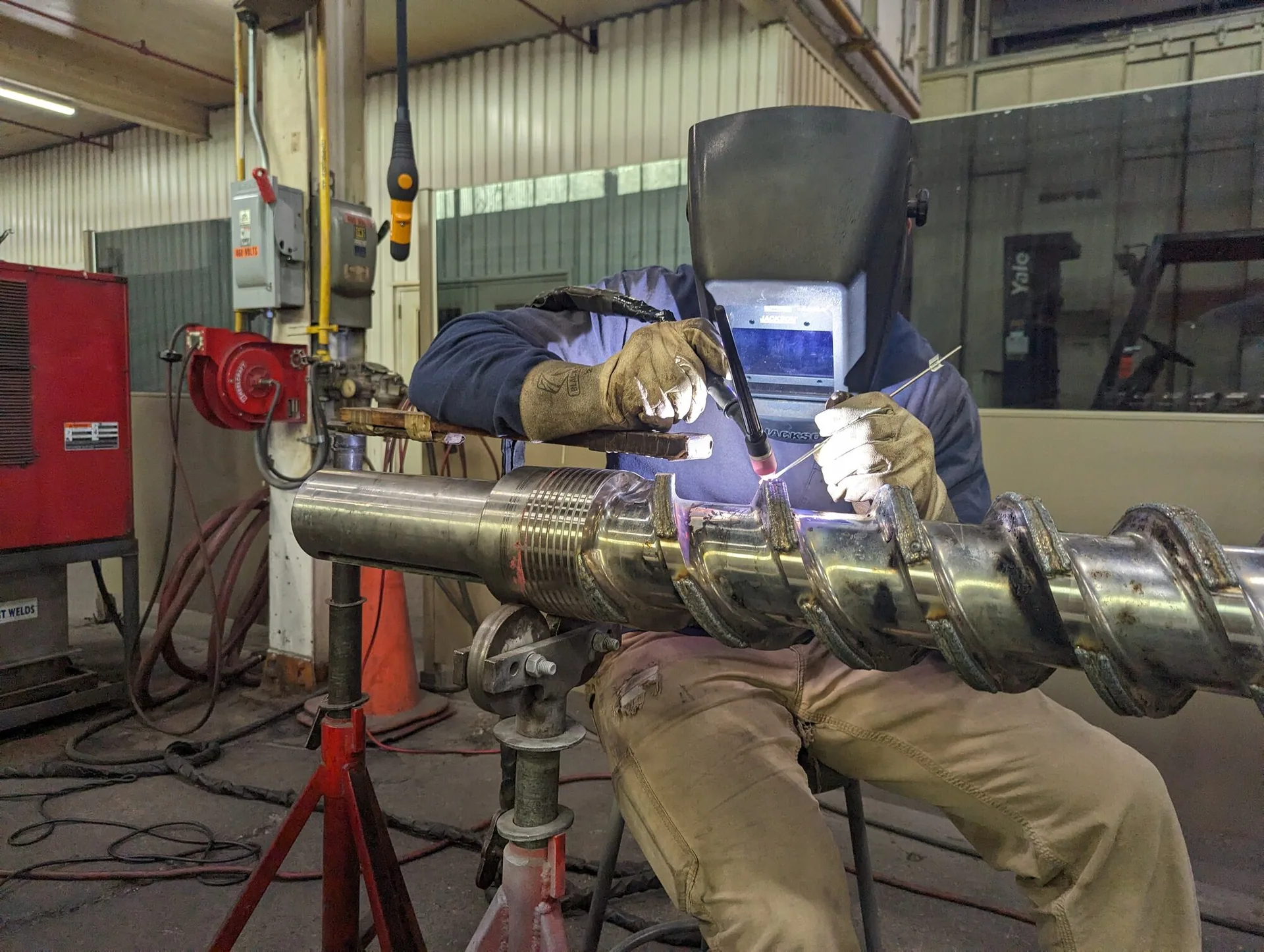
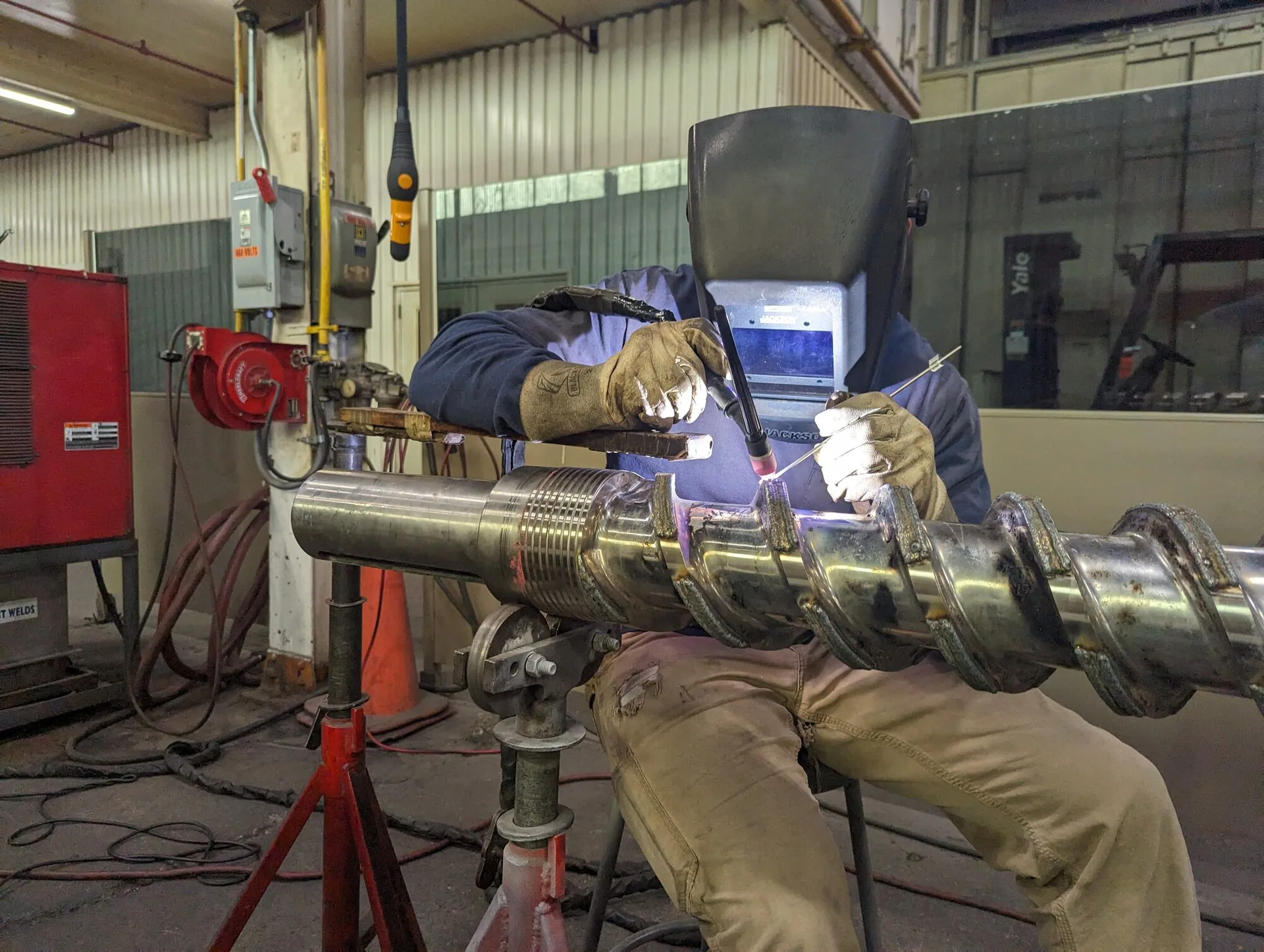
Chemical mixers and agitators often face corrosive chemistries, abrasive media, heat, and continuous operation. HFW evaluates the damage, base material, tolerances, and operating environment before selecting a repair path.
- Mixer shafts, agitators, paddles, sleeves, screws, and seal surfaces
- Corrosion, wear, dimensional loss, and profile restoration
- Thermal spray coatings, hardfacing weld overlays, machining, and grinding
- LP inspection of overlays, runout checks, straightness checks, and concentricity verification
Components
Chemical Mixer and Agitator Parts HFW Supports
Mixer Shafts and Agitators
Mixer shafts, agitators, and related rotating parts evaluated for corrosion, wear, runout, straightness, and fit.
Paddles, Screws, and Sleeves
Paddles, screws, sleeves, and profiles restored when wear, corrosion, or dimensional loss affects service.
Seal Surfaces and Journals
Seal surfaces, journals, and interfaces rebuilt or finished where tight tolerances and surface finish are critical.
Corrosion and Wear Surfaces
Component surfaces matched to the repair path, coating process, chemistry, base material, and failure mechanism.
Repair Path
Machining, Thermal Spray, or Hardfacing
The right approach depends on the severity of wear, the base material, the chemistry, and how much profile or dimensional restoration is required.
HFW can coordinate welding, coating, machining, grinding, inspection, and final assembly inside one facility, which helps shorten lead times when multiple steps affect the finished part.
Machining Alone
Used when wear is minimal and the base material can be restored without a coating or overlay.
Thermal Spray
Used when minimal heat input is important and no major dimensional restoration is required. Typical finished thickness is about 0.010 to 0.050 inch.
Hardfacing Weld Overlay
Used for severe environments, impact, heavy wear, aggressive corrosion, and significant profile restoration such as mixer screws and paddles.
RFQ Fit
Good Projects for HFW
HFW is a good fit when a mixer or agitator component needs more than a single operation. Common RFQ drivers include corrosion-driven failures, recurring wear, tight tolerances, short repair cycles, and components that need coating or welding plus final machining and grinding.
For quoting, send drawings, photos, base material, process chemistry, wear pattern, coating history, surface finish requirements, and required turnaround.
Related Topics
Mixer Repair and Coating Resources
FAQ
Chemical Mixer and Agitator Repair Questions
Does HFW provide chemical mixer and agitator repair?+
Yes. HFW repairs and manufactures mixer shafts, agitators, paddles, sleeves, screws, seal surfaces, and related chemical processing equipment exposed to corrosion, wear, heat, and continuous operation.
What repair processes can HFW use on mixers and agitators?+
Depending on the component, HFW may use thermal spray coatings, hardfacing weld overlays, precision CNC machining, grinding and finishing, inspection, and final assembly.
When does HFW use thermal spray instead of weld overlay?+
Thermal spray is a good fit when minimal heat input is important and no major dimensional restoration is required. Hardfacing weld overlays are used for more severe environments, impact, heavy wear, aggressive corrosion, or significant profile restoration.
What tolerances can HFW hold on mixer and agitator shaft work?+
Typical shaft tolerances are about 0.0005 inch. Depending on geometry, HFW can work to tighter requirements down to about 0.0002-inch TIR.
Need a Mixer or Agitator Component Quoted?
Send drawings, photos, material, process chemistry, wear pattern, coating history, tolerance requirements, and timeline.