Reliability engineers and procurement teams managing turbomachinery assets are actively evaluating hard chrome plating alternatives, and the timeline is no longer theoretical. Two converging regulatory actions are forcing the issue: the U.S. EPA's tightening effluent rules on chrome finishing facilities and California's binding 2039 phase-out of hexavalent chromium in functional industrial plating. For power generation facilities dependent on chrome-plated rotating components, the window to transition is narrowing.
This article explains the regulatory landscape, why high velocity oxygen-fuel (HVOF) thermal spray coatings have emerged as the validated replacement for turbomachinery applications, and how HFW Industries delivers a turnkey solution, coating through finish-grinding, all in one factory.
Why Chrome Plating Suppliers Are Under Pressure Right Now
Electrolytic hard chrome (EHC) plating has long been the default surface hardening treatment for turbine shafts, compressor rotors, and pump sleeves. That default is unraveling at the regulatory level on two fronts:
- Federal (U.S. EPA): The EPA's updated effluent guidelines for chrome finishing facilities now target PFAS-based chemical fume suppressants, the compounds plating shops rely on to control hazardous hexavalent chromium air emissions. As PFAS restrictions tighten, platers face compounding compliance costs and capacity constraints. Full program details are available via the EPA Electroplating Effluent Guidelines.
- State (California CARB): The California Air Resources Board's updated Airborne Toxic Control Measure (ATCM) banned new hexavalent chrome facilities as of 2024 and set a hard 2039 deadline for the total phase-out of hexavalent chromium in functional hard chrome plating. Because California's regulations can set the floor for national supply chain standards, this deadline has implications well beyond California's borders. The full timeline is published on the CARB Chrome Plating ATCM Summary.
The practical supply chain consequence: as plating shops exit the market or reduce capacity to manage compliance costs, lead times for chrome-plated turbomachinery components will lengthen, and qualified alternative vendors will become harder to source on short notice. Plants that begin qualification of HVOF alternatives now avoid that scramble during a planned outage or turnaround.
HVOF Thermal Spray: The Proven Hard Chrome Plating Alternative
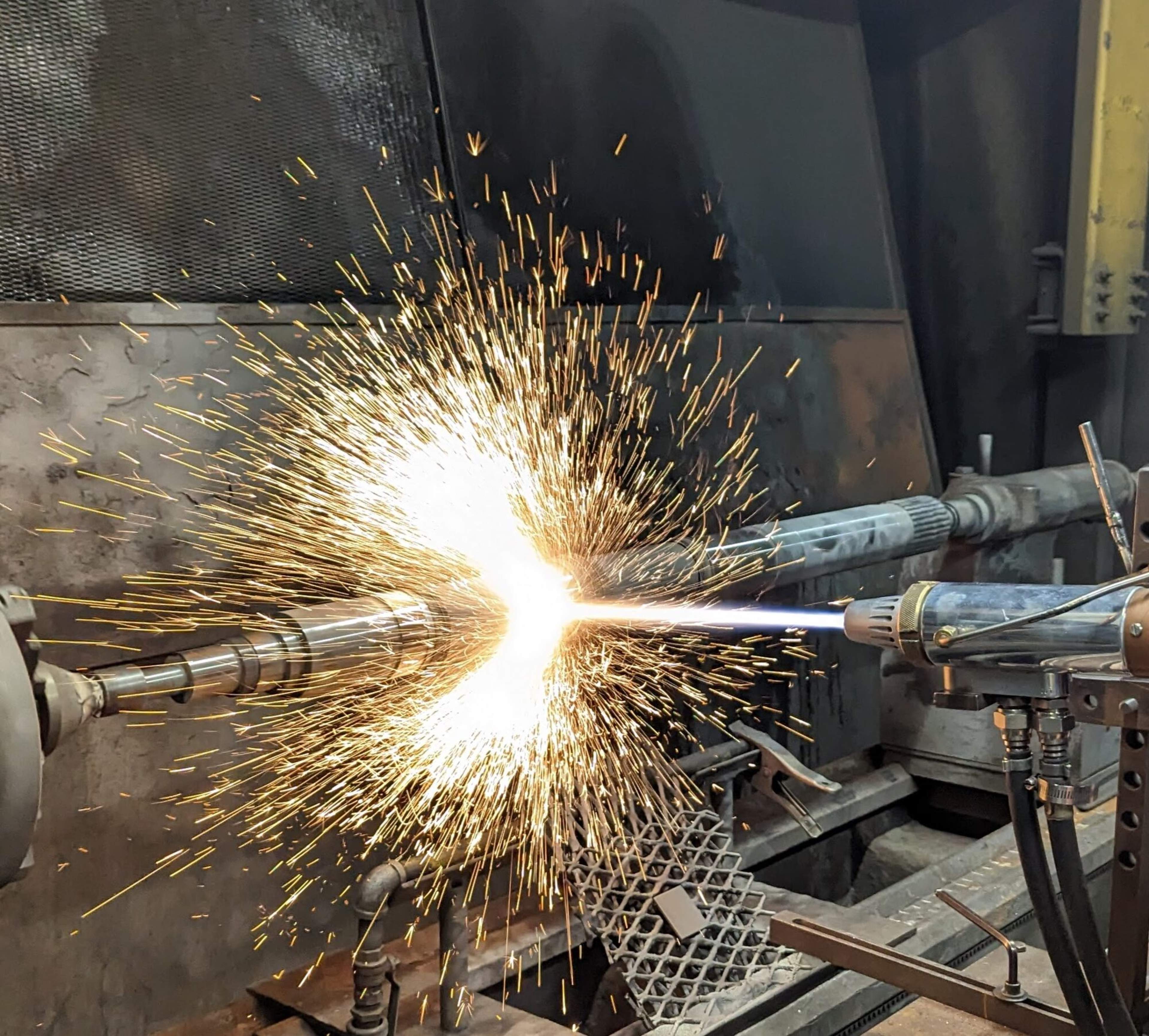
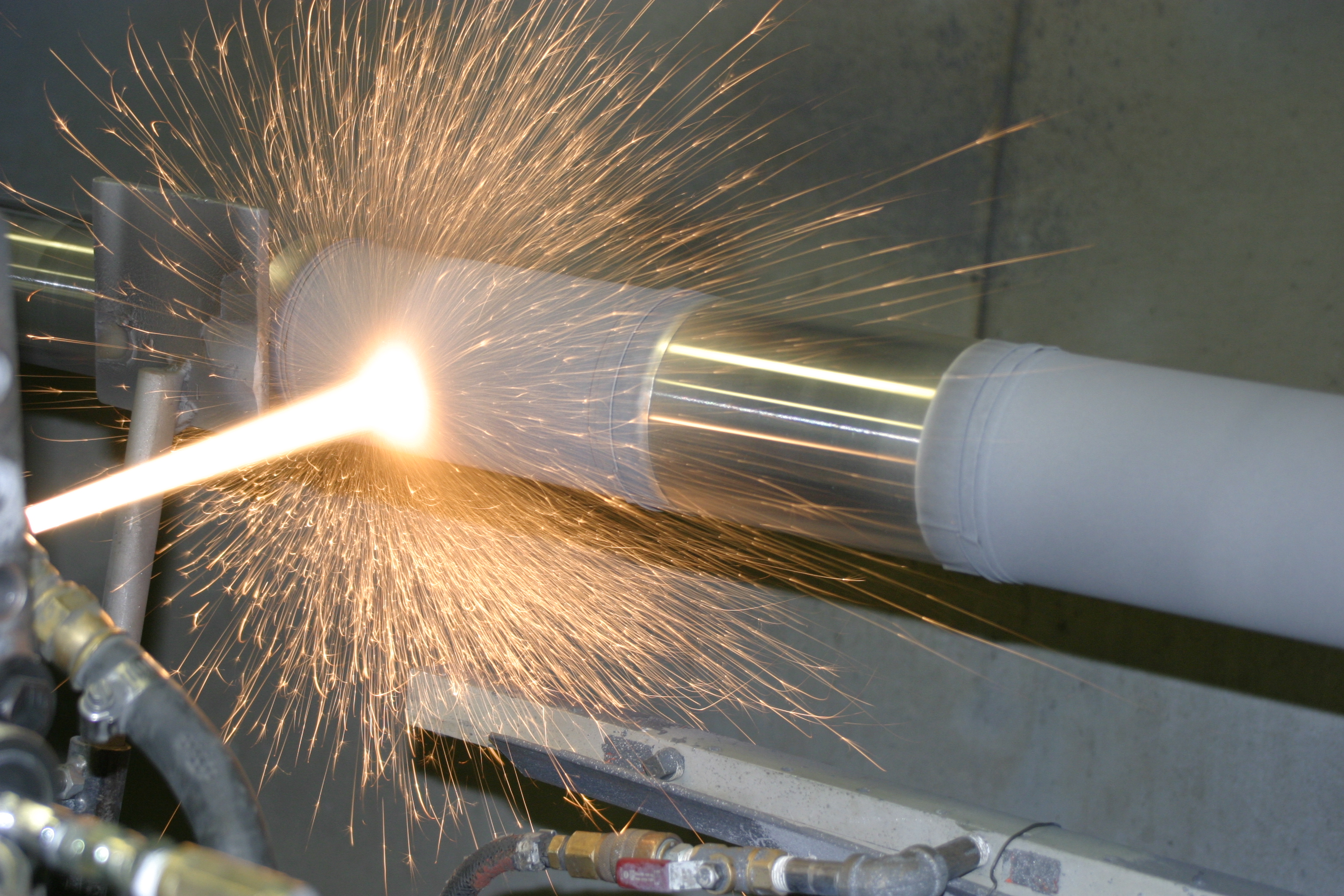
High Velocity Oxygen-Fuel (HVOF) thermal spray coating is not a new or experimental process. HFW Industries has been applying HVOF coatings for more than 30 years. Unlike electroplating, which relies on a hazardous chemical bath, HVOF is a kinetic process: powdered feedstock is heated in a high-pressure combustion flame and propelled at supersonic velocity onto a prepared substrate. The particles flatten on impact and mechanically lock into a dense, low-porosity layer, with no hazardous bath chemistry involved.
What the DoD Testing Found
A Department of Defense task force conducted exhaustive comparative testing of HVOF coatings against electrolytic hard chrome across fatigue life, corrosion resistance, and leakage performance on aerospace-grade components. Premium HVOF coatings outperformed hard chrome plating across every category tested. In certain wear scenarios, service life exceeded chrome plating by a factor of three. HVOF coatings also required less processing time, reducing both cost and turnaround time compared to chrome in those same studies. HFW is happy to share these reports and papers directly. Reach out via email to request them.
Selecting the Right HVOF Coating Material for Turbomachinery Applications
No single coating material is optimal for every turbomachinery application. HFW's engineering team matches coating chemistry to the specific wear, temperature, and corrosion profile of each rotating component. In place of hard chrome plating, the following coating families are most commonly evaluated for power generation equipment:
- Tungsten Carbide / Cobalt (WC/Co): The benchmark choice for aggressive abrasion, sliding wear, and particle erosion on high-speed rotating equipment. Primary applications include centrifugal compressor shafts, turbine impellers, and journal bearing surfaces where chrome plating has historically been the standard.
- Chromium Carbide / Nichrome (Cr3C2/NiCr): Engineered for oxidation resistance at elevated temperatures, protecting turbine and boiler components operating in high-heat environments where chrome plating cannot survive service conditions.
- Tungsten Carbide / Nickel (WC/Ni): Selected for rotating components where corrosion resistance requirements favor a nickel matrix over cobalt, common in steam turbine and wet gas applications.
- Nickel-Based Corrosion Resistant Alloys: Applied to turbomachinery components in aggressive process environments where standard carbide coatings are not the primary fit.
Why Precision Finishing Makes or Breaks the Coating
Selecting the right HVOF coating material is necessary but not sufficient. The finish-grinding step after coating application determines whether the component performs at specification. Non-fused thermal spray coatings have microscopic surface porosity that reads differently on standard profilometers. Grinding these surfaces without HVOF-specific process knowledge can fracture, craze, or fully disbond the coating from the substrate.
This is a failure point that can hurt multi-vendor approaches: the coating is applied by one shop, finished by an outside grinder without HVOF-specific process knowledge, and the component fails in service. The root cause is vendor fragmentation, not the coating itself.
HFW Industries: Single-Source from Substrate to Final Dimension
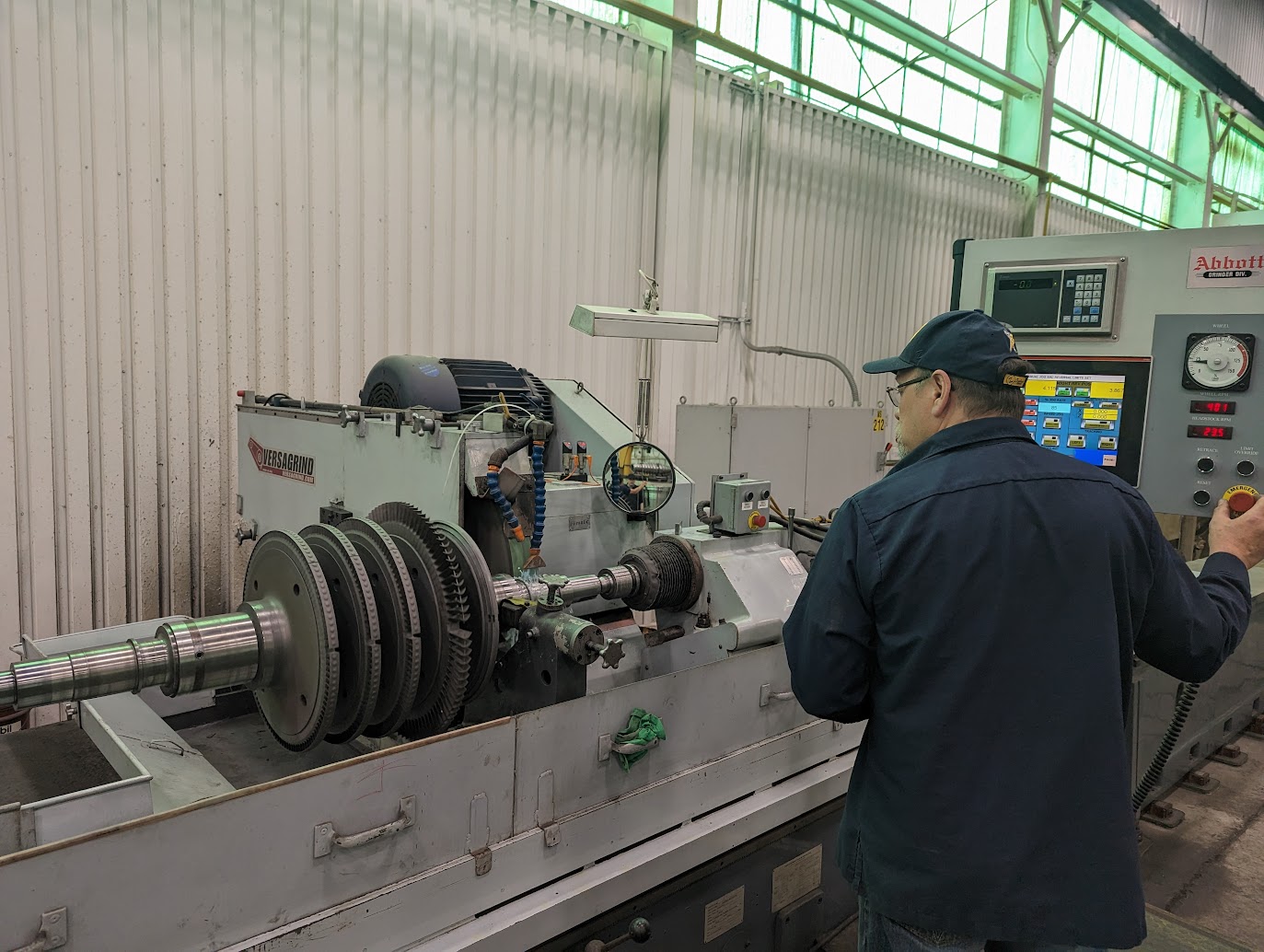
HFW operates as a single turnkey facility at our Buffalo, NY location. A component arrives and doesn't leave our plant until it's finished. CNC machining, hardface weld overlay where needed, automated HVOF spray application, and final cylindrical grinding to 0.0002 inch tolerances. We offer one plant, one team, and 75 years of experience on industrial rotating equipment.
For reliability engineers managing turnaround schedules, the single-source model reduces coordination overhead, compresses lead times, and eliminates the qualification risk of introducing an untested finishing vendor mid-project.
Ready to Discuss Your Turbomachinery Repair Needs?
Whether you're facing a shaft rebuild, a seal housing that needs carbide coating, or a full compressor component overhaul, HFW Industries can help. Contact our team to discuss your application, timeline, and coating requirements.
📞 Call us at (716) 875-3380
📧 Email: RFQ@hfwindustries.com
Additional Technical Resources for Turbomachinery Professionals
Sign up for our newsletter and explore these resources from our Knowledge Base:
- How Does HFW Serve the Turbomachinery Industry?
- Learn about HFW's one-source repair and manufacturing strategy for turbines, rotors, and other turbomachinery equipment
- Emergency Turbomachinery Repair
- See how HFW can improve the reliability of your turbomachinery and cut downtime when it matters most
- Managing the Tungsten Carbide Shortage
- Learn how HFW prepared for the supply crunch and can provide alternative coatings
- How HFW Extends Equipment Life
- Real-world example of innovation in action: 30x increase in service life for a chemical client
- Reducing Assembly Time by 75% at 1/3 the Cost
- Learn how HFW's one-source strategy can streamline our customer's processes and rein in costs
- Overview of Thermal Spray Coatings: HVOF & Tungsten Carbide
- Why these materials are key to high-performance surface protection
- Precision Grinding at HFW
- A look inside our plant, detailing HFW's precision finishing capabilities and CNC grinding
- What are HFW's Hardfacing Capabilities?
- Explore how HFW’s hardfacing expertise restores industrial equipment with proven weld procedures and precision inspection
Frequently Asked Questions: HVOF vs Hard Chrome Plating
Is HVOF coating harder and more wear-resistant than hard chrome plating?
In the DoD comparative testing, HVOF coatings outperformed electrolytic hard chrome across fatigue, corrosion, and leakage categories. In abrasion and sliding wear applications, tungsten carbide HVOF coatings can be more wear-resistant than EHC. The right material selection depends on your specific operating conditions. HFW's engineering team can assess your application and recommend accordingly.
Can HVOF coatings be applied to the same base metals as chrome plating?
Yes. HVOF thermal spray coatings are compatible with steel, stainless steel, cast iron, and most superalloy substrates, the same base metals that have historically been chrome-plated. Surface preparation requirements differ from plating, which HFW's machining team handles as part of the same job scope.
How does the cost of HVOF compare to hard chrome plating?
Per-application cost for HVOF varies by component and coating material. The DoD studies found that HVOF required less processing time than chrome plating, reducing cost and turnaround in those tested scenarios. For a specific cost comparison on your component, contact HFW directly for an RFQ.
Does HVOF coating require special grinding or finishing?
Yes. HVOF coatings require finishing processes specific to thermal spray. Standard grinding approaches used for chrome plating can damage the coating surface. HFW performs all finish grinding on HVOF-coated components in-house, using processes developed over decades of application experience.
What is the deadline for the California chrome plating phase-out?
The California Air Resources Board has set 2039 as the deadline for the total phase-out of hexavalent chromium in functional industrial hard chrome plating. New hexavalent chrome facilities were banned as of 2024. While this is a California regulation, this policy can have ripple effects on national supply chains as platers reduce capacity or exit the market.