June 19, 2026Tungsten Carbide Shortage 2026: Prices, Lead Times & Alternatives
By Matt Watson and Nolan Watson
The 2026 tungsten carbide shortage continues to affect manufacturers, utilities, chemical processors, and maintenance organizations that rely on wear-resistant coatings and components. CNBC reports that China controls up to 80% of the world's tungsten supply, and recent export restrictions have led to rising prices, longer lead times, and supply uncertainty. This article examines the forces driving the tungsten carbide shortage, how it affects repair and maintenance planning, and where alternative materials may make sense.
If you need access to tungsten carbide coatings for a critical industrial application, connect with our team for an emergency quote.
Why Is There a Tungsten Carbide Shortage?
If you work in power generation, oil & gas, or chemical processing, you may have felt the ripple effect of the global tungsten carbide squeeze. The material is in high demand for both military and industrial uses, and Reuters reports that China is only allowing 15 companies to export tungsten in 2026 and 2027. Since China controls a major share of the world’s tungsten supply, the entire thermal-spray ecosystem has felt it. In fact, no commercial tungsten mines are currently operating in the U.S., and there are no firm plans to significantly boost domestic supply.
Amid the shortage, prices have surged for American industries that rely on tungsten carbide to protect their equipment. Ammonium paratungstate, an input to tungsten, rose 200% since the start of 2026 in some places.
We don't know how long these market conditions will persist. HFW intentionally built tungsten carbide inventory before the shortage intensified so customers can continue sourcing coatings that are often required by existing specifications. It is part of our strategy to help customers stay ahead of material availability issues before they affect an outage or repair schedule.
How Tungsten Carbide Shortage Affects Repair and Maintenance Planning
Before supply constraints really made news, our team began proactively building and maintaining tungsten carbide inventories. We’ve made a deliberate choice to safeguard availability for our customers, supporting day-to-day work as well as high-urgency outage and turnaround scenarios where timing determines everything.
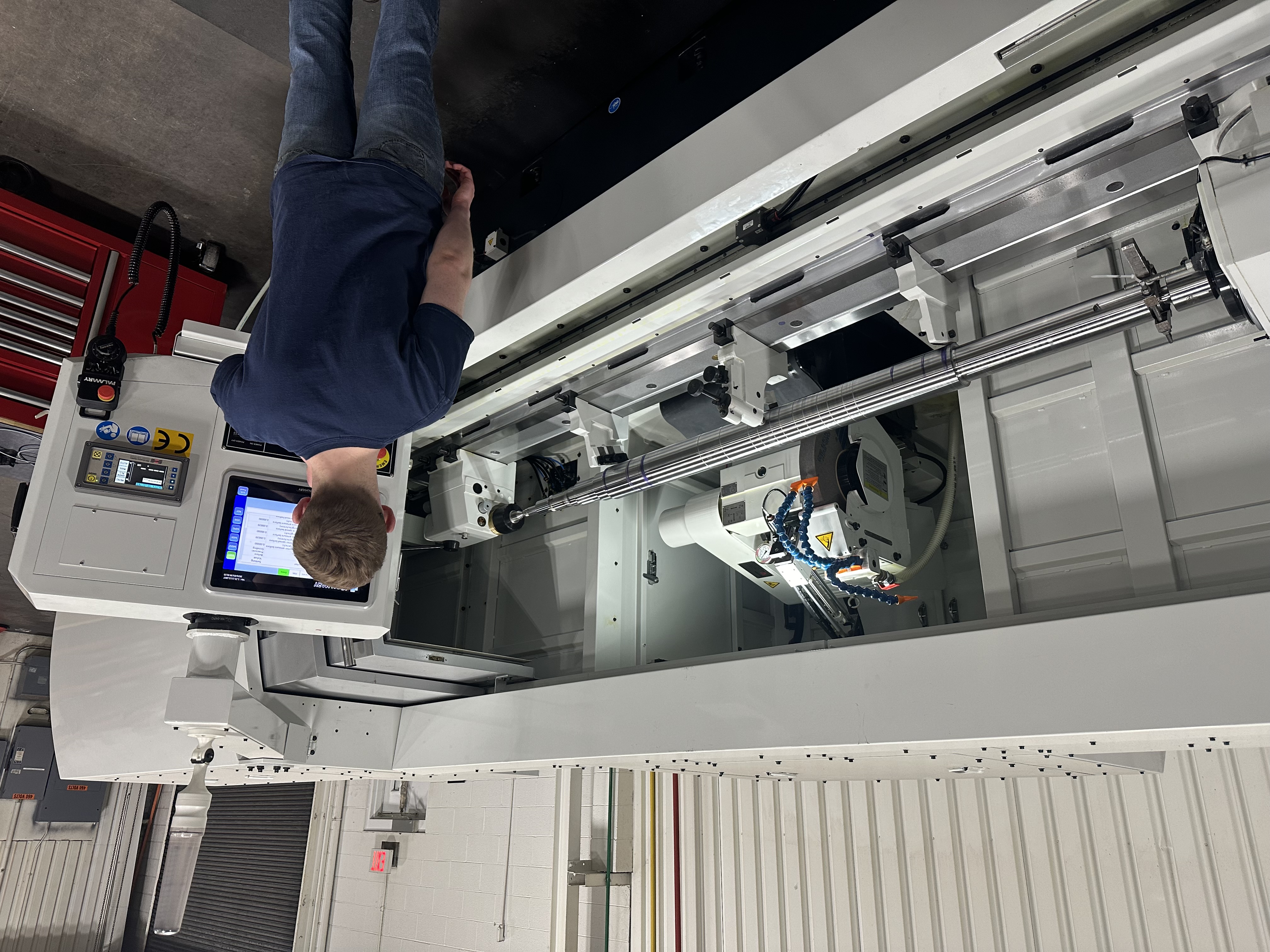
That’s the benefit of a one-source manufacturing and repair partner: thermal spraying, hardfacing, machining, precision grinding/finishing, and assembly all in one facility. When material availability gets tight, having full control of the process from coating through final machining becomes a real advantage for reliability-driven organizations.
It means fewer handoffs, fewer scheduling surprises, and one team responsible for the finished component. Connect with our engineering team to discuss how our one-source, turnkey solutions can improve the reliability of your equipment.
When Tungsten Carbide Isn’t an Option, Alternatives Exist
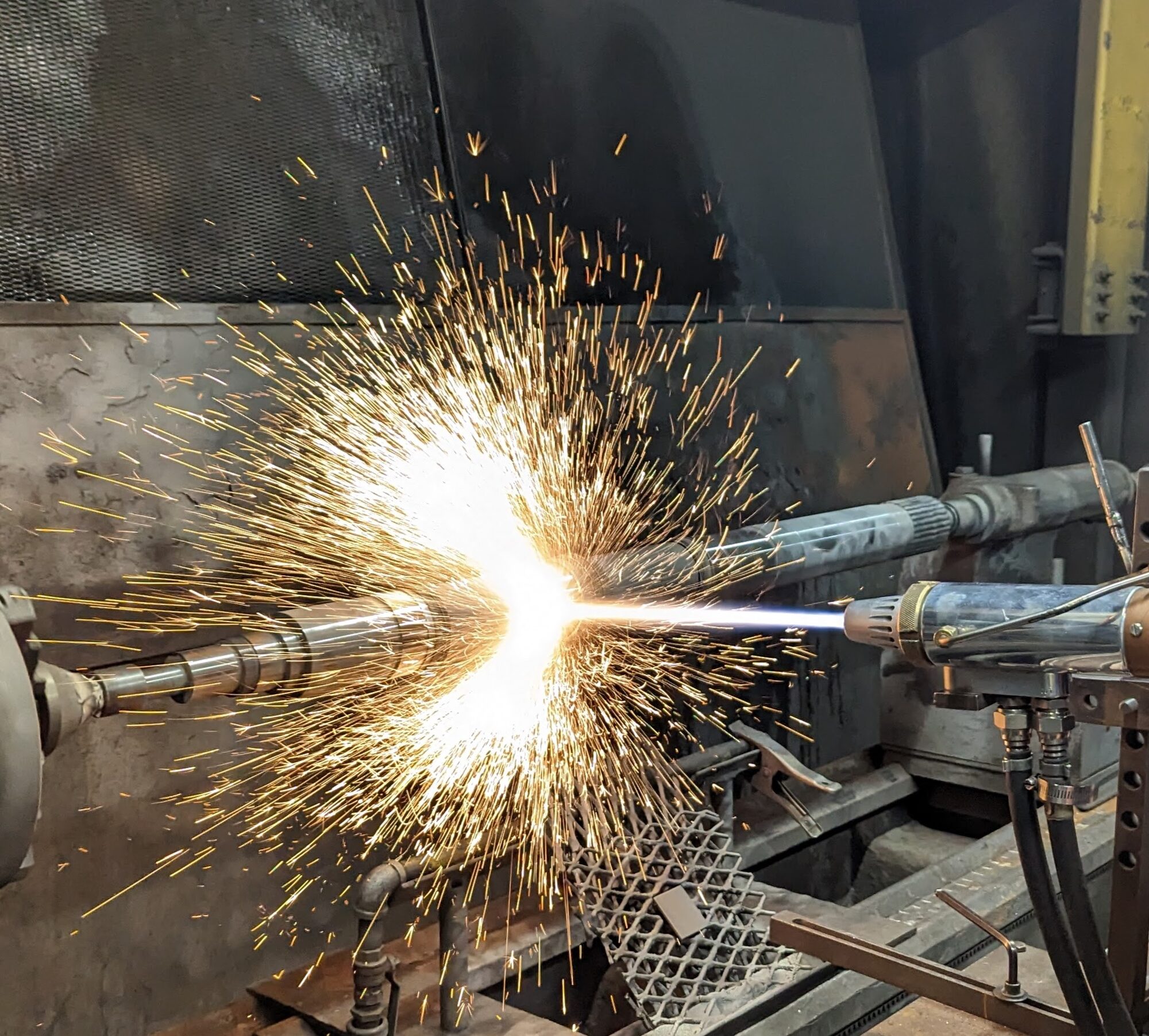
Tungsten carbide remains one of the most versatile, proven materials for combating wear, abrasion, and erosion. In some applications, especially where impact, temperature, or chemical resistance dominate, other materials can perform as well or better.
Interestingly, most of the conversations we are having today revolve around price rather than availability. While customers are increasingly curious about alternative materials, most continue specifying tungsten carbide because it is already approved within their engineering standards and has a long track record in service. Many reliability teams are understandably cautious about changing specifications on critical equipment.
In some applications, tungsten carbide may also provide more wear resistance than necessary. Bearing fits and seal fits are common examples. These surfaces are often rebuilt during normal maintenance cycles, meaning the coating may be removed and replaced before the tungsten carbide itself reaches the end of its useful life. Depending on the application, materials such as 410 stainless steel, chromium carbide, Colmonoy® 63, or Colmonoy 88 may provide a practical alternative.
At HFW, we regularly help customers evaluate options such as ceramics and iron-based amorphous alloys. Connect with our engineering team to see if one of these alternatives might be the right choice for your repair needs.
Because coating, machining, grinding, and inspection happen in a single facility, we can move quickly from material review to finished component. Customers are not coordinating between a spray shop, a machine shop, and a finishing vendor.
A Track Record of Solving Wear Problems When It Matters
The reliability teams we work with know we don’t just “spray what the print says.” We diagnose the root cause and offer a solution that extends life and cuts unplanned downtime.
A few quick examples:
- Chemical processing rolls' useful lives extended 30× using HFW's thermal spray services.
- Custom housings for an OEM reduced assembly time by 75%.
- We rebuilt valve discs and seats for a southeastern utility with upgraded processes to combat Stellite® delamination that caused repeated failure.
This is the one-source reliability difference: fewer handoffs, fewer surprises, and a partner responsible for the performance of the finished component.
Managing Tungsten Carbide Supply Risk
If tungsten carbide availability remains tight—or if pricing keeps climbing—your operations should have options. Those options should be engineered around performance, operating conditions, and repair timing.
Here’s how we’re supporting reliability teams right now:
- Maintaining tungsten carbide inventory for critical coatings.
- Offering engineered alternative materials when the application allows it.
- Providing end-to-end service in one facility, reducing vendor delays.
- Consulting directly with reliability and maintenance teams to ensure material decisions match the operating environment, not just the blueprint.
Contact HFW About Tungsten Carbide Coatings
If you have a component scheduled for repair, an upcoming outage, or questions about tungsten carbide alternatives, send us your drawing, photos, operating conditions, or failed component details. Our team can review the application as well as coating and repair options.
To discuss your application, email RFQ@hfwindustries.com or submit a quote request. You can also call (716) 875-3380.
Let’s keep your equipment running, your schedule reliable, and your team ahead of material availability issues.
Additional Technical Resources for Reliability and Maintenance Teams
Sign up for our newsletter and explore these resources from our Knowledge Base:
- Overview of Thermal Spray Coatings: HVOF & Tungsten Carbide — Why these materials are key to high-performance surface protection
- How HFW Extends Equipment Life — Real-world example of innovation in action: 30x increase in service life for a chemical client
- Reducing Assembly Time by 75% at 1/3 the Cost — Learn how HFW's one-source strategy can streamline our customer's processes and rein in costs
- How Does HFW Serve the Turbomachinery Industry? — Learn about HFW's one-source repair and manufacturing strategy for turbines, rotors, and other turbomachinery equipment
- Steam Turbine Repair — Learn about HFW's steam turbine repair services for valves, rotors, shafts, and blades, backed by a documented case where controlled hardfacing stopped delamination for at least five years.
- Precision Grinding Services at HFW — A look inside our plant, detailing HFW's precision grinding services such as CNC grinding
- What are HFW's Hardfacing Capabilities? — Explore how HFW’s hardfacing expertise restores industrial equipment with proven weld procedures and precision inspection
Tungsten Carbide Shortage FAQ
Why is there a tungsten carbide shortage?
The current tungsten carbide shortage is being driven by strong global demand, Chinese export restrictions, and the concentration of tungsten mining and processing capacity in China. Because China controls a large share of global tungsten production, supply disruptions can affect manufacturers worldwide.
Is tungsten carbide still available?
Yes. Tungsten carbide remains available, but manufacturers have experienced higher prices, longer lead times, and increased supply uncertainty. Organizations that depend on tungsten carbide coatings may benefit from planning repairs and outages earlier than they may have in the past. HFW has maintained tungsten carbide inventory so our customers can still use it to coat their critical components.
Why is tungsten carbide so expensive?
Tungsten carbide is expensive because tungsten supply is concentrated, demand is strong, and recent export restrictions have tightened access to the raw material. For many users, the current challenge is price more than delivery, with customers often absorbing higher costs to stay with approved specifications.
What industries are affected by the tungsten carbide shortage?
Industries that may be affected include power generation, oil and gas, chemical processing, mining, manufacturing, defense, aerospace, and other sectors that rely on wear-resistant coatings and components.
What are the best tungsten carbide alternatives?
Potential alternatives include chromium carbide coatings, 410 stainless steel, Colmonoy alloys, ceramics, and iron-based amorphous alloys. The best material depends on the operating environment, wear mechanisms, temperature, corrosion exposure, and maintenance requirements.
Is tungsten carbide always the best coating choice?
No. Tungsten carbide is excellent for sliding wear, abrasion, and many demanding wear applications, but it may be unnecessary in some bearing fits, seal fits, and other surfaces that are rebuilt during routine maintenance. Material selection should be evaluated based on the application.
Why are many companies still specifying tungsten carbide despite higher prices?
Tungsten carbide has a long track record in demanding industrial applications. Many organizations continue using it because it is already approved within their engineering standards and performance specifications. While interest in alternatives is growing, many reliability teams remain cautious about changing established specifications.
How does the tungsten carbide shortage affect thermal spray coatings?
The shortage has increased attention on coating costs, material availability, and alternative materials. However, many customers continue specifying tungsten carbide because of its established performance in wear, erosion, and abrasion-resistant applications.
How can manufacturers reduce tungsten carbide supply risk?
Manufacturers can reduce risk by planning repairs earlier, evaluating alternative materials where appropriate, maintaining critical spare components, and working with suppliers that maintain coating inventory and offer multiple repair services under one roof.
When should manufacturers consider tungsten carbide coating alternatives?
Manufacturers should consider alternatives when the application does not require tungsten carbide’s full wear resistance, when price becomes a concern, or when the component will be rebuilt during normal maintenance cycles. Bearing and seal fits are common areas where alternatives may be worth evaluating.
Attribution Statements
- Colmonoy® is a registered trademark of Wall Colmonoy Corporation.
- Stellite® is a registered trademark of KENNAMETAL INC.
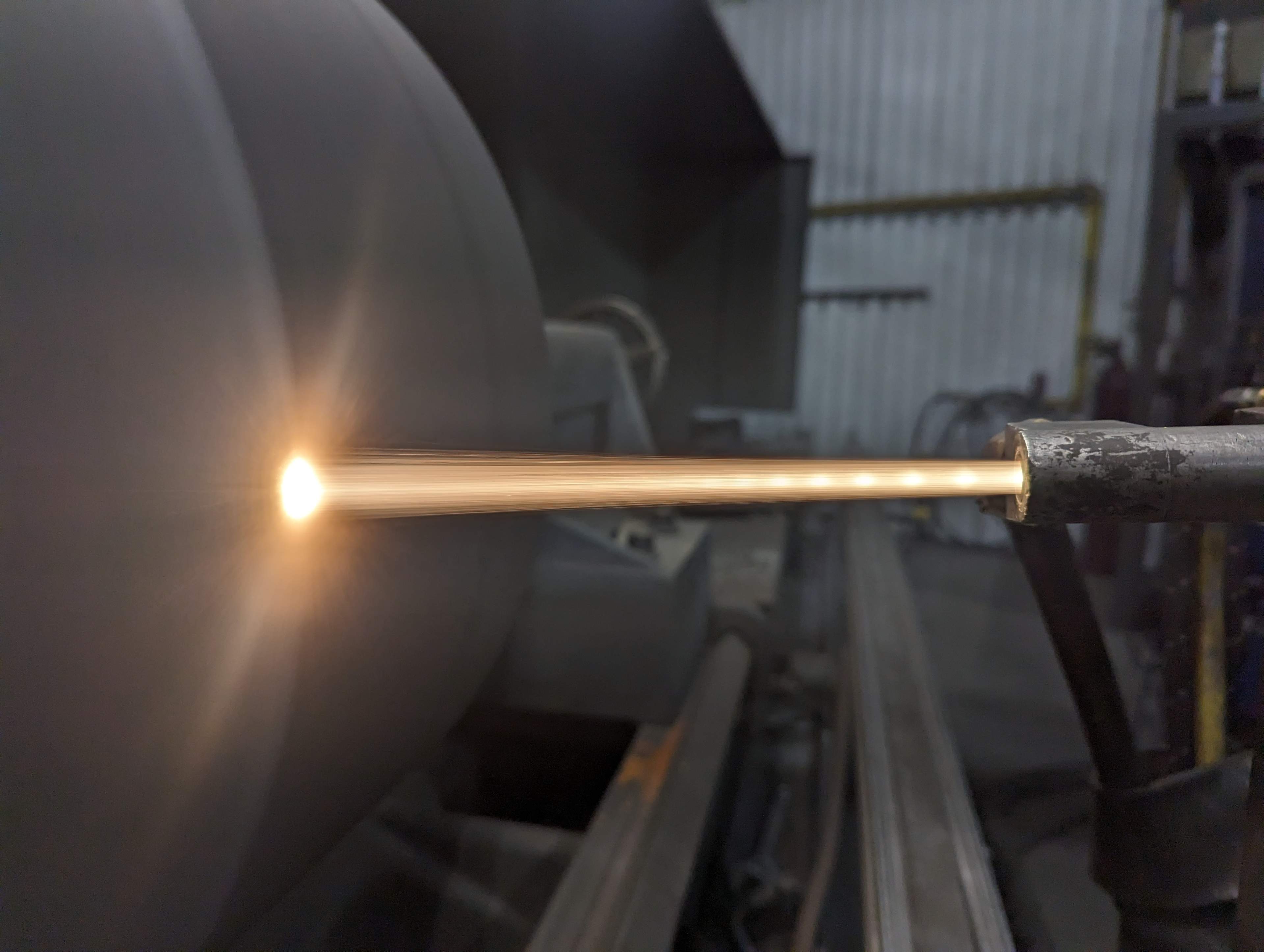
Here, you see the HVOF process being used to coat a roll.