Industrial Equipment Rebuild & Remanufacturing
Industrial equipment rebuild and remanufacturing with coating, welding, machining, grinding, and inspection in one facility.
Rebuild Planned Around the Failure Mode
When Equipment Is Worn, Out of Tolerance, or Failing
When a critical component fails, every day out of service counts. HFW evaluates the damage and what it will take to get your equipment running again.
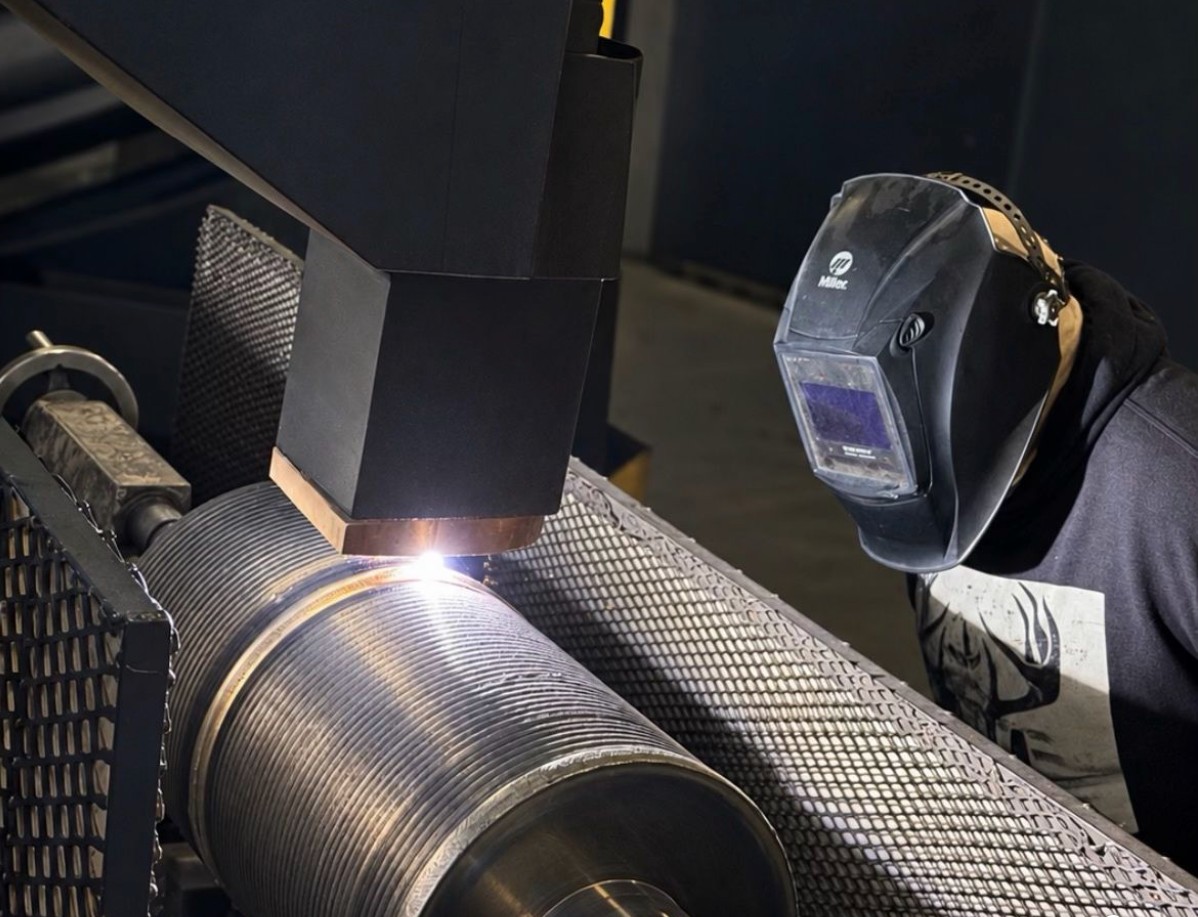
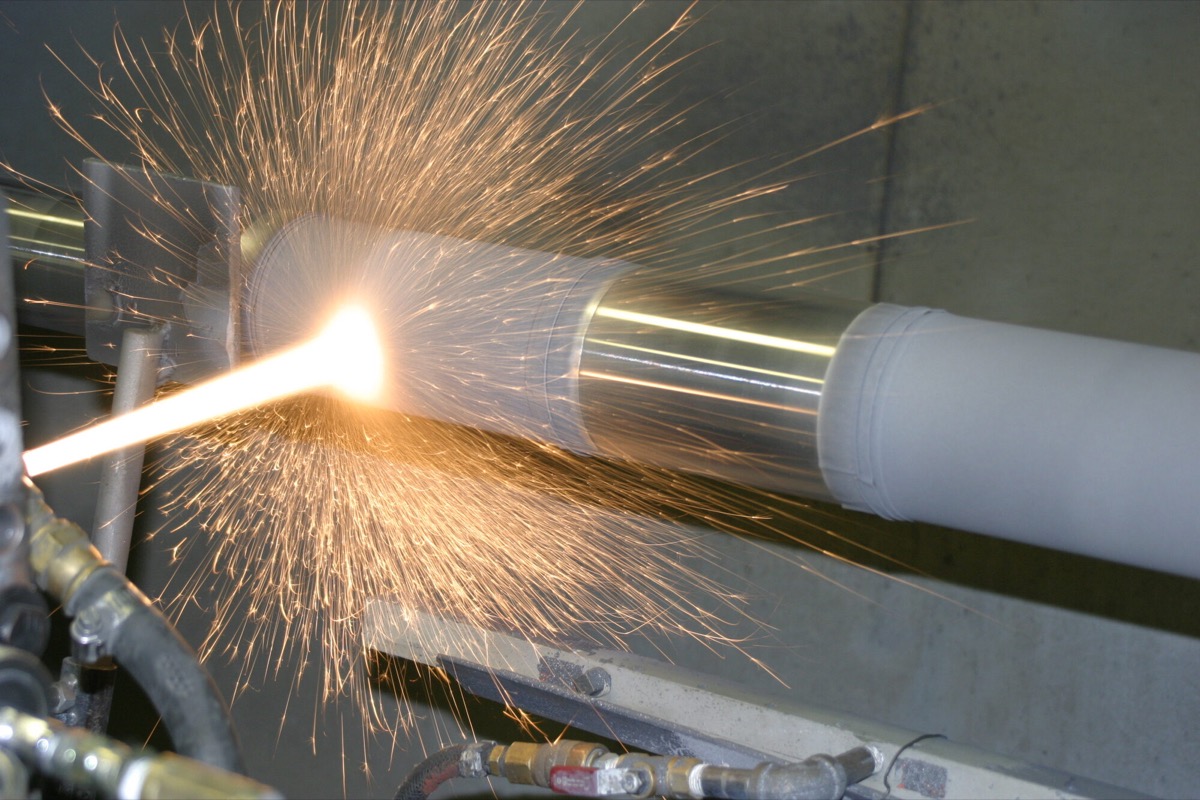
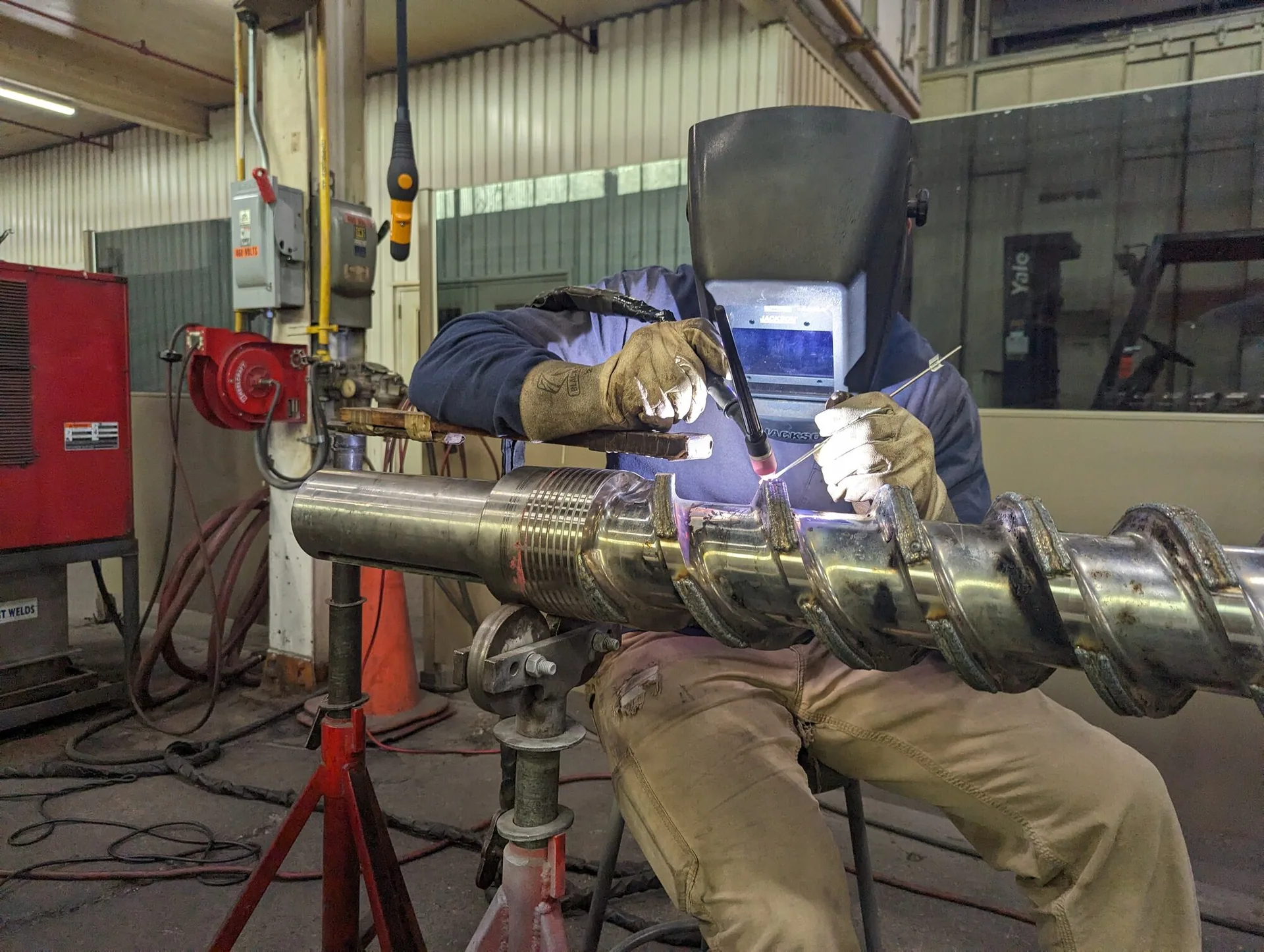
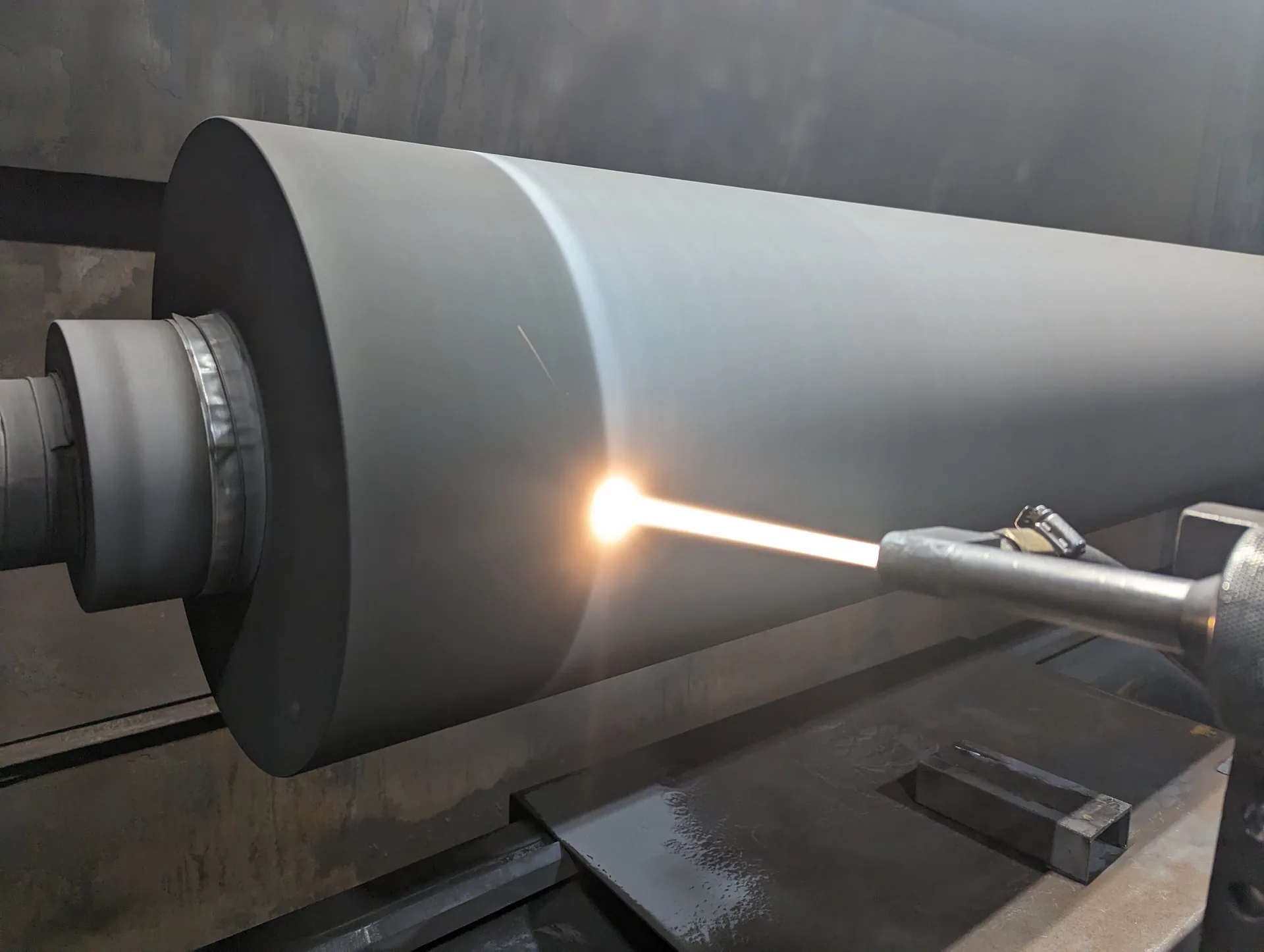
Industrial equipment rebuilding at HFW is a coordinated workflow, not a standalone service. Thermal spray coatings, hardfacing and weld overlay, precision machining, precision grinding, assembly, and inspection are sequenced inside one facility under a single quality system.
Our standard quote turnaround for rebuild work is typically one to three business days, and HFW supports emergency quotes when timing is critical. In one urgent shaft rebuild request, our team delivered a complete quote in 25 minutes.
We can restore the original part, redesign it to address a recurring failure, or build a replacement.
What We Rebuild
Industrial Components HFW Restores
For high-value components, the worn area might only be part of the story. Geometry, coating selection, final finish, lead time, and lifecycle cost all factor into the decision.
Shaft & Journal Rebuild
We rebuild turbine shafts, generator shafts, and compressor shafts. We restore the specified diameter and finish on worn journals and seal lands, then verify bearing fits and runout.
Bearing & Seal Housings
Restore worn bores and seal fits, then machine the housing to print.
Pumps & Pump Components
Pump housings, shafts, sleeves, wear rings, impellers, casings, bowls, and high-value castings where replacement lead time or alloy cost is a problem.
Mixers & Agitators
Mixer shafts, agitator assemblies, screws, paddles, sleeves, seal surfaces, and components exposed to chemical attack, abrasion, and corrosion.
Turbomachinery Components
Recondition rotor assemblies, compressor cases, and thrust collars. Balance rotating assemblies as needed before return to service.
Industrial Process Rolls
Recondition worn or corroded rolls, restore damaged roll faces and journals, and grind coated surfaces to the required finish.
Valve Components
Restore discs, seats, stems, and trim for high-temperature or corrosive service, with hardfacing where needed on seating and wear surfaces.
Build-New Alternatives
New manufacture or redesigned components when rebuilding is not the best technical, lead-time, or lifecycle-cost answer.
Industries Served
HFW can support national and global customers, supporting those that need critical equipment returned to service with documented quality.
Why Rebuilds Fail Early
Too Many Vendors Create Too Many Handoffs
Industrial rebuilds can fail when too many shops touch the same part. If welding, coating, machining, grinding, and inspection are split across multiple vendors, tolerances drift, documentation fragments, schedules slip, and accountability disappears.
HFW removes those variables by sequencing the rebuild inside one facility. The coating plan, machining stock, grinding allowance, inspection method, and assembly requirement are coordinated before the first operation starts.
75+
Years of experience
0.0002″
Tolerances on precision grinding
100%
Inspection on every job
Quick Ways to Get Started
Equipment is down
Email photos, drawings, approximate dimensions, and required turnaround. HFW can prioritize urgent work through a complete in-house process.
Rebuild or replacement is unclear
Ask HFW to evaluate rebuilding, remanufacturing, or build-new options before committing to a path.
Failures keep repeating
Send the failure mode, operating environment, and available inspection history so HFW can review the root cause and recommend a lasting rebuild approach.
For emergency rebuild requests, include photos, drawings if available, material, damaged surfaces, target dimensions, operating conditions, and the date the part is needed.
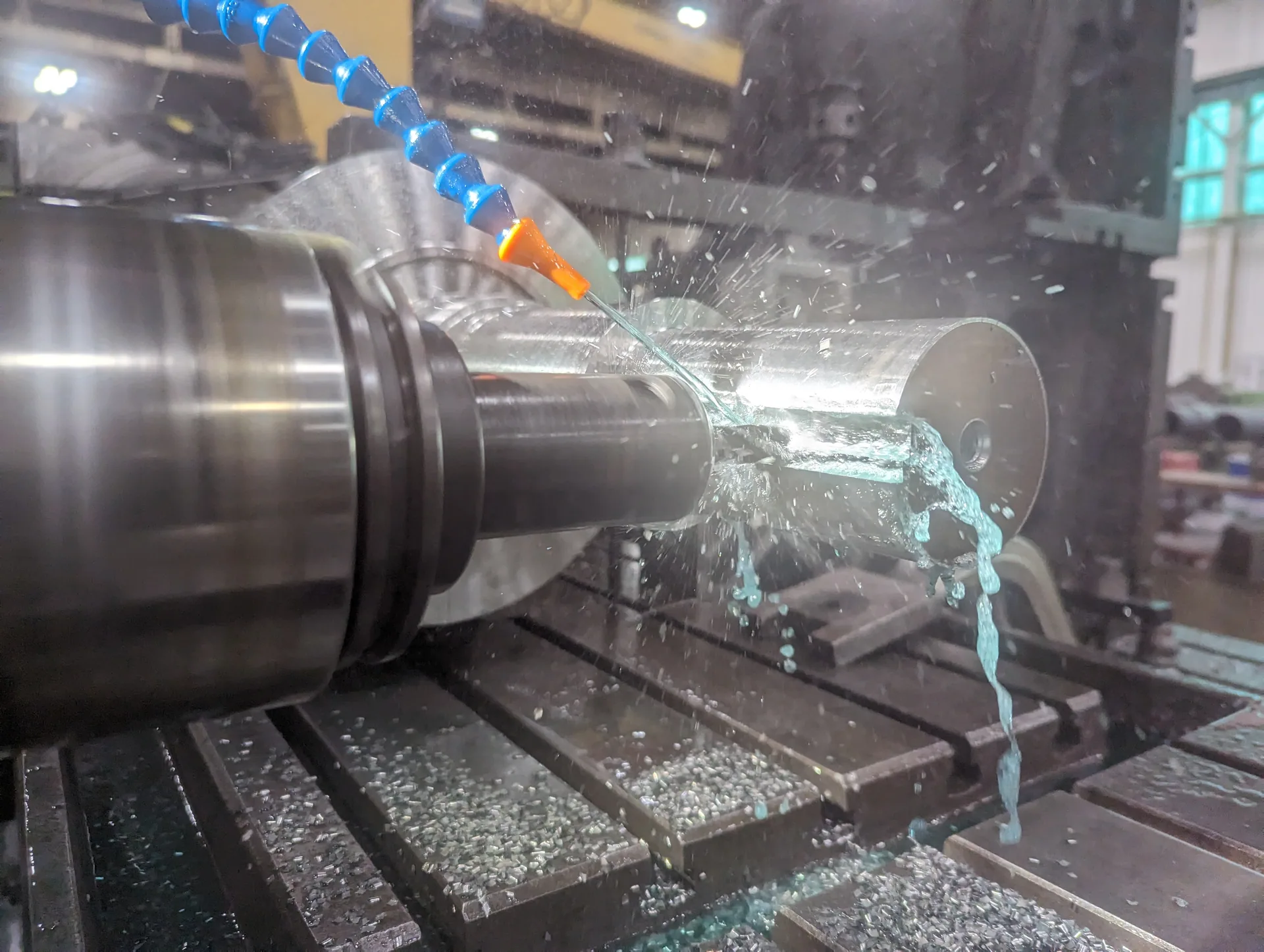
HFW at Work
A Look Inside Our Plant
Rebuild Workflow
One Facility. One Quality System. One Team Responsible for Performance.
A strong rebuild plan is more than a coating or a weld. It is a sequence. HFW builds that sequence around the component, the failure mode, and the customer timeline.
Inspect the Damage
Incoming inspection documents wear, distortion, cracks, coating condition, runout, dimensions, and the features that actually matter to the equipment.
Choose Rebuild, Remanufacture, or Build New
HFW evaluates rebuild risk, lead time, material condition, cost, and remaining service life before recommending the right path.
Restore Material and Geometry
Thermal spraying, hardfacing, and welding build up worn surfaces so they can be machined to the required geometry. HFW selects the method based on load, chemistry, wear, operating temperature, and distortion risk.
Finish to the Working Surface
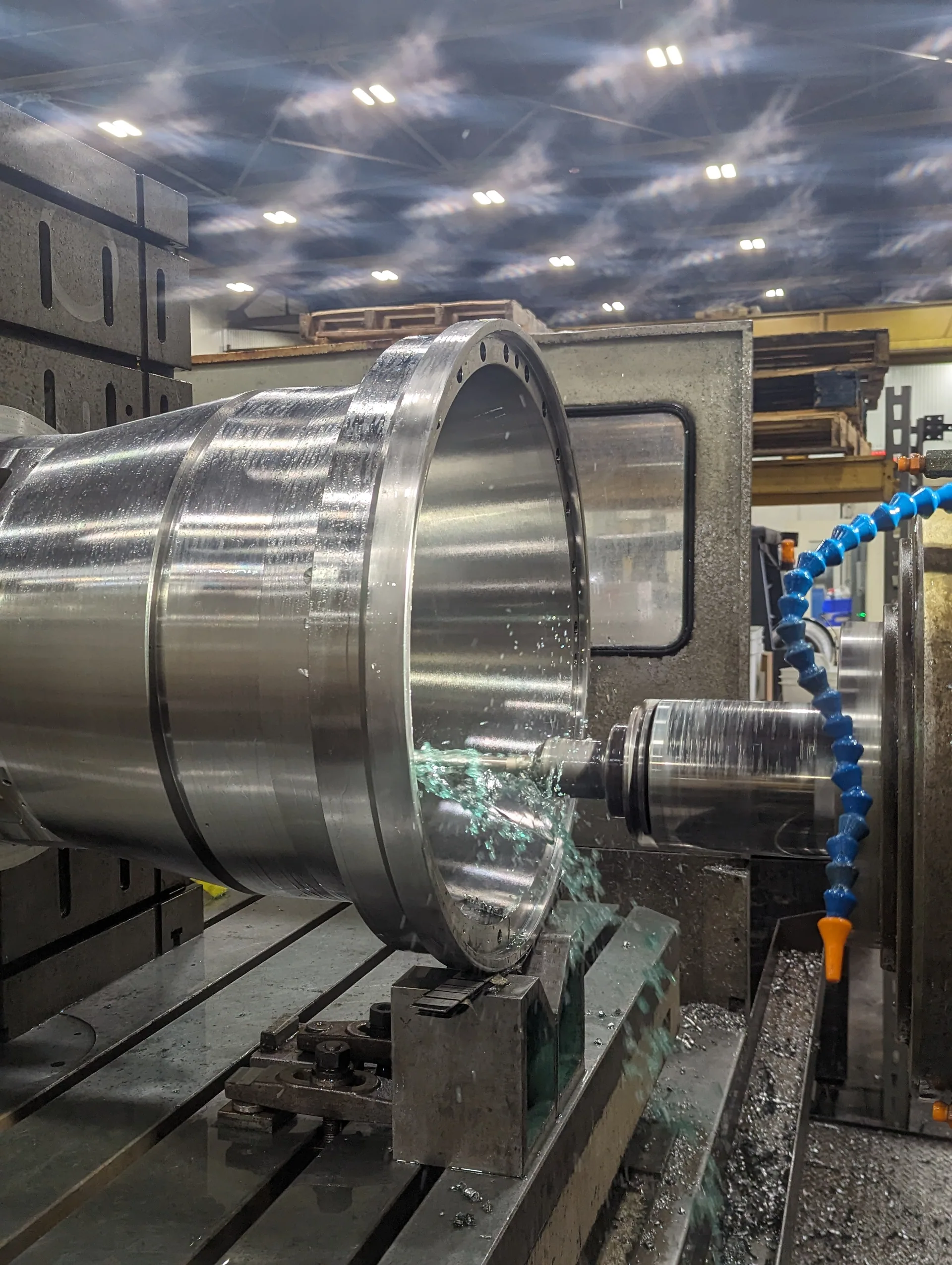
Precision machining, cylindrical grinding, ID grinding, surface finishing, honing, and polishing bring the part back to the required fit and finish.
Verify and Document
Final dimensional inspection, EMRO testing when appropriate, CMM support, calibrated gauges, and QC signoff support reliable return to service.
Assemble When Needed
Mechanical assembly, balancing, hydrotesting, cleaning, and blasting help return complete assemblies in drop-in condition.
Inspection & Quality
Rebuild Decisions Backed by Measurement
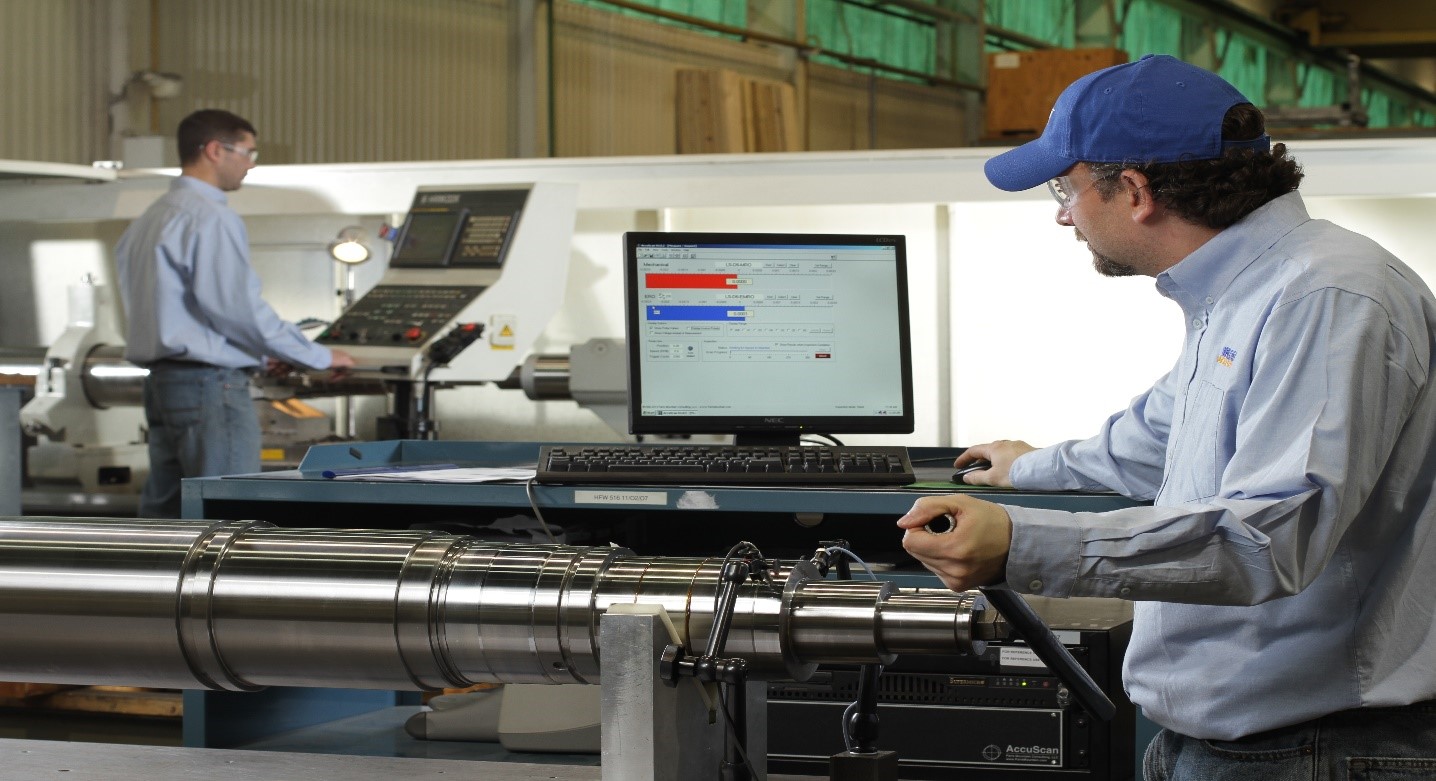
HFW is ISO 9001:2015 certified and maintains a temperature-controlled inspection lab. More than 800 gauges, CMM capability, certified calibration to NIST 2540-1 and ISO-10012 standards, and final QC signoff help ensure the rebuild is verified before it leaves the building.
For critical rotating equipment, HFW can perform electrical-mechanical runout (EMRO) testing to identify hidden conditions that standard mechanical runout may miss and that can create vibration, probe errors, or premature field problems.
Review HFW QualityRebuild Scope Decisions
When a Full Rebuild Beats a Targeted Repair
Repair addresses a defined problem: a worn journal, damaged bore, or out-of-tolerance surface. Remanufacturing goes further, restoring a broader assembly or redesigning a wear feature to reduce the cost and time of the next maintenance event.
On one project, HFW removed damaged material from a high-value alloy housing, fabricated a custom insert, and remachined to original specification at roughly one-third the cost of replacement. We then redesigned the housing with replaceable wear inserts, cutting future assembly time from eight hours to two.
Related Reading
Industrial Rebuild Knowledge Base
Generator Shaft Rebuild
HVOF coating, precision machining, grinding, and EMRO inspection for generator shafts.
TurbomachineryTurbo-Compression Rebuild and Coating Services
One-source rebuild and coating support for turbomachinery components.
Chemical ProcessingChemical Mixer and Agitator Rebuild
Corrosion and wear rebuild strategies for chemical processing equipment.
Industrial RebuildRebuild vs. Replace Industrial Equipment
How to evaluate cost, lead time, risk, and service life before scrapping a part.
Chemical ProcessingReducing Assembly Time by 75%
A rebuild and redesign case study that cut assembly time from eight hours to two.
FAQ
Industrial Equipment Rebuild Questions
Does HFW offer emergency industrial equipment rebuild?+
Yes. HFW supports urgent rebuild projects when downtime is critical. Our standard quote turnaround for rebuild work is one to three business days, and emergency situations are evaluated as quickly as possible. Because coating, welding, machining, grinding, inspection, and assembly are coordinated in one facility, urgent work can move faster without eliminating required quality steps.
What types of equipment does HFW rebuild?+
HFW rebuilds shafts, bearing housings, seal areas, pump components, mixers, agitators, rolls, valves, rotors, turbine and compressor components, and many other high-value industrial parts.
How does HFW decide whether rebuilding or replacement is better?+
The decision depends on base metal condition, geometry, prior repairs, material availability, replacement lead time, operating risk, expected service life, and total lifecycle cost. HFW can rebuild, remanufacture, or build new, so the recommendation is not tied to one department. Read more about rebuild vs. replacement decisions.
Can HFW restore worn shafts and journals to OEM dimensions?+
Yes. HFW can rebuild worn diameters with thermal spraying or hardfacing. We then machine and grind the surface to meet size, finish, and runout requirements.
Can HFW rebuild pump housings and mixer components for chemical service?+
Yes. HFW rebuilds pump housings, pump shafts, mixer shafts, agitator components, sleeves, seal areas, and wear surfaces exposed to corrosion, abrasion, and chemical attack.
What information should I send for a rebuild RFQ?+
Send photos, drawings or sketches, approximate dimensions, material if known, operating environment, failure description, required turnaround, and whether the part is down or planned for maintenance. If the information is incomplete, send what you have.
Let's Talk About Your Rebuild
If downtime is mounting, OEM lead times are long, or past fixes have not been lasting, HFW can help you address the root problem rather than the symptom.